
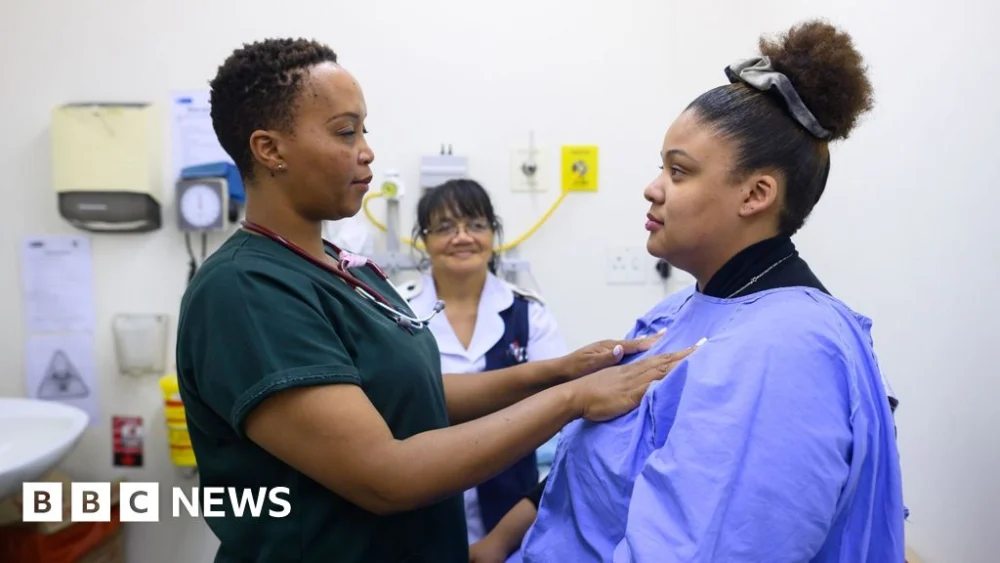
"England’s new 10-year cancer strategy sets a transformative goal: to see three-quarters of cancer patients surviving for at least five years by 2035, marking the fastest improvement in cancer outcomes this century. This ambitious target underscores a commitment to address long-standing disparities and elevate the UK’s standing in global cancer care, demanding significant investment and systemic reform."
The government in England has launched a landmark 10-year cancer strategy, outlining an ambitious vision to significantly improve patient outcomes and survival rates across the nation. At its core, the plan aims to ensure that 75% of cancer patients survive for at least five years by 2035, a substantial leap from the current 60% recorded in 2022. This comprehensive strategy, detailed on Wednesday, promises a multi-faceted approach centered on earlier diagnosis, swifter access to treatment, and a renewed focus on prevention, all designed to position England as a leader in combating this devastating disease.
The Ambitious Target and Current Landscape
The target of 75% five-year survival by 2035 is not merely a statistical aspiration; it represents a profound commitment to saving tens of thousands more lives and significantly improving the quality of life for countless others. Five-year survival is a critical benchmark in cancer care, reflecting the efficacy of detection, treatment, and ongoing management. While a 15-percentage-point increase over little more than a decade is undoubtedly challenging, it is framed as a necessary and achievable goal, spurred by advancements in medical science and technology coupled with dedicated investment in the National Health Service (NHS).
Currently, England’s 60% five-year cancer survival rate lags behind many other developed nations. Data analyzed by Cancer Research UK consistently shows the UK trailing comparable countries in survival for several common and aggressive cancers, including those of the stomach, colon, pancreas, ovaries, and lungs. For instance, five-year survival rates for colon cancer exceed 70% in countries like Australia, while remaining below 60% in the UK. Similarly, for lung cancer, only 15% of UK patients survive five years, compared to over 20% in Norway and Canada. This disparity highlights a pressing need for systemic improvements, which the new strategy seeks to address head-on.
Pillars of the Strategy: Early Diagnosis
A cornerstone of the new strategy is a sharpened focus on improving early diagnosis. The prognosis for cancer patients is overwhelmingly better when the disease is detected in its earliest stages (stages one and two), often leading to more effective and less aggressive treatment options. Presently, just over half of all cancers in England are diagnosed at these optimal stages, a proportion that has seen only marginal improvement over the past decade. The strategy aims to drastically increase this figure, recognizing that early detection is the most impactful lever for improving survival.
To achieve this, the government has outlined several key initiatives aimed at expanding and enhancing screening programmes. Currently, only a small fraction—around 6%—of cancer cases are identified through screening. The new plan seeks to broaden this reach significantly. One crucial measure involves lowering the threshold at which bowel cancer screening triggers further diagnostic checks. This adjustment, likely involving a revised interpretation of the Fecal Immunochemical Test (FIT) results, aims to catch more precancerous lesions and early-stage cancers that might otherwise be missed under current parameters.
Furthermore, a targeted lung cancer screening programme is being rolled out for ex-smokers. Lung cancer, often diagnosed at advanced stages due to its asymptomatic early presentation, carries one of the lowest survival rates. By offering low-dose CT scans to high-risk individuals, typically those aged 55-74 with a significant smoking history, the programme intends to detect lung cancers at a curable stage. This initiative holds immense potential to transform outcomes for a disease that claims a disproportionate number of lives. Beyond these specific programmes, the strategy hints at leveraging technological advancements such as AI in medical imaging, liquid biopsies for early detection of circulating tumour DNA, and expanded genetic testing for inherited cancer risks, all contributing to a more proactive and precise diagnostic landscape.
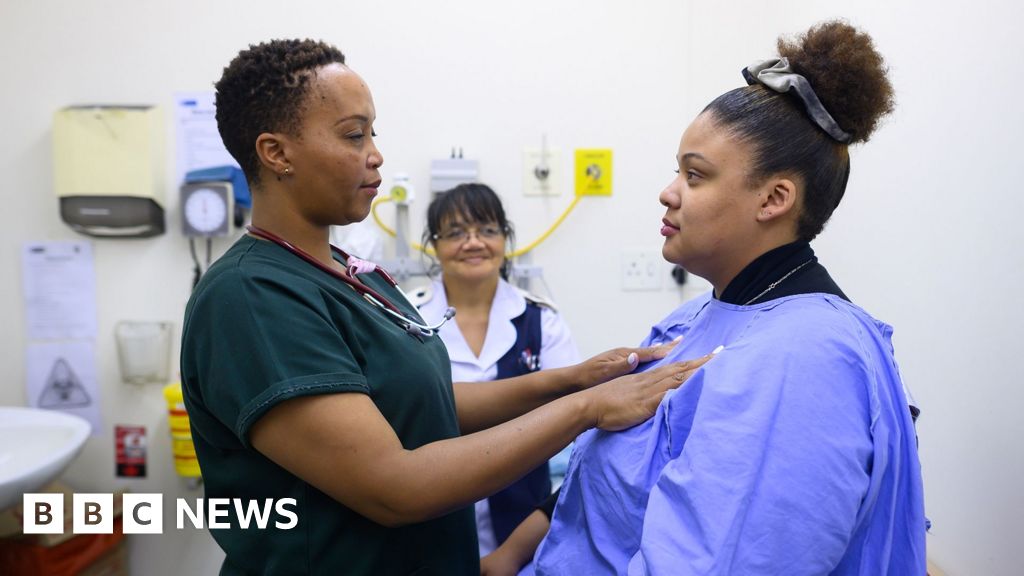
Pillars of the Strategy: Faster Treatment Pathways
Beyond early diagnosis, the strategy places significant emphasis on accelerating access to treatment. A critical pledge is to consistently meet the 62-day waiting time target by 2029, a benchmark that dictates that patients should begin treatment within 62 days of an urgent GP referral for suspected cancer. This target, established to prevent unnecessary delays and improve outcomes, has not been met for over a decade, with current performance hovering around 70% against an 85% target. The consistent failure to meet this target has been a source of significant concern, contributing to the UK’s poorer survival rates.
The 62-day target is complex, encompassing several stages: referral, diagnosis, decision-to-treat, and commencement of treatment. While a 28-day target for diagnosis from referral is largely being met, and a 31-day target for treatment commencement from the decision-to-treat point is often missed, the overall 62-day pathway is where significant bottlenecks occur. These delays can be attributed to a confluence of factors, including diagnostic capacity constraints, workforce shortages, and fragmented patient pathways.
The government’s commitment to hitting this target by 2029 signals a comprehensive effort to streamline these pathways. This will likely involve increased investment in diagnostic equipment, such as MRI and CT scanners, expanding endoscopy services, and establishing more community diagnostic centres. Crucially, it will also necessitate a substantial overhaul of workforce planning and development, ensuring that there are enough specialists to process referrals, interpret results, and deliver treatments promptly. Health Secretary Wes Streeting, a kidney cancer survivor himself, expressed confidence in the plan’s achievability, citing ongoing NHS investment—a 3% above-inflation budget increase in coming years—and the rapid pace of medical innovation as key enablers. His personal experience fuels a conviction that "survival shouldn’t come down to who won the lottery of life," underscoring the strategy’s equity dimension.
The Critical Workforce Challenge
While the strategic ambitions are lauded, experts caution that their realization hinges on overcoming significant workforce shortages within the NHS. The Royal College of Radiologists (RCR) has issued stark warnings about the insufficient number of specialist cancer staff required to meet current and projected demand. Workforce surveys reveal a staggering 30% shortfall in radiologists, who are crucial for diagnosing and staging cancer through imaging, and a 15% deficit in clinical oncologists, who oversee non-surgical treatments like chemotherapy and immunotherapy.
Dr. Stephen Harden, president of the RCR, articulated these concerns, stating, "Plans to diagnose and treat cancer faster are welcome, but without sustained investment in the specialist workforce, there will not be enough doctors to deliver timely and effective care for patients." These shortages extend beyond radiologists and oncologists to pathologists (who diagnose cancer from tissue samples), specialist cancer nurses, and surgical teams. The implications are profound: without an adequately staffed workforce, increased diagnostic capacity will lead to longer waiting lists for interpretation, and faster diagnoses will not translate into faster treatment, creating new bottlenecks in the system.
Addressing this challenge requires a multi-pronged approach. This includes not only increasing training places for medical students and specialist registrars but also improving retention rates through better working conditions, competitive remuneration, and opportunities for professional development. International recruitment will also play a vital role, alongside exploring innovative models of care delivery, such as expanding the roles of advanced clinical practitioners and leveraging technology to augment human expertise. Without a robust and growing specialist workforce, even the most well-intentioned strategies risk faltering.
Benchmarking Against Global Peers
The UK’s relatively poorer cancer survival rates compared to other high-income countries are a complex issue, often attributed to a combination of factors. These include historical underinvestment in diagnostic infrastructure, challenges in primary care access and referral pathways, lower public awareness of early cancer symptoms, and a less proactive approach to screening in some areas. Countries that consistently outperform the UK, such as Australia, Canada, and several Western European nations, often benefit from more integrated diagnostic services, higher per-capita spending on cancer care, stronger primary care systems that facilitate earlier investigations, and more comprehensive national screening programmes.
The new strategy implicitly acknowledges these shortcomings by directly targeting earlier diagnosis, faster treatment, and expanded screening. By learning from international best practices and committing to significant investment, England aims to close this survival gap. The ambition to reach 75% five-year survival would place England firmly among the leading nations in cancer outcomes, a testament to a concerted national effort.
The Prevention Imperative
Crucially, the strategy extends beyond treatment to a proactive focus on cancer prevention. It is estimated that approximately four out of ten cancer cases could be avoided through lifestyle changes, highlighting the immense potential of public health interventions. The plan outlines several measures aimed at reducing preventable cancers:
- Smoking Cessation: Providing extra support to help people quit smoking, which remains the single biggest preventable cause of cancer. This could include expanded access to cessation services, nicotine replacement therapies, and potentially e-cigarettes as a harm reduction tool.
- Weight Loss Drugs: Increasing access to weight loss drugs for eligible individuals, addressing the growing obesity epidemic which is a significant risk factor for at least 13 types of cancer.
- Sunbed Use Enforcement: Implementing mandatory ID checks for sunbed use to rigorously enforce the existing ban on under-18s, thereby reducing exposure to harmful UV radiation and the risk of skin cancer.
While these measures are welcomed, some experts argue for bolder, more comprehensive preventative policies. Thalie Martini, of Breast Cancer UK, expressed disappointment that the strategy did not place more emphasis on "bold and proactive policies on alcohol, diet, exercise and chemical exposure." Such policies could include higher taxes on unhealthy foods and alcoholic beverages, stricter regulations on chemical carcinogens in consumer products and the environment, and urban planning initiatives that promote active lifestyles. Martini emphasized that "to significantly change cancer outcomes, we must be one step ahead," advocating for a more upstream approach to public health that tackles the root causes of cancer incidence.
Holistic Patient Support
The strategy also recognizes that cancer’s impact extends far beyond the physical illness. Wes Streeting’s personal account underscores the holistic challenges faced by patients: "Cancer doesn’t just attack your body – it takes over your whole life. I was fortunate. I had a supportive employer, a family who could rally around me and the financial security to focus on getting better. But I know that’s not everyone’s reality. For too long, we’ve treated the tumour and left patients to figure out the rest on their own."
This acknowledgment suggests that the strategy will also look to improve patient support services, addressing the psychological, social, and financial burdens of a cancer diagnosis. This could encompass enhanced access to mental health support, financial advice, practical assistance, and improved coordination between healthcare providers and community support organizations, ensuring that patients receive comprehensive care that addresses their entire well-being.
Road Ahead: Investment and Implementation
The government’s commitment to increasing the NHS budget by 3% above inflation in the coming years is framed as the financial bedrock for this ambitious strategy. However, the scale of the challenge, particularly regarding workforce shortages and infrastructure upgrades, will demand astute financial management and potentially further targeted investment. The success of the strategy will ultimately hinge on meticulous implementation, continuous monitoring, and the ability to adapt to evolving scientific understanding and patient needs.
The 10-year cancer strategy represents a pivotal moment for cancer care in England. It lays out a clear, ambitious roadmap for transforming patient outcomes, narrowing the gap with international peers, and fostering a healthcare system that is more proactive, efficient, and compassionate. While significant hurdles remain, particularly in staffing and sustained funding, the strategic intent is clear: to ensure that a cancer diagnosis in England no longer carries the same grim prognosis it once did, offering hope and a significantly improved chance of survival to future generations.
