
“We’re going to make sure we provide for the community.” This simple yet profound mission drives the Fred Hampton Free Store, a vibrant hub of mutual aid and radical care operating out of an otherwise neglected building in New Orleans’ Lower 9th Ward.
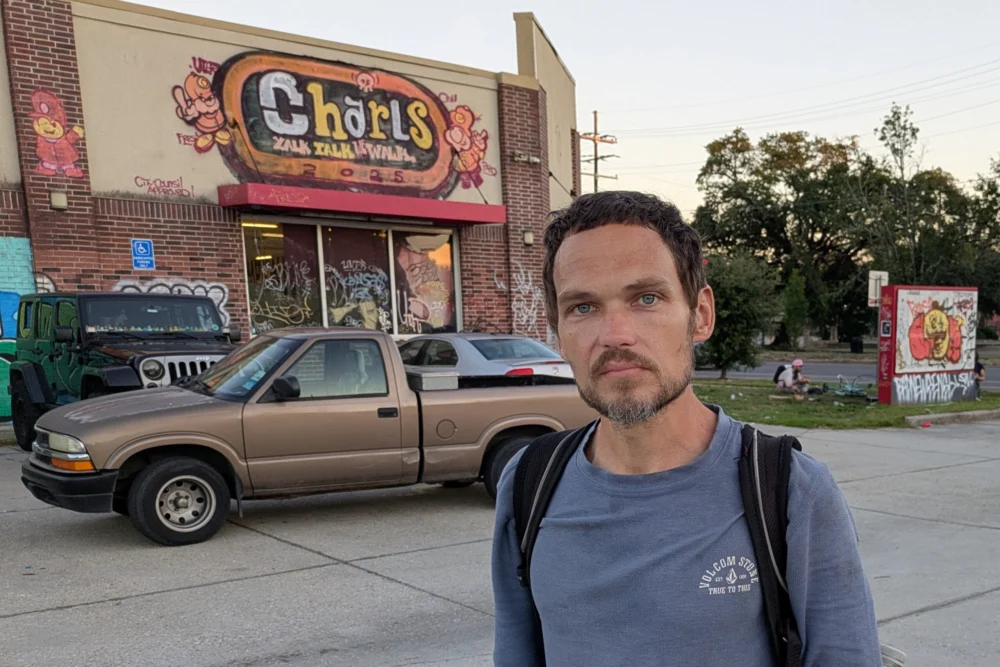
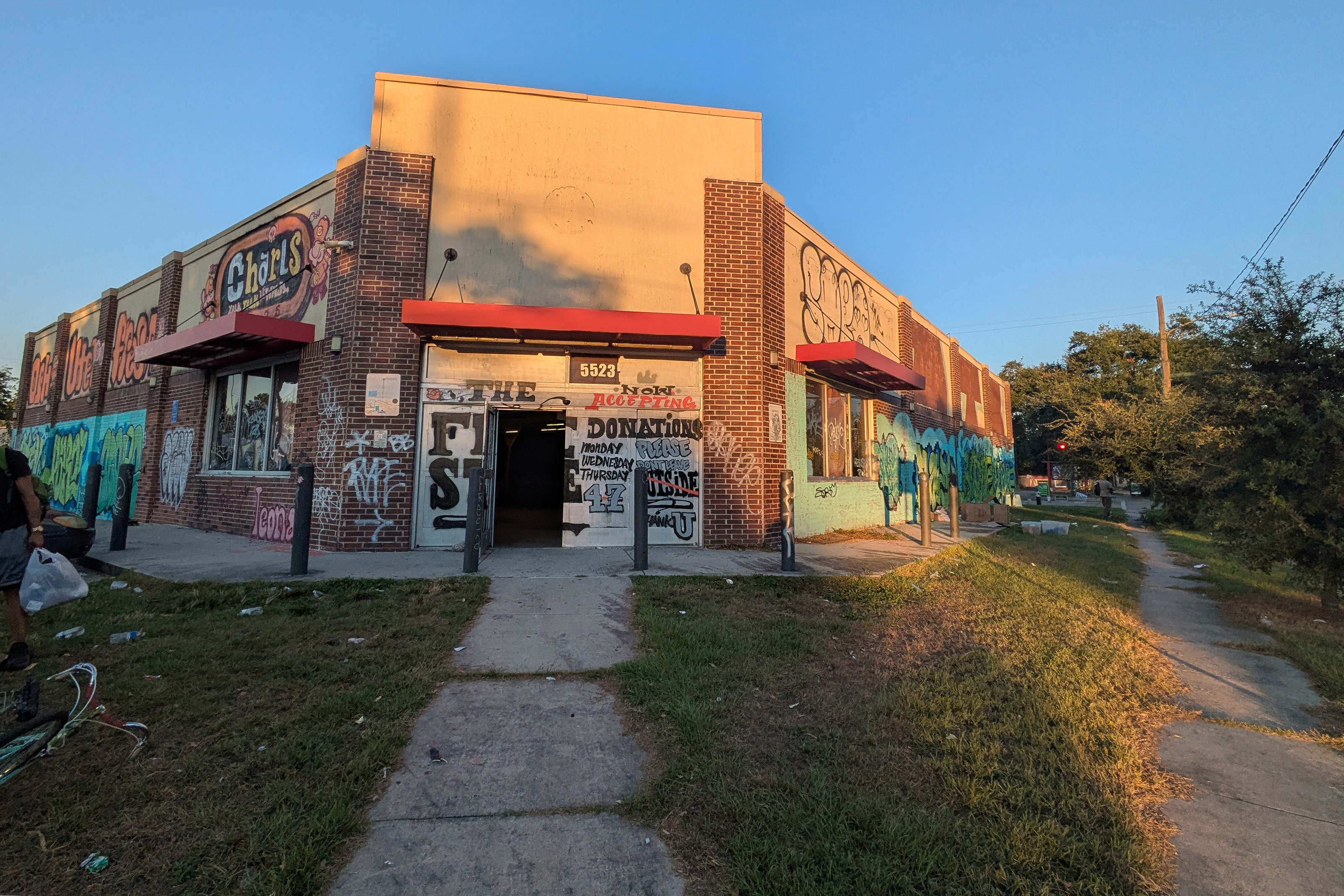
From the street, the abandoned Family Dollar store in New Orleans’ Lower 9th Ward presents a stark image of urban decay. Graffiti mars its facade, and the surrounding parking lot is littered with debris. It stands as a somber testament to the enduring devastation that has impacted this historically marginalized neighborhood, a community that has faced profound challenges in the wake of Hurricane Katrina. Yet, beyond this imposing exterior lies a beacon of hope and a testament to the power of community-driven initiatives.
Inside, the transformation is remarkable. The once-empty retail space has been reimagined as a welcoming oasis. Twinkling string lights illuminate racks brimming with donated clothing, while shelves and bins overflow with essential items such as children’s books, allergy medications, and toiletries. Curtains delineate a versatile area that serves as a stage for local musicians and features a neon roller skate sign, signaling the venue’s weekly free skate nights. This multifaceted space functions as a free thrift store, an informal over-the-counter pharmacy, and a venue for punk rock shows, all unified under the banner of what its operator, Dan Bingler, describes as "a radical community center."
Bingler, a local waiter and bartender, is the driving force behind the Greater New Orleans Caring Collective, a mutual-aid organization that operates the center. The building’s owners permit its use on the condition that Bingler covers the costs of water, electricity, and trash services. This arrangement allows the collective to provide a critical range of services without relying on traditional institutional funding.
The center’s impact extends beyond material provisions. On Monday evenings, volunteers from various community organizations converge at the site. These collaborations offer a spectrum of vital services, including free testing for sexually transmitted infections, basic medical consultations, hot meals, and the distribution of sterile syringes and other harm reduction supplies for individuals who use drugs. Bingler’s overarching philosophy is straightforward: "We’re going to make sure we provide for the community."
While the Fred Hampton Free Store has been operational for several years, its significance has amplified in recent months, particularly in light of shifting federal policies. The Trump administration’s approach, characterized by significant cuts to social service funding and a more aggressive stance on homelessness and drug use, has created a void that community-led initiatives are striving to fill. National policies have included measures like clearing homeless encampments and advocating for mandatory treatment for individuals with substance use disorders, while simultaneously decrying harm reduction strategies. Harm reduction, widely recognized by public health experts as crucial for safeguarding the health and lives of drug users, has faced criticism from those who argue it inadvertently encourages illicit drug use.
In this climate of policy changes and societal shifts, the Fred Hampton Free Store, named in honor of the influential Black Panther activist Fred Hampton, who championed cross-group collaboration for social reform, endeavors to be a steadfast haven. Its operational model is rooted in a pure form of neighbor-to-neighbor support, eschewing federal funding, state or local grants, and foundation support. "It’s simply neighbors helping neighbors," Bingler articulated, his voice tinged with emotion, adding, "It’s a really beautiful thing to be able to share all this space."
The resources available at the store are entirely community-sourced. Donations range from clothing and toiletries to larger items, such as a recent contribution of 50 flat-screen TVs from a local hotel undergoing renovations. On average, more than 100 individuals visit the center on its open nights, demonstrating the substantial demand for its services.
During a recent fall evening, dozens of people browsed through the free clothing and over-the-counter medications. Outside, individuals gathered on the grass, engaging in conversation while keeping a watchful eye on their bicycles or grocery carts laden with their possessions.
James Beshears, who uses sterile supplies for injecting heroin and fentanyl, visited the harm reduction group operating in the parking lot. He shared his experience with the challenges of accessing affordable addiction treatment, noting that his previous doctor had moved, and a new clinic charged an exorbitant daily fee. "Street drugs were cheaper than treatment," he explained. Beshears expressed a desire to overcome his addiction but finds places like the free store to be a lifeline in the interim. He believes that without its support, he would be in a far more precarious situation, stating, "I’d have one foot in the grave."
Another individual seeking assistance outside the store was awaiting Aquil Bey, a paramedic and former Green Beret recognized for his work in dismantling barriers to healthcare access. Upon spotting Bey’s distinctive black Jeep, the man approached him with an urgent plea. "I’ve got stage 4 kidney disease," he stated, explaining his difficulty in reaching scheduled hospital treatments. Bey, in the process of unloading medical equipment, responded with empathy: "Do me a favor. When our team gets here, come and see us. Maybe we can get you transportation."

Bey is the founder of Freestanding Communities, a volunteer-driven organization that offers free basic medical care and referrals to individuals experiencing homelessness, substance use disorders, or belonging to other vulnerable populations. His group maintains a consistent presence at the free store. On that particular day, Bey and his team facilitated access to reduced-cost transit programs for the man with kidney disease. They also conducted blood pressure and blood sugar checks, treated infected wounds, and assisted patients without phones in scheduling clinic appointments.
The center’s compassionate approach was further exemplified when a man with a leg injury mentioned he was sleeping on concrete floors at an abandoned naval base. Noticing a mattress in the store’s furniture section, Bey and another volunteer transported it to the man’s sleeping location. "We’re just trying to find all these barriers" that individuals face and "find ways to fix them," Bey remarked, underscoring the organization’s problem-solving ethos.
Stephen Wiltz, a lifelong resident of the Lower 9th Ward, found his path to addiction care through the free store’s clinic. Having struggled with drug use since the age of 10 and experiencing discrimination from healthcare providers who blamed him for his addiction, Wiltz was initially hesitant to seek formal treatment. However, after years of building trust with the free store’s volunteers, he felt confident in their guidance. In the fall, Wiltz reported being in sustained recovery for the first time in his life at the age of 56. He attributed this success to the volunteers who "cared for people who didn’t have nobody to care for them."
As dusk settled on that fall evening, the sounds of a punk band setting up for a performance mingled with the activities of the medical clinic. The transition from daytime services to an evening concert underscored the unique, multifaceted nature of the space. Bey, calmly consulting with a patient suffering from gout, acknowledged the ambient music: "I get used to the sound. I like it sometimes," he said, referring to the energetic blend of rapid drums and loud guitar chords that filled the room. The Fred Hampton Free Store stands as a powerful example of how communities can mobilize to create resilient support systems in the face of systemic challenges, offering not just necessities but also a sense of belonging and a platform for cultural expression.
