
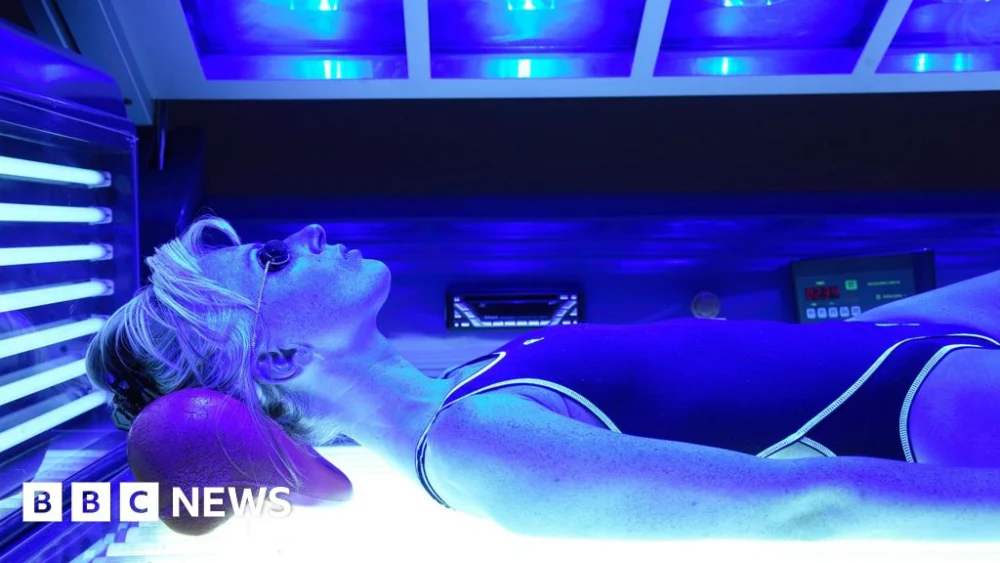
"Amidst winter’s gloom, sunbed companies are actively propagating dangerous misinformation on social media, falsely claiming health benefits from tanning that health experts universally debunk as irresponsible and potentially fatal, increasing the risk of life-threatening skin cancers."
This investigation reveals a pervasive and alarming trend where tanning businesses exploit social media platforms like TikTok, Instagram, and Facebook to promote sunbeds with unsubstantiated health claims. These misleading advertisements suggest sunbeds can combat winter ailments, boost mental well-being, or treat skin conditions, directly contradicting established medical advice and regulatory warnings. The findings underscore a critical public health concern, as vulnerable individuals, particularly young people, are being exposed to information that downplays severe cancer risks and encourages practices linked to rising rates of melanoma.
A recent BBC exposé has brought to light a disturbing proliferation of harmful misinformation surrounding sunbed use, particularly during the winter months. Hundreds of advertisements across major social media platforms, including TikTok, Instagram, and Facebook, have been identified peddling false claims that sunbeds offer a myriad of health benefits. These claims range from boosting energy and treating various skin conditions to alleviating mental health problems, all without scientific backing and often in direct opposition to expert medical consensus.
The scale of this deception is concerning. The investigation uncovered over 200 distinct advertisements from individual salons and smaller chains, all making unsubstantiated health assertions. For instance, one particularly egregious TikTok video, garnering over 18,000 likes, erroneously stated that "doctors prescribe sunbeds" for conditions such as vitamin D deficiency, seasonal depression, and various skin disorders. Such claims are not only false but actively dangerous, creating a veneer of medical legitimacy around a practice that carries significant health risks.
Health experts have unequivocally refuted these claims. Regarding vitamin D, while some sunbeds may emit UVB rays that the body can convert, the World Health Organization (WHO) explicitly states they are an inefficient and unsafe method for vitamin D production. The NHS advises safer alternatives, recommending a healthy diet and supplements. Similarly, the notion that sunbeds can treat skin conditions is vigorously disputed by the British Association of Dermatologists. While highly controlled light therapies are utilized in hospital settings for specific conditions like eczema or psoriasis, these are clinically supervised treatments with precisely targeted UV rays, vastly different from commercial sunbeds.
Other alarming claims identified by the BBC included suggestions that an "eight-minute" sunbed session could prevent colds and flu, or that UV rays could "stimulate the thyroid gland" for weight loss. These assertions are met with strong condemnation from medical and public health bodies. The Obesity Health Alliance deemed weight loss claims "outrageous," while the mental health charity Mind labeled claims of treating anxiety or seasonal affective disorder as "irresponsible and harmful." Serotonin levels, often linked to mood, cannot be reliably or safely boosted through sunbed use.
The government has responded with grave concern, labeling such claims as "irresponsible" and "potentially dangerous." Dr. Amy Perkins, an NHS dermatologist in Stirling, expressed her alarm, describing the volume of sunbed misinformation online as "genuinely terrifying." Dr. Perkins, who has formally complained to the Advertising Standards Authority (ASA) about some of this online content, highlighted the broader public health crisis: "The numbers being diagnosed with skin cancer are rising year-on-year, with a staggering impact on our health services."
These findings follow a series of actions by the Advertising Standards Authority (ASA), which previously banned six tanning advertisements for making irresponsible health claims or misleadingly suggesting sunbeds were safe. The ASA plays a crucial role in regulating advertising content in the UK, ensuring that claims are substantiated and not misleading. The body is currently drafting new guidance specifically for tanning salons, expected to be published in March, which will reinforce its clear stance: "Our main message to anyone in the industry is, don’t claim that sunbeds are safe, don’t claim they provide health benefits, and don’t claim they can be used to treat medical conditions," stated Jess Tye, the ASA’s regulatory projects manager.
The consensus among cancer charities and medical professionals regarding the risks of sunbed use is stark and unambiguous. Sunbeds are definitively linked to higher rates of melanoma, the deadliest form of skin cancer, and other skin malignancies. The WHO underscores this by classifying sunbeds in its highest cancer-risk category, alongside notorious carcinogens like smoking, asbestos, and alcohol. Their data indicates that using a sunbed before the age of 35 dramatically increases the risk of developing melanoma later in life by a staggering 59%.

This critical information often fails to reach the public, particularly younger demographics who are most susceptible to misinformation. A 2025 YouGov survey revealed that approximately one in seven 18-to-24-year-olds in the UK had used a sunbed in the past year, a rate double the national average across all age groups. Compounding this, data from Melanoma Focus suggests nearly a quarter of individuals under 25 mistakenly believe that sunbeds actually reduce the risk of skin cancer – a dangerous misconception with potentially fatal consequences.
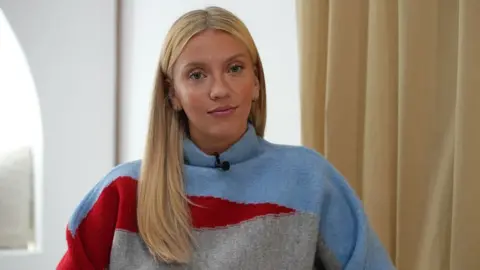
Kass Barker’s story tragically illustrates the real-world impact of these risks. Diagnosed with melanoma at just 22 after noticing a suspicious mole, Kass reflected on her past sunbed use. While the precise cause of her cancer cannot be definitively attributed, she believes her regular sunbathing and weekly winter sunbed sessions likely increased her risk. Like many of her peers, Kass and her friends justified their sunbed use with the false premise of obtaining "a few minutes of vitamin D," a narrative frequently pushed by misleading advertisements. The NHS explicitly advises against using sunbeds for this reason.
Cancer charities are vocal in their concern about the unchecked spread of harmful health messages online. Rosie Vare, health information manager at the Teenage Cancer Trust, emphasized the danger: "So many videos on social media are just repeating misinformation and encouraging the use of something that has been proven to cause cancer." She urged young people to critically evaluate information sources, asking, "where your information is coming from, who is creating this information, and whether you can trust them."
The statistics paint a grim picture of rising skin cancer rates in the UK. Since the early 1990s, melanoma cases have surged by approximately 250%. While the increase is predominantly observed in older age groups, around 1,000 individuals under the age of 30 are diagnosed with some form of skin cancer annually, with young women disproportionately affected. Cancer Research UK highlights that almost nine out of ten melanoma cases in the UK are preventable through safe sun practices and the avoidance of sunbeds. The British Association of Dermatologists, advocating for a complete ban on these devices, attributes an estimated 100 deaths per year to sunbed use.
Despite the overwhelming medical evidence, the sunbed industry maintains a differing perspective. The Sunbed Association, representing about half of the UK’s tanning establishments, contends that health bodies and the ASA rely on "outdated data." While its chairman, Gary Lipman, stated he would "encourage members not to make health claims" and acknowledged that "tanning salons are selling a tan – we are not doctors," he also asserted that some claims go "too far." The association argues that stricter regulations in place today offer better customer protection. It cites studies, including one from University of Edinburgh researchers in 2024, which purportedly link UV-ray exposure from either sunshine or sunbeds to a lower chance of dying from heart disease or cancer. However, dermatologists and cancer specialists have heavily criticized the industry’s interpretation of this research, and the ASA ruled last year that such studies should not be used to imply health benefits from sunbeds.
Current regulations in the UK permit sunbeds but impose limits on UV light strength and ban use by under-18s. The Sunbed Association states its members train staff to screen high-risk customers, particularly those with very fair skin, and adhere to guidelines limiting individuals to no more than 60 sessions per year. Looking ahead, the government last month indicated it is considering tightening some rules in England, potentially introducing stricter ID checks and mandatory health warnings in salons, mirroring measures already implemented in other parts of the UK.
The role of social media platforms in allowing this misinformation to flourish is also under scrutiny. TikTok has stated it removes posts that violate its policies on harmful misinformation, while Meta, the parent company of Instagram and Facebook, affirmed it would investigate the videos brought to its attention by the BBC. However, the sheer volume and continuous emergence of such content underscore the ongoing challenge platforms face in effectively policing health-related misinformation and protecting their users from dangerous advice. The imperative for rigorous fact-checking and proactive content moderation remains paramount in safeguarding public health against deceptive advertising.
