
“With nearly half of Team USA expected to experience symptoms of mental health concern, the USOPC is transitioning from a performance-only mindset to a holistic care model that treats psychological well-being as being just as critical as physical conditioning.”
As the 2026 Winter Olympics in Milano Cortina approach, the United States Olympic & Paralympic Committee (USOPC) is confronting a stark statistical reality: a significant portion of its elite athlete population will struggle with mental health challenges during the Games. To address this, the organization has undergone a systemic overhaul, moving away from a traditional focus on "mental toughness" toward a comprehensive clinical infrastructure designed to support athletes through depression, anxiety, and the unique existential vacuum that often follows world-class competition.
The Math of High-Stakes Competition
When the world’s eyes turn to the slopes and rinks of Italy in February 2026, the internal landscape for many competitors will be one of significant distress. According to Jonathan Finnoff, the Chief Medical Officer of the USOPC, the data surrounding athlete well-being is sobering. Projections based on internal assessments suggest that approximately 50 percent of U.S. Olympians and 60 percent of U.S. Paralympians will report symptoms of mental health concerns leading into or during the Games.
These figures highlight a paradox in elite sports: the very traits required to reach the pinnacle of athletic achievement—unrelenting focus, sacrifice, and the suppression of physical pain—can often mask or exacerbate underlying psychological vulnerabilities. For the 232 athletes representing the United States in the Winter Games, the pressure to perform is compounded by the isolation of winter sports and the high-stakes environment of a four-year quadrennial cycle.
A Legacy of Scrutiny and Reform
The USOPC’s current proactive stance is a relatively recent evolution, born out of years of external pressure and public criticism. For decades, the prevailing culture in Olympic sports prioritized the "medal count" above the individual welfare of the participants. This "performance-at-all-costs" mentality began to face serious institutional challenges following the 2018 creation of the Borders Commission. The commission’s 2019 report was a watershed moment, concluding that mental health care within the Olympic movement was not just insufficient but required immediate and massive expansion.
Perhaps no voice was more influential in this movement than that of Michael Phelps. The most decorated Olympian in history became the face of the mental health crisis in sports after his retirement in 2016. Phelps’ 2020 documentary, The Weight of Gold, offered a harrowing look at the "post-Olympic depression" that plagues many athletes. Phelps famously stated that during his career, he felt that no one in the leadership hierarchy truly cared to help athletes with their mental struggles. His repeated criticisms acted as a catalyst, forcing the USOPC to reconcile its duty of care with its pursuit of gold medals.
The Paradigm Shift: From Tokyo to Paris
The conversation reached a global fever pitch during the 2021 Tokyo Olympics. In a moment that redefined modern sports, gymnastics superstar Simone Biles withdrew from the individual all-around competition. Biles cited the "twisties"—a dangerous mental block where a gymnast loses their spatial awareness mid-air—and emphasized the need to protect her mind and body over the expectations of the public.
The "Biles Effect" was immediate. It opened a floodgate for other high-profile athletes, including tennis champion Naomi Osaka and sprinter Noah Lyles, to speak candidly about their own battles with anxiety and depression. The USOPC’s 2021 Impact Report acknowledged this as a "powerful paradigm shift," recognizing that mental health was no longer a peripheral issue but a central component of athletic safety and performance.
In response, the USOPC accelerated its investment. Between the Tokyo Games in 2021 and the Paris Games in 2024, the committee nearly tripled its staff of licensed psychologists, growing the team from six to 15. By the time the Milano Cortina Games arrived, that number had stabilized at 16 dually certified providers—professionals trained in both clinical mental health and mental performance.

Building a Robust Support Infrastructure
The current USOPC mental health program is designed to be both preventative and reactive. Beyond the core staff of 16, the organization now maintains a virtual consultation network featuring more than 500 psychological services professionals. This ensures that regardless of where an athlete is training—whether in a remote mountain town or a metropolitan training center—they have access to specialized care.
Jessica Bartley, the USOPC’s Senior Director of Psychological Services, notes that the distinction between "mental performance" and "mental health" is crucial. Performance coaching focuses on visualization, focus, and pressure management to help an athlete go from "good to great." Mental health care, however, addresses clinical issues like depression, eating disorders, and trauma.
During the 2024 Paris Olympics, the USOPC recorded over 1,200 mental health sessions. While many were focused on performance, a significant number dealt with "life issues," including athletes coping with miscarriages, the loss of family members, and the dissolution of personal relationships. This holistic approach acknowledges that an athlete cannot be partitioned; their performance on the ice is inextricably linked to their stability at home.
The "Mental Hell" of the Post-Olympic Vacuum
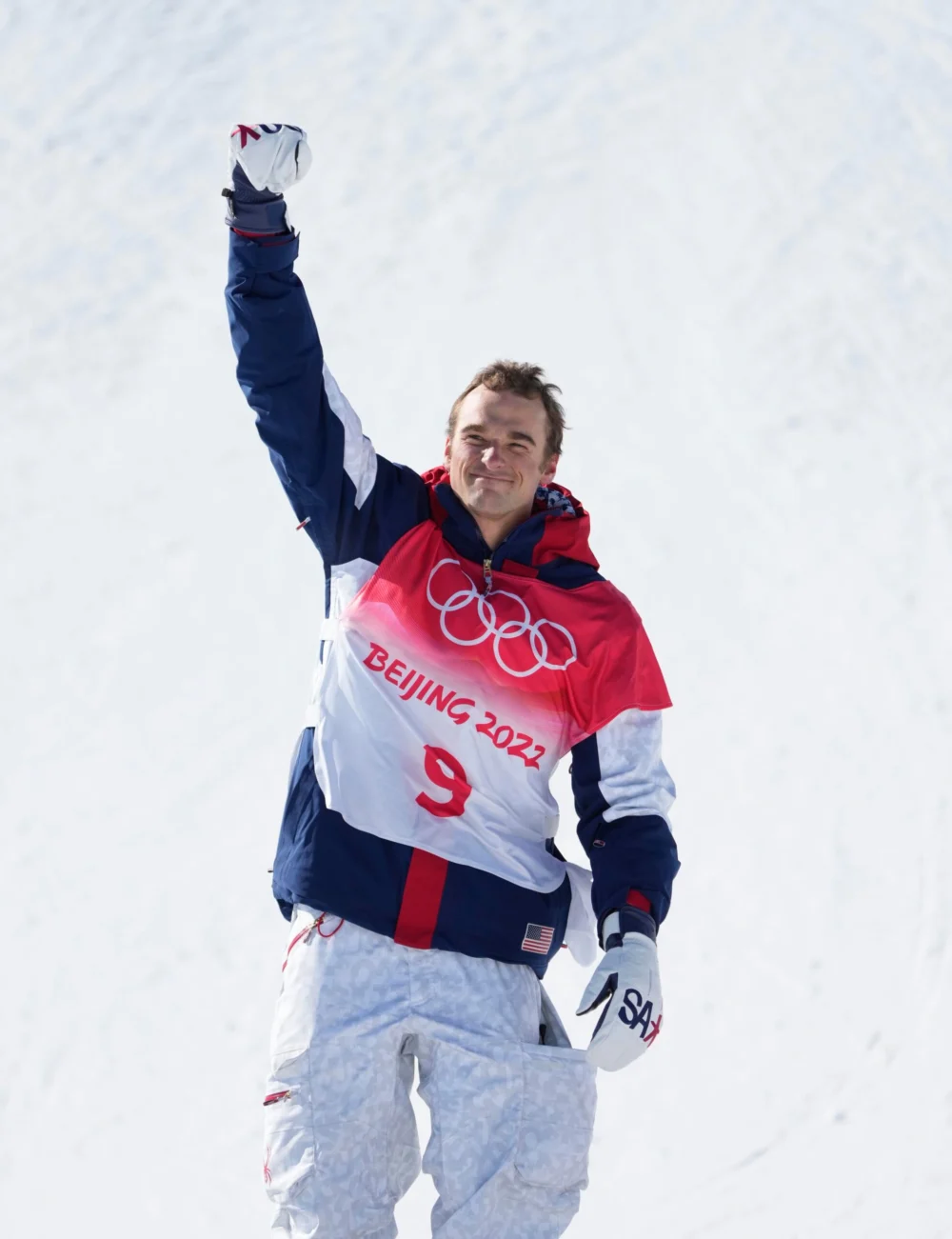
For many winter athletes, the greatest danger doesn’t occur during the competition, but in the silence that follows. Nick Goepper, a veteran American freestyle skier, has become a prominent advocate for mental health awareness within the Winter Games circuit. Having battled substance abuse, suicidal ideation, and panic attacks, Goepper describes the period following the 2014 and 2018 Games as a time of profound "aimlessness."
Goepper’s experience is common among elite competitors. After spending years focused on a single moment of competition, the sudden removal of that goal can lead to an existential crisis. "You’re living in this tiny vacuum after you do the coolest thing you’re ever going to do in your life," Goepper noted. His warning to his peers is blunt: "Take care of your mental health or else you’ll find yourself in mental hell."
The USOPC has responded to this "vacuum" by extending services beyond the closing ceremonies. The goal is to provide a "soft landing" for athletes, helping them transition back to daily life or retirement with the same level of support they received while they were chasing medals.
The Influence of Corporate and Philanthropic Partners
The shift in the USOPC’s priorities has also been reflected in its financial partnerships. Historically, corporate sponsors like Coca-Cola, Samsung, and Visa focused their marketing on the triumph of the podium. However, as public sentiment has shifted toward valuing athlete well-being, sponsors have followed suit.
Philanthropy has also played a major role. In 2021, a $1.5 million donation from the Rieschel Family Foundation specifically earmarked for mental health services allowed the USOPC to expand its reach. These funds have been used to implement universal mental health screenings for all Team USA athletes, ensuring that those who may not proactively seek help are still identified and supported.
Conclusion: A New Standard for Milano Cortina 2026
As Team USA prepares for the 2026 Winter Olympics, the definition of "preparedness" has evolved. It is no longer measured solely by lap times, jump height, or technical precision. It is now measured by the resilience of the support system standing behind the 232 athletes.
The USOPC’s leadership, including Jonathan Finnoff and Jessica Bartley, remains focused on the reality that a mentally healthy athlete is not just a more successful competitor, but a more resilient human being. By acknowledging the sobering "math" of mental health concerns and meeting it with a robust, well-funded clinical response, the USOPC is attempting to ensure that the 2026 Games are remembered not just for the medals won, but for the health and safety of those who competed for them. The goal for Milano Cortina is clear: to ensure that no athlete has to endure the "weight of gold" alone.
