
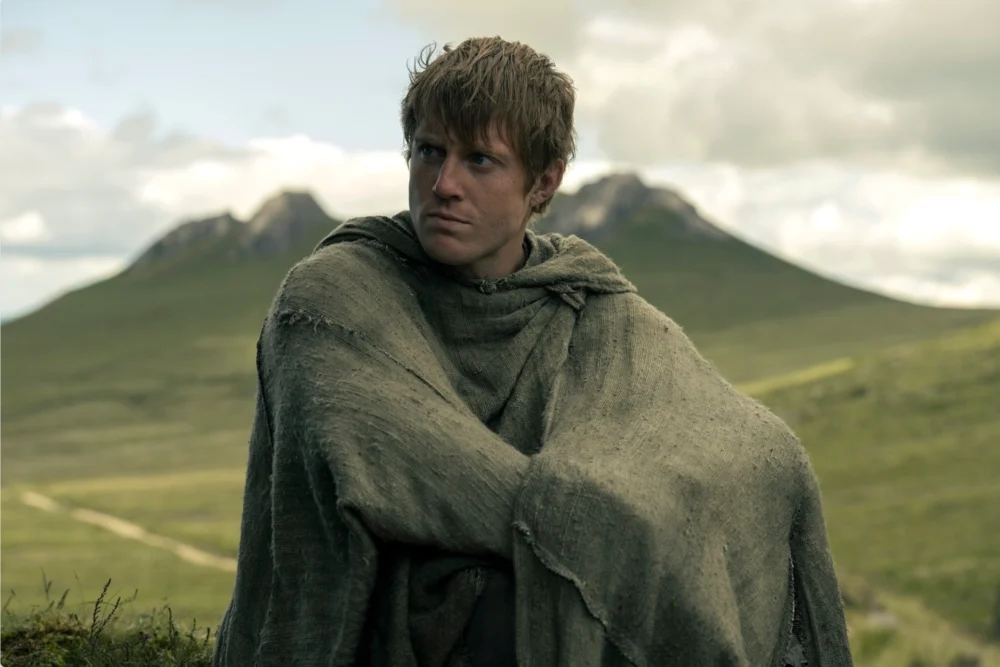
“The massive success of A Knight of the Seven Kingdoms demonstrates that high-fantasy audiences are increasingly drawn to character-centric, smaller-scale narratives, signaling a strategic pivot away from the constant pursuit of world-ending stakes.”
While the television landscape has recently been dominated by "maximalist" productions featuring sprawling casts and existential threats, HBO’s latest venture into the world of George R. R. Martin offers a refreshing counter-narrative. By focusing on the personal journey of two singular figures—Ser Duncan the Tall and his squire, Egg—the series has managed to capture a massive audience, proving that the intimacy of a well-told story can be just as potent, and profitable, as the spectacle of a global war.
The landscape of prestige television is undergoing a quiet but profound transformation. For years, the prevailing wisdom among major networks and streaming services was that "bigger is better." Following the cultural phenomenon of Game of Thrones, the industry rushed to produce epic-scale fantasies where the fate of the entire world hung in the balance in every episode. However, HBO’s A Knight of the Seven Kingdoms has disrupted this trend by proving that a "minor" story, when executed with precision and heart, can command just as much cultural authority as its larger-than-life predecessors.

Set roughly a century before the events of the original Game of Thrones series, A Knight of the Seven Kingdoms departs from the political machinations of King’s Landing and the existential dread of the White Walkers. Instead, it follows Peter Claffey as Dunk, a humble and naive but honorable hedge knight, and Dexter Sol Ansell as Egg, his diminutive and mysterious squire. The stakes are personal rather than global; the conflicts are often localized to a single tournament, a small village, or a personal debt. Yet, despite—or perhaps because of—this narrowed focus, the series has resonated deeply with both critics and a massive viewership, reportedly averaging 13 million viewers per episode.
This shift toward "micro-storytelling" within "macro-universes" is not an isolated incident. The success of A Knight of the Seven Kingdoms mirrors a broader trend across major entertainment franchises. In the Marvel Cinematic Universe, the series Wonder Man was recently lauded for its grounded approach, focusing on a specific individual dealing with super-powered problems on a human level rather than a cosmic one. Similarly, the Star Wars universe reached a new creative peak with Andor, a series that largely ignored the Jedi and the Force to focus on the gritty, bureaucratic, and boots-on-the-ground reality of the burgeoning Rebellion. These examples suggest that audiences may be experiencing "spectacle fatigue," where the constant threat of planetary destruction begins to lose its emotional impact. By scaling down the stakes, creators are finding they can dial up the character development.
HBO’s strategy with the Game of Thrones intellectual property appears to be one of balanced diversification. While A Knight of the Seven Kingdoms provides a character-driven, intimate experience, the network remains committed to the high-spectacle format as well. House of the Dragon is slated to return later this year, promising the return of maximalist storytelling filled with fire-breathing dragons and a sprawling civil war that threatens the Targaryen dynasty. This "two-pronged" approach allows HBO to satisfy different segments of the audience: those who crave the adrenaline of epic warfare and those who seek the emotional resonance of a focused character study.
The industry impact of A Knight of the Seven Kingdoms extends beyond narrative style; it also represents a shift in production and release philosophy. One of the most significant complaints from modern television viewers is the increasingly long gaps between seasons of major shows. Series like Stranger Things, Andor, and House of the Dragon often require two years or more to produce a single season due to their massive scale and heavy reliance on visual effects. HBO President Casey Bloys has indicated that A Knight of the Seven Kingdoms is intended to break this cycle.

In a recent interview, Bloys confirmed that the network aims to release new seasons of the show on an annual basis. "This will be annual," Bloys stated, noting that while such a schedule is not possible for every show, it is a creative and logistical goal for this specific series. This return to the "annual television" model is a strategic move to maintain viewer engagement and build long-term loyalty in an era of fragmented attention spans. By keeping the production scale manageable, HBO can ensure that Dunk and Egg remain a consistent presence on the cultural calendar.
The longevity of the series seems well-secured. HBO renewed A Knight of the Seven Kingdoms for a second season in November 2025, several months before the series even made its debut. At present, production on the second season is already well underway, and discussions for a third season are already taking place. The source material for the show is based on George R. R. Martin’s "Dunk and Egg" novellas, of which three have been published: The Hedge Knight, The Sworn Sword, and The Mystery Knight.
However, the three existing novellas are merely the starting point. Showrunner Ira Parker has revealed that George R. R. Martin has shared an additional 10 to 12 story ideas that extend far beyond the published material. Parker’s vision for the show is expansive, expressing a desire to follow the protagonists through the entirety of their lives—a journey that would span decades and eventually see Dunk become the Lord Commander of the Kingsguard and Egg ascend to the Iron Throne as King Aegon V Targaryen.
"They’re producing Season 2 right now, Season 3 beyond that," Bloys remarked regarding the show’s future. "I haven’t really gotten into what’s possible beyond that, but if [George] has more stories, it’s certainly something to talk to Ira and George about." This suggests a level of collaboration between the author and the showrunner that could result in television-original stories that eventually find their way into future Martin publications, creating a symbiotic relationship between the screen and the page.

The success of the show also highlights the importance of casting in character-driven narratives. Peter Claffey’s portrayal of Dunk has been praised for capturing the character’s blend of physical prowess and endearing insecurity, while Dexter Sol Ansell has brought a sharp, youthful energy to the role of Egg. In a story where there are no massive battles or world-ending prophecies to hide behind, the weight of the production rests entirely on the shoulders of the actors. The audience’s willingness to return week after week is a testament to the fact that viewers have found people they can genuinely care about.
Ultimately, A Knight of the Seven Kingdoms serves as a vital lesson for the future of the "cinematic universe" model. It proves that a franchise does not always need to escalate its stakes to remain relevant. In fact, by de-escalating, a series can find new ways to surprise and move its audience. As the industry moves forward, the "Dunk and Egg" model—prioritizing character, maintaining a manageable scale, and adhering to a consistent release schedule—may become the new gold standard for franchise management.
As fans look forward to the return of the "maximalist" House of the Dragon, the quiet triumph of A Knight of the Seven Kingdoms remains a powerful reminder of a fundamental truth in storytelling: the most important thing is not the size of the world, but the depth of the people living within it. With a roadmap that could span decades and a production team committed to an annual presence, the journey of the hedge knight and his squire is only just beginning, and the industry will be watching closely to see where their path leads next.
