
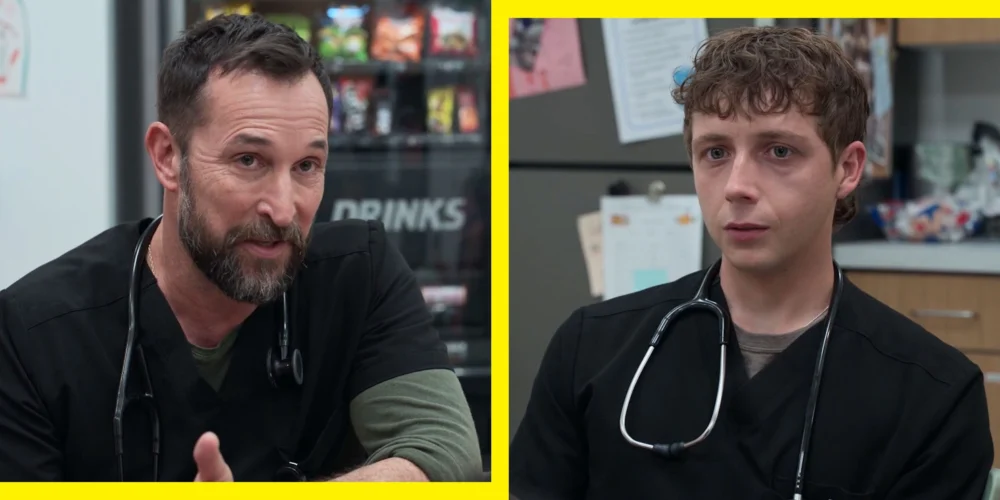
"While mentorship is vital in medical training, the blurring of professional and personal lines between senior physicians and residents creates a dangerous power imbalance that threatens the sanctity of the clinical hierarchy."
As The Pitt navigates its second season, the series has transcended the traditional boundaries of the medical procedural by intertwining high-stakes clinical emergencies with the complex, often messy, interpersonal ethics of hospital life. In the ninth episode of the season, titled "3:00 P.M.," the narrative shifts from the external chaos of the emergency room to the internal friction of professional boundaries. By examining a pivotal exchange between the veteran Dr. Robby and his protégé, Dr. Whitaker, the show highlights a critical issue in modern medicine: the ethical lapse that occurs when personal favors are disguised as professional mentorship.
The Pressure Cooker of the Fourth of July
Season 2 of The Pitt has meticulously documented the relentless pace of a metropolitan emergency department during one of the busiest times of the year: the Fourth of July weekend. Viewers have been treated to a visceral display of medical challenges, ranging from the trauma of automobile accidents and gunshot wounds to the biological threats of flesh-eating viruses and complex tumors. The show has even delved into the more unusual side of emergency medicine, featuring the peculiar ailments of hot dog eating contest champions. This backdrop of "anything that can go wrong, will go wrong" serves as a crucible for the characters, testing not only their clinical skills but their emotional resilience.
However, the appeal of The Pitt lies in its refusal to remain a mere documentary-style depiction of competent medicine. While the show earns high marks for its technical accuracy—often bolstered by real-world medical consultants—it is the character-driven subplots that provide the emotional gravity. The audience is drawn to the people behind the stethoscopes, particularly as they navigate situations that threaten to compromise their professional integrity. In "3:00 P.M.," these tensions reach a boiling point as the series explores the "hidden curriculum" of medical training—the unspoken social and ethical rules that govern the relationship between attendings and residents.

Dr. Robby: A Mentor at the Edge
Central to the season’s narrative arc is Dr. Robby, portrayed by Noah Wyle. As the veteran presence in the ER, Robby is a figure of immense respect, yet he is also a man teetering on the edge. The audience is well aware of his history with mental illness and depression, themes that were central to the first season. In Season 2, we find him on the precipice of a three-month sabbatical, a break intended to facilitate his recovery and prevent total burnout.
His colleagues, most notably Dr. Abbot (Shawn Hatosy), watch him with a mixture of admiration and concern. Robby’s impending departure casts a shadow over his interactions, particularly with Dr. Whitaker (Gerran Howell), the young physician who has recently transitioned from resident to "officially-a-doctor" status. Robby has taken Whitaker under his wing, viewing him as the future of the department. However, this mentorship takes a complicated turn when Robby discovers that Whitaker has been spending his off-hours at the farm of a widow whose husband was a burn patient under Whitaker’s care.
The ethical implications of a physician maintaining a relationship with a patient’s family—even after the patient has passed—are significant. It suggests a potential breach of professional distance and an emotional entanglement that could cloud clinical judgment. Robby, sensing this, attempts to intervene as a mentor, urging Whitaker to stay on the "straight and narrow." Yet, in a startling display of irony, Robby immediately follows this lecture on boundaries with a request that violates them entirely.
The House-Sitting Proposition: A Breach of Ethics
The crux of the episode’s ethical debate occurs when Robby asks Whitaker to house-sit for him during his sabbatical. On the surface, the offer appears to be a generous act of support; Robby provides Whitaker with a rent-free "bachelor pad" for three months, while Whitaker ensures Robby’s home is cared for. However, as medical ethics experts point out, this "ask" is far from harmless.
Dr. Robert Glatter, an Assistant Professor of Emergency Medicine at Lenox Hill Hospital and a member of the Men’s Health Advisory Board, notes that this interaction represents a fundamental violation of the social boundaries between residents and attendings. "As a general rule, it would be highly unusual and inappropriate to have an ED attending get involved or in the middle of a delicate personal or living arrangement," Glatter explains. By inserting himself into Whitaker’s living situation, Robby is not just offering a favor; he is exerting his influence over a subordinate in a way that creates a "sacred" yet compromised working relationship.

The power imbalance in a hospital is absolute. An attending physician holds the keys to a resident’s career progression, evaluations, and professional reputation. When an attending asks for a personal favor—no matter how well-intentioned—it is rarely perceived as a true choice by the resident. Whitaker’s "gracious acceptance" may be less about wanting the house and more about the impossibility of saying "no" to the man who shaped his career.
The Psychology of Burnout and PTSD
Robby’s behavior in this episode can be viewed through the lens of his own psychological struggles. Dr. Glatter suggests that Robby’s inability to see the ethical lapse might be a symptom of burnout or PTSD. In a state of chronic stress, the nuances of professional ethics can become blurred. Robby likely views the house-sitting arrangement as a simple, pragmatic solution—a way to help a protégé while securing his own property.
However, the ominous undertone of Robby’s comment—suggesting Whitaker could have the house permanently "if he doesn’t come back"—points to a deeper malaise. This remark hints at a darker psychological state, perhaps even suicidal ideation or a desire to abandon his life entirely. By involving Whitaker in his personal affairs at such a critical moment, Robby is unfairly burdening the younger doctor with his own emotional baggage. This is the antithesis of healthy mentorship; instead of providing a stable foundation for the junior doctor, the senior doctor is drawing the junior into his own instability.
The Irony of the Mentor-Protégé Dynamic
The brilliance of the writing in The Pitt lies in the irony of this scene. Robby confronts Whitaker about his relationship with the burn victim’s widow to emphasize the importance of ethical doctor-patient boundaries. Yet, in the same breath, he creates an ethical lapse of his own by blurring the lines between supervisor and friend.
This "boundary bending" is a common theme in high-intensity professions like emergency medicine, where the shared trauma of the job can create a sense of "us against the world." This camaraderie, while necessary for survival, often leads to the erosion of the very rules designed to protect the staff and the patients. Dr. Glatter posits that the show’s writers included this scene to test the audience’s perception of Robby. We want to like him; we want to see him as the benevolent mentor. But the show forces us to recognize that even "good" doctors can be guilty of ethical failures when they lose sight of the hierarchy and the power they wield.

Conclusion: The Sanctity of Professional Distance
The episode "3:00 P.M." serves as a cautionary tale about the importance of professional distance in the medical field. While the ER is a place of intense human connection, those connections must be governed by a strict code of ethics to prevent exploitation and emotional burnout.
As The Pitt continues its second season, the fallout from this exchange will likely ripple through the remaining episodes. For Whitaker, the "economic boon" of a rent-free house may come at the cost of his professional independence. For Robby, the sabbatical represents a desperate attempt to find himself, but by tethering his protégé to his personal life, he may find that he cannot truly walk away.
Ultimately, the show reminds us that competence in the emergency room is about more than just a successful intubation or a rapid diagnosis; it is about the integrity of the relationships formed within those sterile walls. When those lines are crossed, the medical system itself begins to fracture, leaving both doctors and patients vulnerable to the consequences.
