
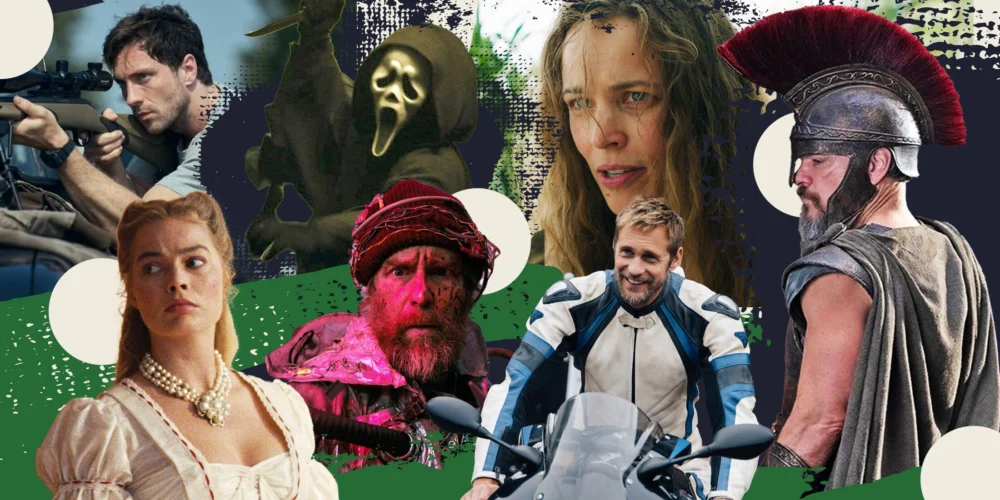
As 2026 reshapes the cinematic landscape, the convergence of high-concept original sci-fi, visceral horror revivals, and star-powered crime thrillers signals a bold new era for both theatrical and streaming storytelling. From the return of legendary auteurs to the elevation of rising leading men, this year’s slate prioritizes creative risk-taking and the revitalization of genre-specific tropes.

The current film cycle reflects a growing appetite for diverse narratives that range from gritty, grounded crime dramas to surreal, camp-infused horror. Audiences are no longer satisfied with standard franchise fare; instead, they are gravitating toward projects that carry the distinct fingerprints of their directors. Whether it is the frantic camera work of Sam Raimi, the meticulous world-building of Gore Verbinski, or the provocative stylistic choices of Emerald Fennell, 2026 is defined by the "Auteur Blockbuster." This shift suggests a pivot away from the safety of established IP toward original stories that utilize massive star power to justify their ambitious premises.

The Return of the Masters
One of the most significant developments of 2026 is the return of directors who have long defined their respective genres. Sam Raimi, the master of "splatstick" and kinetic horror, returns with Send Help. For the first time since 2009’s Drag Me to Hell, Raimi is operating within an original horror framework. Starring Rachel McAdams and Dylan O’Brien, the film is described as a psychological survivalist nightmare—a tonal intersection of the isolation of Cast Away and the claustrophobic obsession of Misery. Industry analysts view this as a pivotal moment for 20th Century Studios, signaling a willingness to let legendary directors play with high-concept, R-rated material.

Similarly, Gore Verbinski makes his first directorial appearance since 2016’s A Cure for Wellness with the sci-fi romp Good Luck, Have Fun, Don’t Die. Known for the original Pirates of the Caribbean trilogy and the haunting atmosphere of The Ring, Verbinski’s latest project utilizes Sam Rockwell’s manic energy to tell a story about time travel and rogue artificial intelligence. While the film leans into contemporary satire, it is being praised for its commitment to practical effects, a hallmark of Verbinski’s filmography that stands in stark contrast to the CGI-heavy landscapes of modern sci-fi.

The New Face of the Crime Thriller
The crime genre is undergoing a prestige makeover in 2026, led by familiar pairings and high-stakes adaptations. The Rip reunites Matt Damon and Ben Affleck in a gritty police thriller that explores systemic corruption. The narrative follows a specialized police unit that discovers a massive "rip"—a cache of illicit cash—and the subsequent moral decay that infects the team. While the premise may feel classic, the execution is elevated by a powerhouse supporting cast, including Steven Yeun and Academy Award nominee Teyana Taylor.

In a similar vein, Crime 101 seeks to capture the lightning-in-a-bottle energy of Michael Mann’s 1995 masterpiece, Heat. Based on the Don Winslow novella, the film pits Chris Hemsworth against Mark Ruffalo, with Halle Berry and Barry Keoghan rounding out a cast that represents some of the industry’s most bankable talent. The comparison to Mann is not incidental; the film’s focus on professional thieves and the dogged detectives who pursue them emphasizes tactical realism and the psychological toll of the criminal lifestyle.

Literary Reimagining and Gothic Ambition
Emerald Fennell, the Academy Award-winning mind behind Promising Young Woman, continues to polarize and fascinate with her adaptation of Wuthering Heights. Starring Margot Robbie and Jacob Elordi, Fennell’s take on the Emily Brontë classic is less a traditional period piece and more a visually stunning, anachronistic epic. By incorporating an original soundtrack by pop icon Charli XCX, Fennell is clearly targeting a contemporary audience, blending 19th-century gothic obsession with 21st-century stylistic sensibilities. This "new gothic" movement is further bolstered by Maggie Gyllenhaal’s The Bride!, a reimagining of the Frankenstein mythos. Featuring Christian Bale as the Monster and Jessie Buckley as the titular Bride, the film leans into camp and "Joker-esque" chaos, positioning itself as a high-fashion, punk-rock take on universal horror.

Horror: Legacy and Innovation
The horror genre remains the most consistent performer in the 2026 market, characterized by both long-awaited sequels and experimental indies. 28 Years Later: The Bone Temple continues the post-apocalyptic saga started by Danny Boyle. While Nia DaCosta takes the directorial reins, the script remains in the hands of Alex Garland, ensuring the intellectual rigor of the franchise remains intact. The film leans heavily on the magnetic presence of Ralph Fiennes and Jack O’Connell, exploring the long-term societal decay of a world ravaged by the Rage Virus.

On the more experimental end of the spectrum, A24 continues its dominance with Pillion and How to Make a Killing. Pillion, starring Harry Melling and Alexander Skarsgård, is a tonal tightrope walk that explores an unexpected BDSM relationship with a blend of raunchy comedy and genuine pathos. Meanwhile, Glen Powell continues his ascent to superstardom in How to Make a Killing, a black comedy neo-noir about inheritance and familial homicide. These films represent the "A24 Brand"—projects that are too idiosyncratic for major studios but possess enough star power to command mainstream attention.

Sci-Fi and the "Martian" Playbook
Perhaps the most commercially promising film of the year is Project Hail Mary. Based on the novel by Andy Weir, the film follows the blueprint of Weir’s previous success, The Martian: a lone, scientifically minded protagonist (played by Ryan Gosling) attempting to save humanity through ingenuity and grit. Directed by the duo of Phil Lord and Chris Miller, the film is expected to balance hard science with the irreverent humor that has become the directors’ trademark. If Project Hail Mary hits its mark, it could solidify the "optimistic sci-fi" subgenre as a permanent fixture in the Hollywood ecosystem.

Animation and Niche Parody
Even the animation sector is seeing a return to original storytelling. Pixar’s Hoppers is a departure from the studio’s recent reliance on sequels. The film’s "consciousness-transfer" premise—involving a robotic beaver—allows the studio to explore themes of empathy and animal intelligence through a mystery-thriller lens. With a voice cast led by Jon Hamm and Meryl Streep, Pixar is clearly aiming for "all-ages" appeal rather than strictly children’s entertainment.

On the fringe of the mainstream, The Napa Boys offers a hyper-specific brand of parody. By imagining a world where the American Pie direct-to-video sequels merged with the "wine-bro" culture of Sideways, the film serves as a meta-commentary on franchise exhaustion and the absurdity of mid-2000s raunchy comedies. It is a "cult classic in the making," designed for audiences who appreciate the deconstruction of cinematic tropes.

The Streaming vs. Theatrical Balance
As the year progresses, the line between streaming exclusives and theatrical events continues to blur. While films like Wuthering Heights and Project Hail Mary are being positioned as must-see big-screen experiences, titles like The Wrecking Crew—a buddy action comedy starring Jason Momoa and Dave Bautista—demonstrate the power of the "high-budget streaming original." These films provide the visceral thrills and star power traditionally reserved for the summer box office, but delivered directly to home audiences, reflecting a permanent shift in how mid-budget action is consumed.

In summary, 2026 is a year of bold transitions. It is a year where the "B-movie" finds a second life in films like the killer-chimp slasher Primate, where pop stars like Charli XCX transition into cinematic subjects in The Moment, and where the horror of the mundane is elevated in supernatural thrillers like Undertone. For the film enthusiast, the year offers a rare equilibrium: the comfort of the familiar and the thrill of the genuinely new. Whether through the lens of a robotic beaver or the eyes of a gothic anti-hero, 2026 invites audiences to see the world—and the cinema—differently.
