
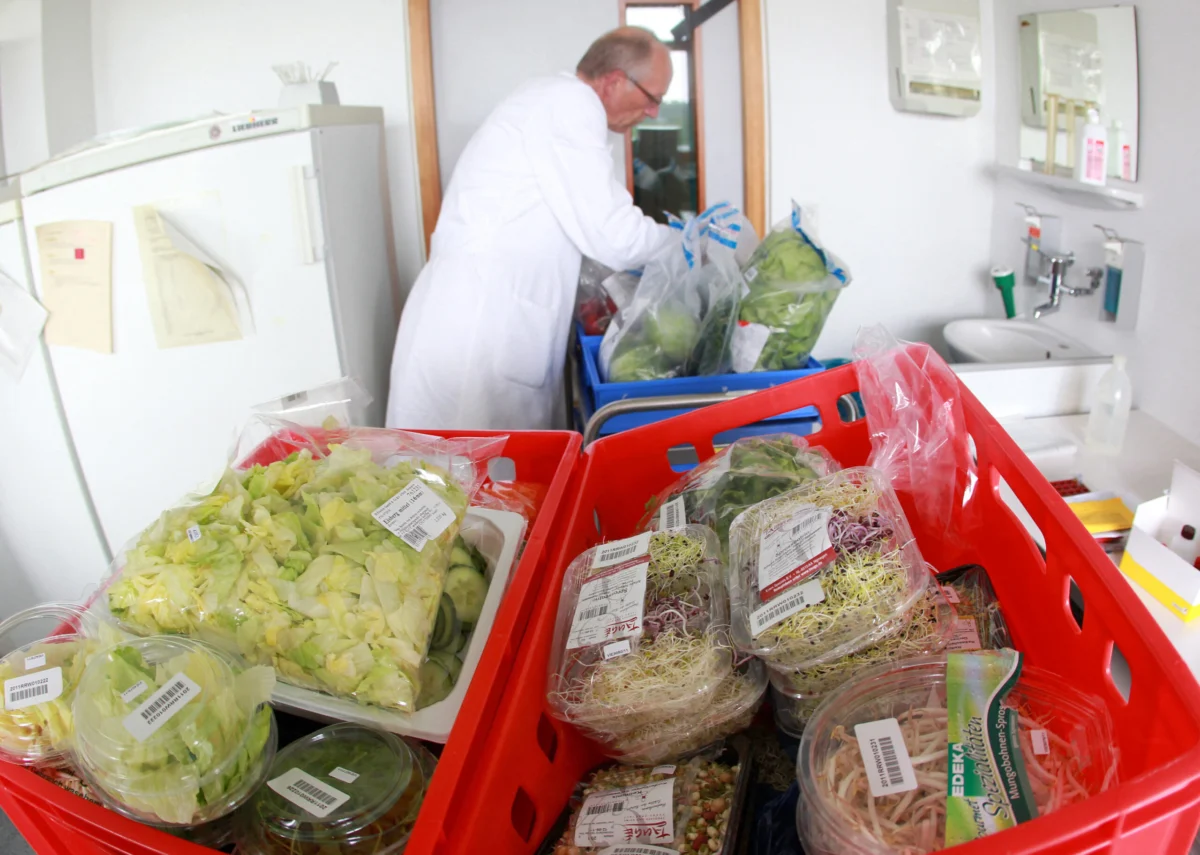
"With over 1,562 cases confirmed and no source identified, Michigan is implementing stringent, produce-specific washing and handling instructions, moving beyond general advice to offer detailed guidance on preparing fresh produce to mitigate risk."
Michigan’s largest-ever Cyclospora outbreak has prompted an urgent and detailed response from health officials, as confirmed cases surged past 1,562 by July 10, 2026. The Michigan Department of Health and Human Services (MDHHS) has released unprecedented, produce-specific washing and handling instructions, a measure that goes far beyond the typical "wash your produce" advice. These comprehensive guidelines aim to empower consumers with the knowledge to reduce their risk of contracting the parasitic illness, the source of which remains elusive despite an intensive investigation. The outbreak’s scale and the lack of a definitive food source underscore the critical importance of these enhanced safety protocols for all fresh produce.
The microscopic parasite, Cyclospora cayetanensis, is known for its tenacious grip on produce surfaces, often evading removal through standard rinsing techniques. The Centers for Disease Control and Prevention (CDC) highlights that this parasite can cling to leafy vegetables and herbs in ways that make thorough cleaning exceptionally challenging. Recognizing this, Michigan health officials have developed detailed preparation methods designed to significantly reduce the risk of infection, offering a crucial layer of protection in the absence of a specific product to avoid.
The magnitude of the current outbreak is staggering, with over 1,562 confirmed cases in Michigan and hundreds more reported in neighboring states like Ohio. This widespread distribution, coupled with the unidentified source, necessitates a proactive and precautionary approach. Consumers are left without a particular food item to boycott, making the detailed produce safety guidance from health authorities particularly vital. The prudent strategy, therefore, involves adopting enhanced precautions for all fresh produce, especially given the history of Cyclospora outbreaks linked to various fruits and vegetables.
Michigan officials have underscored the importance of these recommendations for individuals preparing raw produce, with particular emphasis on those who are immunocompromised, elderly, undergoing chemotherapy, or otherwise more vulnerable to severe illness from dehydration or infection. The MDHHS has also extended these critical guidelines to restaurants and commercial kitchens across southeastern Michigan, aiming to create a unified front against the spread of the parasite.
As of the morning of July 10, 2026, the MDHHS outbreak dashboard reported a total of 1,562 confirmed cases. The outbreak’s epicenter appears to be in southeastern Michigan, with cases concentrated in counties such as Monroe, Wayne, Washtenaw, Lenawee, Shiawassee, Jackson, Oakland, and Livingston. However, the reach of produce supply chains means that the risk and the recommended precautions extend beyond these immediate areas. The outbreak officially began on June 22, 2026, and has rapidly surpassed Michigan’s typical annual average of 40 to 50 cases, marking an increase of more than thirtyfold in less than three weeks.
To date, approximately 44 hospitalizations have been reported, though thankfully, no deaths have been attributed to the outbreak. The CDC and the U.S. Food and Drug Administration (FDA) are actively collaborating with Michigan investigators, employing advanced techniques such as whole-genome sequencing of parasite isolates and comprehensive epidemiological traceback to pinpoint a common food vehicle. Despite these efforts, a definitive source has not yet been identified.
The MDHHS’s produce-specific safety guide offers detailed instructions for consumers:
Lettuce and Leafy Greens:
- What to buy: Opt for whole heads of lettuce instead of pre-washed, bagged varieties or salad mixes. Pre-cut and pre-washed bagged salad kits have been implicated in previous Cyclospora outbreaks in both the United States and Canada.
- How to prepare: Begin by removing and discarding the outer two to three leaves, as these are most likely to have been exposed to contaminants. Thoroughly wash the remaining inner leaves under cool, running water.
- Safest option: For leafy greens that can be cooked, heat is the most effective method for eliminating the Cyclospora parasite. Cooking to an internal temperature of 158°F (70°C) or higher is recommended.
Cilantro and Basil:
- How to prepare: Wash these herbs thoroughly under running water. A key recommendation is to separate the individual leaves from the stems during the washing process. This action increases the surface area exposed to running water, thereby reducing the likelihood of the parasite persisting between leaves.
- Safest option: Both cilantro and basil are safest when consumed cooked. Incorporating them into hot dishes as cooked ingredients offers a significantly reduced exposure risk compared to raw consumption.
- Note: The MDHHS is not advising consumers to cease purchasing or consuming cilantro and basil. The guidance focuses on safe preparation methods rather than complete avoidance of these popular herbs.
Green Onions:
- How to prepare: Trim the root end of the green onions. Remove and discard the outermost layer of the bulb and stem. Thoroughly wash the remaining portions under running water.
- Safest option: Similar to leafy greens, cooking green onions effectively eliminates the risk posed by Cyclospora. Incorporating them into stir-fries, soups, or other heated preparations is the safest approach during the outbreak period.
Other Produce: Universal Rules:
For all other fruits and vegetables not specifically listed, the MDHHS recommends:
- Thoroughly washing all produce under running water before peeling, cutting, or eating.
- Using a clean vegetable brush to scrub firm produce like melons and cucumbers.
- Drying produce with a clean cloth or paper towel after washing.
The Heating Rule: 158°F Kills Cyclospora
The most reliable method for eradicating Cyclospora from any produce is heat. The MDHHS confirms that cooking food to 158°F (70°C) or higher effectively kills the parasite. This recommendation applies to any produce on the concern list. If an item can be cooked, it should be.
What Not to Buy During the Outbreak:
The MDHHS has specifically noted that the following items have been linked to prior U.S. and Canadian Cyclospora outbreaks and should be treated with heightened caution:
- Pre-packaged salads and salad mixes (especially those containing lettuce)
- Pre-cut fruits and vegetables
- Fresh herbs (such as basil and cilantro) when consumed raw
The MDHHS is not recommending a complete cessation of purchasing these items but emphasizes applying the specific preparation steps outlined above, prioritizing cooked preparations whenever possible, and strictly avoiding pre-washed bagged lettuce.
Where the Risk Is Highest:
Southeastern Michigan and the adjacent border regions of Ohio, including Lucas County and northwest Ohio where over 500 cases have been reported, currently represent the epicenter of the risk. However, given that the food source has not been identified and that fresh produce from Michigan’s growing regions is distributed nationally, these guidelines are pertinent to consumers across the Midwest and beyond who purchase fresh produce from common grocery chains and distributors.
Individuals at the highest risk for severe illness from Cyclospora include:
- Those with weakened immune systems (e.g., due to HIV/AIDS, organ transplant, or cancer treatment)
- Older adults
- Young children
- Individuals with chronic gastrointestinal conditions
The MDHHS specifically highlighted that these recommendations are particularly crucial for these vulnerable populations.
Dr. Natasha Bagdasarian, Michigan’s Chief Medical Executive, stated that the state’s leading hypothesis points to fresh produce as the likely source of the outbreak. This conclusion is based on the geographic distribution of cases, the timing of the outbreak during the peak summer produce season, and the historical pattern of Cyclospora outbreaks in North America. She confirmed that the state is actively conducting food exposure interviews with all confirmed cases and performing whole-genome sequencing on parasite samples to narrow down the search for a common source.
"All fresh produce—and not just the ones I listed—should be thoroughly washed under running water," Dr. Bagdasarian stated in recent public communications. "If it has leaves, like cilantro and basil, separate them as you wash them."
The CDC further emphasizes that Cyclospora can adhere strongly to certain foods, and washing alone may not entirely eliminate the risk from contaminated produce. This reinforces that cooking remains the most dependable protective measure currently available to consumers.
Symptoms and Warning Signs to Watch For:
Cyclospora infections typically manifest symptoms approximately one week after exposure, though the onset can range from as little as two days to over two weeks. Common symptoms include:
- Diarrhea (often watery and profuse)
- Loss of appetite
- Stomach cramps or pain
- Bloating
- Increased gas
- Nausea
- Fatigue
- Fever
Without antibiotic treatment, symptoms can persist for weeks to months and may experience relapses. The illness is not known to spread from person to person.
Seek medical care if:
- Diarrheal symptoms persist for more than a few days.
- You experience severe dehydration.
- You have a compromised immune system and develop symptoms.
A specific laboratory request is necessary for Cyclospora diagnosis, as standard stool testing may not always detect the parasite. If exposure is suspected, it is crucial to specifically ask your clinician to test for Cyclospora.
What You Can Do Now:
- Follow the specific produce preparation guidelines provided by MDHHS.
- Prioritize cooking produce whenever feasible.
- Practice good hand hygiene, washing hands thoroughly with soap and water before and after preparing food.
- Clean and sanitize all food preparation surfaces, utensils, and equipment.
- If you experience symptoms suggestive of Cyclospora infection, consult a healthcare provider promptly and request specific testing.
Cost and Access: What Patients Should Know:
Treatment for Cyclospora typically involves the antibiotic trimethoprim-sulfamethoxazole (TMP-SMX). This medication is widely available in generic form at a low cost, generally ranging from $4 to $10 at most pharmacies with a prescription. Most health insurance plans provide coverage for this treatment. The parasite-specific stool test required for diagnosis is also typically covered by insurance when ordered by a clinician. For uninsured patients, local health department clinics can offer evaluation and testing during an active outbreak at no or low cost.
What Happens Next:
The MDHHS outbreak dashboard is updated daily throughout the investigation. The results of whole-genome sequencing, which compares parasite samples from different cases, hold the potential to identify a common food source. Such a finding could trigger a specific product recall or a public advisory. Should a food source be identified, MDHHS, the FDA, and the CDC will issue a public announcement and, if warranted, a product recall notice. Until that time, the produce preparation guidance detailed in this article represents the most protective measures available to consumers.
The Bottom Line:
Michigan’s Cyclospora outbreak has reached an alarming scale with 1,562 confirmed cases and no identified food source. Until investigators pinpoint a specific product, consumers are urged to adopt enhanced safety measures. These include buying whole heads of lettuce instead of pre-cut bagged mixes, thoroughly washing and separating cilantro and basil leaves under running water, trimming and peeling green onions before washing, and cooking suspect produce to 158°F (70°C) whenever possible. Furthermore, individuals experiencing diarrheal illness lasting more than a few days should consult a clinician and specifically request Cyclospora testing. These are not mere suggestions; they are official MDHHS instructions designed to protect public health, and their relevance extends nationally due to the interconnectedness of produce supply chains.
