
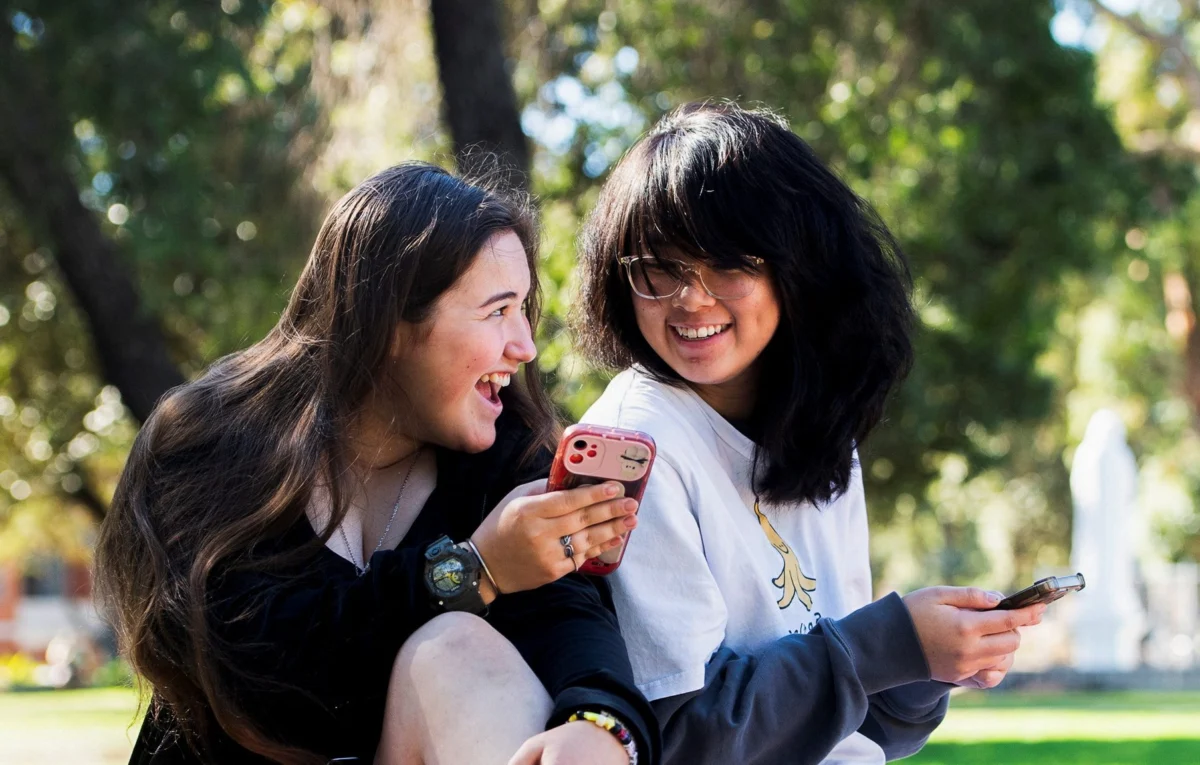
“Despite aggressive legislative mandates and the removal of millions of accounts, the persistence of youth engagement on social media underscores the profound difficulty of decoupling digital natives from a globalized, unregulated internet infrastructure.”
A new report from Australia’s internet regulator, eSafety, has revealed a significant gap between legislative intent and digital reality, finding that over 80 percent of children under the age of 16 continue to access social media platforms despite a nationwide prohibition. While the ban was introduced to safeguard the mental health of minors against the backdrop of rising cyberbullying and predatory AI-generated content, the three-month progress report suggests that technical workarounds and inconsistent age-verification measures have allowed the vast majority of the targeted demographic to remain active online.
The Persistence of the Digital Native
When Australia became the first nation to codify a strict social media ban for children under 16 in December 2025, it was hailed as a watershed moment for digital child safety. However, the latest data released in August 2026 suggests that the "digital iron curtain" is more porous than policymakers anticipated. According to eSafety, more than eight in 10 Australian teens and preteens are still utilizing platforms like TikTok, Instagram, and Snapchat.
The statistics are particularly striking when compared to the period immediately preceding the ban. In late 2025, approximately 86 percent of surveyed children reported using at least one age-restricted platform. By March 2026, three months after the law took effect, that figure had only dipped to 81 percent. Furthermore, the frequency of use has remained largely static; 58 percent of teenagers reported daily social media usage in the most recent survey, compared to 60 percent before the legislation was enacted. This marginal decrease suggests that while some casual users may have been deterred, the core habits of Australian youth remain deeply tethered to social platforms.
The Failure of Age Assurance
The primary catalyst for this continued access appears to be a systemic failure in age assurance technology. The eSafety report noted that most under-16s who possessed accounts prior to the ban were able to either retain them or simply create new ones by the three-month mark. The report pointed to the "social media platforms’ failure to implement effective age assurance measures" as the central reason for the ban’s lack of efficacy.
Of the children who managed to keep their accounts, roughly half reported that the platforms had made no effort to verify their age. In other instances, children successfully bypassed filters by self-reporting their age as 16 or older, or by exploiting flaws in automated age-checking systems that incorrectly verified them as adults.
Digital wellbeing experts had previously warned of this outcome. Joanna Orlando, a prominent researcher in digital parenting, noted that "tech-savvy teens" possess a suite of tools to circumvent local restrictions. These range from the use of Virtual Private Networks (VPNs) to mask their geographic location to the use of AI-manipulated photos to bypass facial-scanning age estimation tools. Furthermore, the ban’s exclusion of video game platforms has led to a migration of social activity toward less regulated gaming environments and emerging platforms like Lemon8, which may not yet fall under the same level of scrutiny as established giants like Meta or ByteDance.
Government Defense and the "Drinking Age" Analogy
Despite the data suggesting widespread non-compliance, the Australian government remains steadfast in its support of the law. Andrew Leigh, the Assistant Minister for Productivity, Competition, Charities, and Treasury, defended the legislation by arguing that its value lies not just in total enforcement, but in shifting the national culture.
Leigh compared the social media ban to minimum drinking age laws, noting that while underage drinking still occurs, the law provides a vital framework for parental guidance and societal expectations. "We never expected that this would have 100 percent compliance," Leigh stated. "But it’s still appropriate that we have that law on the books." He emphasized that the ban has been an "important game changer" in fostering conversations between parents and children about digital boundaries.
Government officials also point to the 4.7 million accounts that were successfully revoked in the first month of the ban as evidence of progress. Communications Minister Anika Wells previously asserted that the government had "stared down" some of the world’s most powerful companies to prioritize child safety. However, critics argue that if these millions of users simply created new accounts weeks later, the initial purge was a cosmetic victory rather than a structural solution.
Legal Challenges and Industry Resistance
The enforcement of the ban is further complicated by ongoing legal battles. Reddit, one of the ten major platforms mandated to block minors under the new law, lodged a challenge in the High Court shortly after the ban took effect. While the platform currently complies with the regulations, its legal team argues that the mandate imposes "unreasonable" technical burdens and potentially infringes on broader principles of internet freedom.
The law carries significant financial weight, with platforms facing fines of up to $33 million if they fail to take "reasonable steps" to block underage users. The definition of "reasonable steps" remains a point of contention between the tech industry and the regulator. While the government pushes for robust biometric and database-linked verification, platforms cite privacy concerns and the technical impossibility of a 100 percent accurate filter.
The AI Frontier and Emerging Risks
The urgency behind Australia’s legislation is rooted in a rapidly evolving digital landscape where traditional risks like cyberbullying are now amplified by artificial intelligence. Experts argue that the explosion of generative AI has created a new category of harm for young users.
An advisory from the American Psychological Association highlighted that AI systems can amplify violent or sexual content, and that adolescents—whose cognitive defenses are still developing—are less likely than adults to question the accuracy of AI-generated misinformation. There is also the growing threat of "deepfakes" used for online child sexual exploitation. Research published by UNICEF in October 2025 found that children globally are increasingly worried about how AI can be misused to create non-consensual imagery or manipulate their likeness.
By restricting social media access, the Australian government aimed to reduce the surface area for these AI-driven harms. However, the eSafety report suggests that as long as the ban is easily bypassed, these risks remain as prevalent as ever.
A Global Domino Effect
Australia’s experiment is being watched closely by the international community. Several other nations have followed suit with their own legislative proposals, seeking to replicate the "Canberra model" of age-based restrictions:
- The United Kingdom: The British government has announced plans to ban platforms like TikTok and Snapchat for minors starting in spring 2027. Notably, the UK plan excludes messaging apps like WhatsApp and Signal to maintain essential communication channels.
- Denmark: In late 2025, the Danish government secured parliamentary support for a ban on social media for children under 15, expected to be implemented by late 2026.
- Malaysia and Greece: Both nations have announced similar intentions, with Malaysia targeting a 2026 rollout and Greece aiming for a January 2027 start date.
These countries are looking to Australia not just for a legislative blueprint, but as a cautionary tale regarding enforcement. The Australian experience suggests that without a global consensus on age verification technology and a fundamental redesign of how platforms identify users, national bans may struggle to achieve more than a symbolic impact.
The Road Ahead
As the Australian government reviews the three-month findings, the debate over the "reasonable steps" required of tech companies is expected to intensify. The eSafety report found minimal change in the amount of time children spent on physical activities, arts, or with family, suggesting that the ban has not yet triggered the "analog resurgence" some proponents hoped for.
The challenge for the next phase of the ban will be closing the technical loopholes that allow for account retention and spoofing. Whether through mandatory digital IDs, more sophisticated biometric scanning, or heightened penalties for platforms, the Australian government is under pressure to prove that its landmark law is a functional shield rather than a symbolic gesture. For now, the digital lives of Australian youth remain largely unchanged, highlighting the enduring power of social media in the modern age.
