
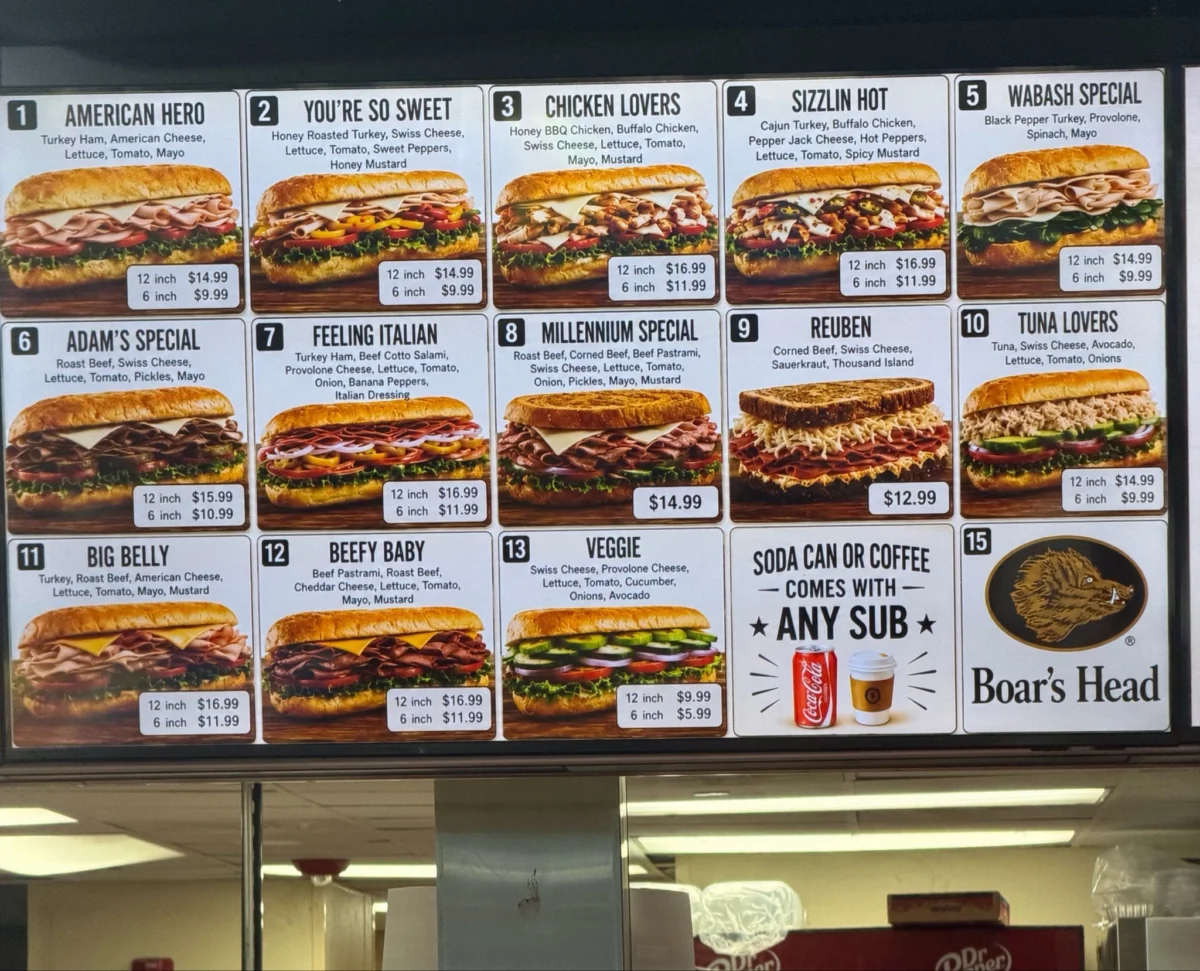
"AI-generated food imagery often triggers a visceral biological rejection because it mimics the textures of decay and disease, proving that efficiency in marketing cannot replace the authentic visual language of human appetite."
In an era where generative artificial intelligence has permeated nearly every facet of digital content, the hospitality industry is facing a unique backlash over the proliferation of "AI food slop"—hyperrealistic yet unsettlingly distorted images of menu items. While businesses adopt these tools to save on the high costs of professional food photography, the result is often a psychological phenomenon known as the "uncanny valley," where images that appear almost human or natural, but fall just short, evoke feelings of eeriness and revulsion. This tension between technological convenience and biological instinct is reshaping how consumers view brand authenticity and the future of dining.
The trend hit a boiling point in late August 2026 when Chris Murphy, a professional working in downtown Chicago, stepped into his local deli. For years, the establishment had been a reliable lunch spot, its walls adorned with standard, if unremarkable, photos of sandwiches and salads. However, upon his most recent visit, Murphy found the traditional menu boards replaced by high-definition screens displaying AI-generated imagery. The sandwiches featured strange, repetitive textures—bread crusts that looked like woven skin and meat with crystalline, fractal patterns.
"The food was just so viscerally disgusting," Murphy told reporters. The images, which he described as "aggressively fake," had an immediate physiological effect. Rather than stimulating hunger, the hyper-saturated colors and impossible geometries suppressed his appetite entirely. When he shared the images with colleagues at his office across the street, the reaction was unanimous: a physical recoil. The deli, which had boasted a loyal following, saw its Yelp page flooded with comparisons between the new AI visuals and the "honest" photography of its past. For Murphy, the choice was clear: he left without ordering, a lost sale directly attributable to the "AI slop" on the screen.
This phenomenon is not isolated to Chicago. Across the globe, "AI food slop" is becoming a derogatory term for a specific genre of generative content that prioritizes glossy aesthetics over biological reality. On social media platforms like X, posts showcasing these digital aberrations frequently go viral, garnering millions of views from a public that is increasingly captivated by the "horror" of the imagery. One viral post featuring a restaurant’s outdoor signage prompted users to describe the visuals as "nightmare fuel," with one commenter noting that looking at the AI-generated textures felt like "having bugs crawling in my throat."
Psychologists suggest there is a profound evolutionary reason for this widespread revulsion. Dr. Stephanie Sarkis, a psychologist specializing in cognitive responses, explains that when images look almost real but are fundamentally "off," the human brain enters a state of conflict between "approach and avoidance." Our ancestors relied on visual cues to identify safe food sources; things that looked "wrong"—whether due to mold, parasites, or decay—triggered a disgust response designed to ensure survival.
"These AI images often make recognizable food look biologically bizarre," Sarkis notes. "The brain recognizes the object as a sandwich, but the textures trigger a warning signal that says ‘contamination’ or ‘disease.’" For a significant portion of the population, these images can trigger trypophobia—an intense aversion to clusters of small holes or repetitive patterns. While trypophobia is often associated with natural objects like lotus seed pods, the "mathematical" nature of AI generation often creates similar patterns in bread, cheese, and meat, leading to severe distress and anxiety in sensitive viewers.
The rise of AI slop comes at a time of deepening public skepticism regarding artificial intelligence. According to a Pew Research Center survey conducted in August 2026, 55% of American adults under the age of 30 express more concern than excitement about the integration of AI into daily life. This sentiment is echoed by a July YouGov poll, which found that 70% of adults believe technology companies have amassed too much power. In this climate, a restaurant’s decision to replace real photos with AI-generated ones is often interpreted not as a tech-forward move, but as a deceptive cost-cutting measure that signals a lack of care for the actual product.
Professional food photographers, who are on the front lines of this shift, argue that AI fundamentally lacks the ability to capture "appetite appeal." Emily Hawkes, a New York-based food photographer, explains that the human eye is remarkably adept at sensing authenticity. "There is an innateness that you can feel in your bones," Hawkes says. "Even if someone isn’t an expert, they know when something is real. They can imagine the steam, the crunch, the way the light hits a real piece of lettuce. AI doesn’t understand physics; it only understands pixels and probability."
Hawkes and her peers in the digital creative industry have noted that while AI ads are becoming normalized on streaming platforms like Hulu, the food industry faces a steeper uphill battle. The "truth in advertising" factor is paramount in dining. When a customer sees a photo of a Reuben sandwich, they are looking for a promise of what will be delivered to their table. AI imagery, by definition, is a fabrication. It represents a "hallucination" of a sandwich rather than the specific ingredients used by the chef. This creates a "trust gap" that can be fatal for small businesses.
The economic argument for AI—that it is cheaper than hiring a professional—is often a false economy. While a professional shoot may cost thousands of dollars, the resulting images build long-term brand equity and consumer trust. Hawkes suggests that for businesses on a tight budget, authenticity is still more valuable than AI-generated "perfection." She recommends that restaurant owners look to student photographers or even use modern smartphones to take honest, well-lit photos of their actual food. "A thoughtful photo of your food with your iPhone is going to be better than whatever AI is going to generate because it’s your food," she asserts.
The concern among consumers like Murphy is that "AI food slop" is a harbinger of a broader "slippery slope." If a business is willing to automate its visual identity to the point of repelling customers, what is the next step? There are fears that the industry will move toward ChatGPT-generated recipes and fully automated, soul-less kitchens. Murphy speculates on a future where "we’re eating straight up horror slop"—a reference to the possibility of food quality declining to match the low-effort, synthetic nature of the marketing.
For now, the backlash serves as a reminder that the human sensory experience remains grounded in biology, not algorithms. As more people speak out against the "ick factor" of generative menus, the hospitality industry may find that the most high-tech solution is actually the most detrimental to the bottom line. To find relief from the digital distress caused by these images, experts like Dr. Sarkis recommend grounding exercises—focusing on real, tangible objects in the environment to reset the brain’s "disgust" signals.
Ultimately, the failure of AI food slop highlights a fundamental truth about the dining experience: it is an act of trust. When a restaurant presents an image of its food, it is inviting a customer to consume something. When that invitation is extended through an "uncanny" and "viscerally disgusting" digital proxy, the invitation is not just declined—it is rejected on a primal level. The future of food marketing may well depend on a return to the "real," as consumers increasingly crave the imperfections of the human touch over the sterile, unsettling perfection of the machine.
