
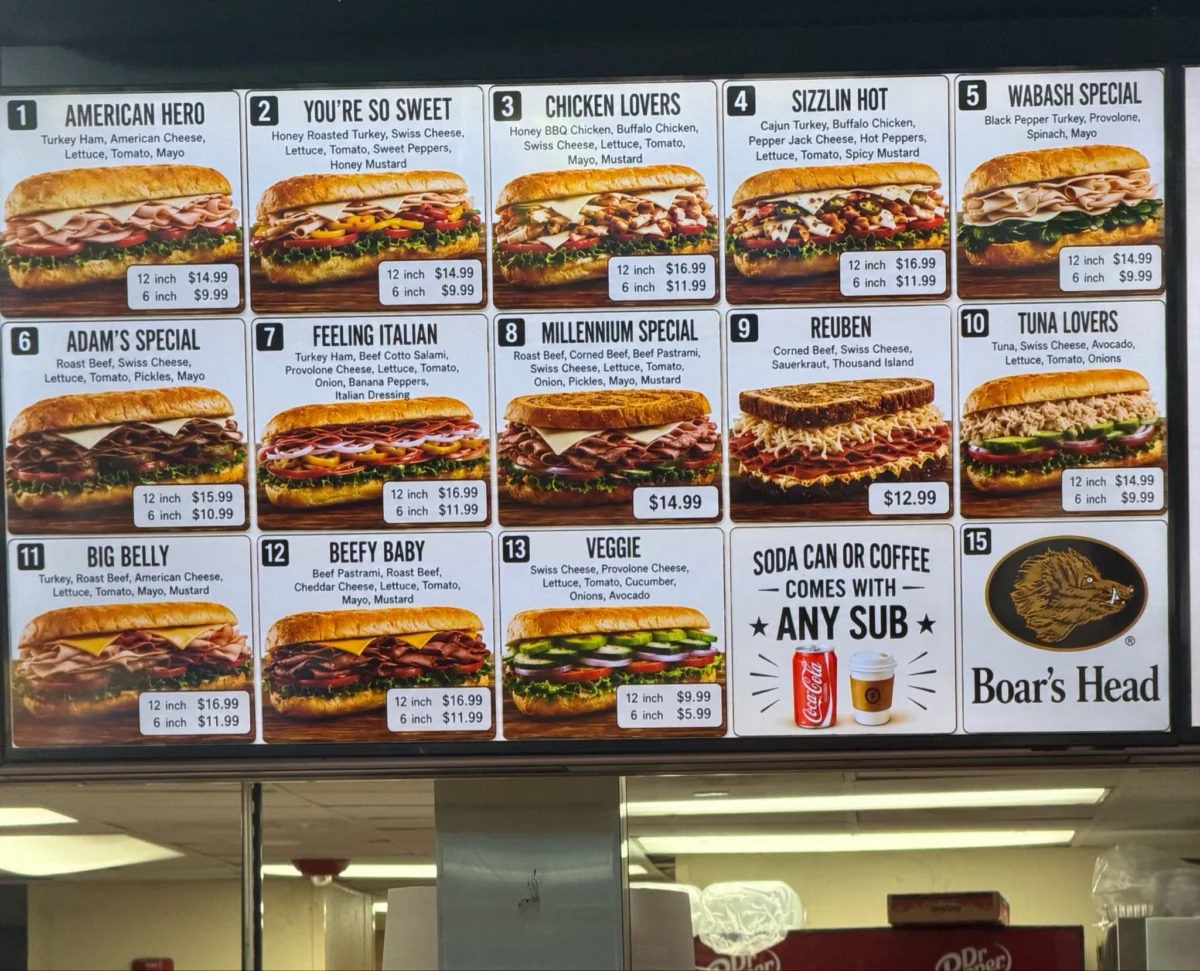
"AI-generated food imagery creates a psychological conflict between recognition and revulsion, triggering evolutionary survival instincts that associate unnatural patterns with contamination and disease."
As generative artificial intelligence moves from experimental software to a ubiquitous tool for small businesses, a new phenomenon known as "AI food slop" is transforming the visual landscape of the hospitality industry. While intended to reduce marketing costs, these hyperrealistic yet biologically improbable images are frequently inducing physical discomfort in consumers, highlighting a significant disconnect between technological efficiency and human biological response.
The shift began subtly, but by late 2026, the transition has become unavoidable for urban commuters. Chris Murphy, a professional based in Chicago, recently experienced this digital-to-physical friction at his local deli. For years, the establishment had relied on standard menu boards featuring text and generic photography. However, during a routine visit in late August, Murphy found the menu replaced by a high-definition screen displaying sandwiches that appeared both hyper-vivid and deeply unsettling. The images featured "AI slop"—a term used to describe low-effort, generative content—characterized by strange, repeated textures and structural inconsistencies that made the food look "aggressively fake."
The reaction from Murphy and his colleagues was not merely one of aesthetic disappointment; it was visceral. Upon seeing the images, Murphy’s coworkers reportedly recoiled, with some describing a feeling of nausea. This reaction is becoming a common data point in a broader trend where AI-generated signage is replacing traditional advertisements. From public flyers to restaurant menus, these "uncanny" depictions are sparking a backlash that transcends simple preference, tapping into deep-seated psychological triggers.
Psychologists suggest there is a clinical reason why humans find these images so repulsive. Dr. Stephanie Sarkis explains that when an image appears almost human or almost organic but contains "glitches" or unnatural repetitions, the human brain enters a state of "approach and avoidance" conflict. The brain recognizes the object as food—something to approach—but simultaneously detects that something is fundamentally "wrong" with the texture or structure, triggering an avoidance response. This cognitive dissonance creates anxiety and an urge to look away, yet the brain remains fixated as it attempts to resolve the visual paradox.
For a specific segment of the population, the impact is even more severe. The repetitive, swirling patterns and porous textures often found in AI-generated imagery can trigger trypophobia—an intense aversion or disgust toward patterns of small holes or bumps. While the condition varies in severity, the "AI food slop" style, which often over-renders textures to the point of looking like a cluster of cells or parasites, acts as a direct catalyst for trypophobic distress.
According to Dr. Sarkis, these reactions are rooted in evolutionary biology. Throughout human history, the sight of irregular patterns, mold-like textures, or "bizarre" biological structures served as a warning of contamination, decay, or parasitic infection. When a digital menu displays a Reuben sandwich with bread that appears to have a repetitive, honeycomb-like pore structure, the primitive brain does not see a "cost-saving marketing tool"; it sees a potential biohazard. "Our brain goes, ‘We need to look at that and make sure it’s not bad,’" Sarkis notes. "The problem is that if you look at it again, it doesn’t stop the reaction; it can actually intensify it."
This biological rejection is mirrored by a growing social and political skepticism toward AI. By mid-2026, public sentiment regarding Big Tech has shifted toward caution. Data from a Pew Research Center survey conducted in August 2026 reveals that 55% of adults under the age of 30 are more concerned than excited about the integration of AI into daily life. Furthermore, a July 2026 YouGov poll found that 70% of Americans believe technology companies have amassed too much power. The proliferation of "AI slop" in the food industry has become a visible symbol of this perceived overreach, where the pursuit of automation is seen as a disregard for the human experience.
The professional creative community is also sounding the alarm. Emily Hawkes, a New York-based food photographer, argues that the "innateness" of food is something AI struggles to replicate. In her view, the goal of food photography is "appetite appeal"—a psychological state where a viewer can imagine the taste, temperature, and texture of a dish. AI-generated images, by contrast, often lack the "truthfulness" that makes food appetizing. Hawkes observes that even consumers who aren’t trained in visual arts can "feel in their bones" when an image of food is fraudulent.
"When people see something that makes them actually hungry, it’s because they’re seeing something real," Hawkes explains. "They’re seeing something that they can imagine themselves eating. I struggle to see a world where AI could ever really capture that."
The "slippery slope" argument is a recurring theme among critics of the trend. For consumers like Murphy, the use of AI in menus raises questions about the integrity of the establishment itself. If a restaurant is willing to use "horror slop" to represent its offerings, customers begin to doubt the quality of the actual ingredients and the care put into the cooking process. There is a fear that the automation of imagery is merely the first step toward the automation of flavor, leading to a future where ChatGPT-generated recipes and synthetic ingredients become the norm, further distancing the act of eating from its cultural and biological roots.
For businesses looking to avoid this pitfall, the solution may lie in returning to simpler, more authentic methods. Hawkes suggests that even a high-quality smartphone photo taken by a business owner is superior to an AI-generated image because it represents the actual product. For those on a tight budget, she recommends collaborating with student photographers or utilizing DIY tutorials rather than relying on generative algorithms. The human element—imperfections and all—is what ultimately builds trust and appetite.
For the public, the immediate remedy for the "ick" factor of AI slop is psychological grounding. Dr. Sarkis recommends that individuals who feel distressed by these images engage in grounding exercises, such as the "3-3-3 rule": identifying three things they can hear, three things they can see, and three things they can touch in their immediate, real-world environment. This helps shift the brain’s focus away from the digital uncanny and back to physical reality.
As the "AI food slop" trend continues to meet resistance, it serves as a powerful case study in the limits of technology. While AI can generate an image of a sandwich in seconds, it cannot yet navigate the complex evolutionary and psychological landscape of human hunger. The backlash suggests that for an industry built on the most fundamental of human needs, authenticity remains the most valuable ingredient. Until AI can replicate the "appetite appeal" of a real meal, its presence on the menu may continue to do more to suppress appetites than to stimulate them.
