
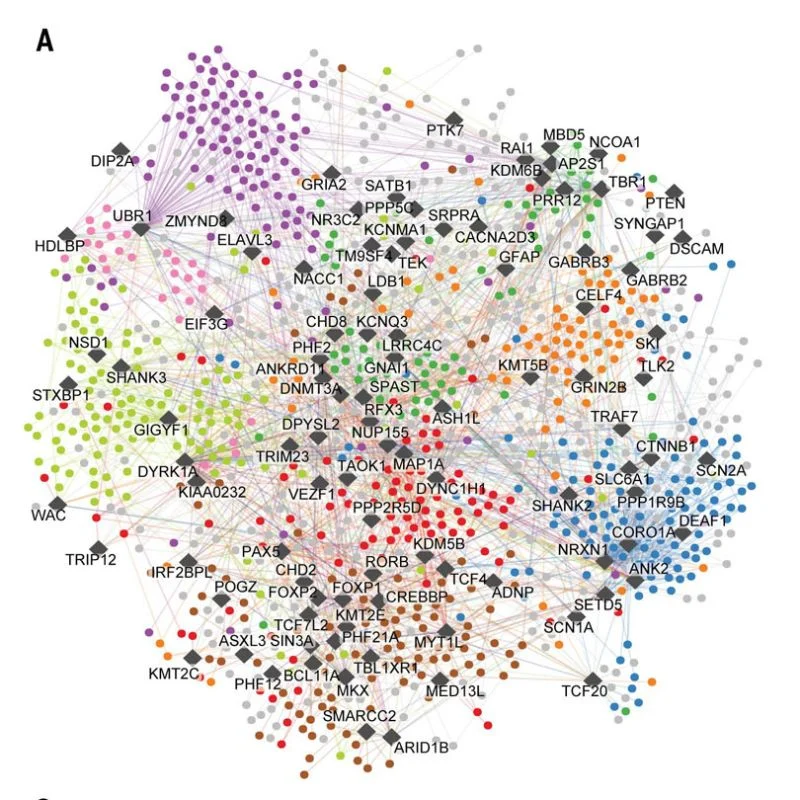
"By shifting focus from individual genetic mutations to the complex ‘wiring diagram’ of protein interactions, researchers have created a transformative blueprint that could lead to the first-ever biological treatments for autism spectrum disorder."
This landmark breakthrough, powered by artificial intelligence and lab-grown human brain tissue, moves beyond simply identifying the genetic "parts list" of autism to understanding the functional machinery of the developing brain. By mapping how hundreds of disparate genetic mutations converge on shared protein pathways, scientists have provided a concrete roadmap for drug discovery that could eventually offer precision medicine for a condition that has long eluded standardized medical intervention.
For decades, the search for a definitive treatment for autism spectrum disorder (ASD) has been hindered by the sheer complexity of its genetic architecture. With more than 250 different genes currently associated with the condition, researchers were essentially looking at a massive collection of individual locks, each requiring a unique key. However, a groundbreaking study published in the journal Science suggests that these hundreds of genetic mutations may actually impact the brain through a much smaller, more manageable number of shared biological pathways. By focusing on how these genes influence protein-protein interactions, scientists have shifted the paradigm from genomic sequencing to functional proteomics, opening a new door for therapeutic development.
The study, led by Dr. Nevan Krogan, a professor at the University of California, San Francisco (UCSF) and a senior investigator at the Gladstone Institutes, utilized a sophisticated combination of CRISPR gene editing, artificial intelligence, and brain organoids—tiny, lab-grown clusters of cells that mimic the early stages of human brain development. This multi-disciplinary approach allowed the team to systematically map out how genetic mutations tied to autism physically rewire the brain’s internal communication systems. The resulting molecular map is the largest of its kind ever created for a neuropsychiatric disorder, identifying more than 1,800 protein-protein interactions, a staggering 87% of which had never been previously documented in the context of autism.
To understand the significance of this "wiring diagram," one must understand the relationship between genes and proteins. While genes provide the instructions, proteins are the actual "workhorses" of the cell; they build the structures of the brain and facilitate the chemical signals that allow neurons to communicate. "When you have the genes and the mutations, that’s just a list. That’s a parts list," Dr. Krogan explained. "What you need to do is have a wiring diagram of that parts list, and that’s where you need to go to the proteins. Understanding how the proteins talk to one another and what happens when you introduce a mutation provides therapeutic roads that were previously unimaginable."
A critical component of this discovery was the use of AlphaFold, an advanced AI system developed by Google DeepMind that can predict the 3D structures of proteins with incredible accuracy. By using AI to prioritize which mutations were most likely to disrupt brain development, the researchers could focus their lab work on the most high-impact biological changes. These findings were then validated in brain organoids, which provide a more accurate model of human neurodevelopment than traditional animal models. This synthesis of "dry lab" computational power and "wet lab" biological validation has accelerated the pace of discovery, allowing the team to already launch three separate programs aimed at developing potential new therapies based on the study’s data.
The implications of this research are particularly profound for individuals with what is classified as "profound autism." This group, which represents approximately 30% of the autistic population, often requires 24-hour care and may be non-verbal or have significant intellectual disabilities. For these families, the promise of precision medicine is not about changing who the individual is, but about addressing the underlying biological challenges that can lead to severe distress or physical limitations. Alison Singer, president of the nonprofit Autism Science Foundation, described the study as a "huge watershed moment." She noted that for families of people with profound autism, the hope has always been to move beyond merely managing symptoms and behaviors to addressing the core neurobiology of the condition.
Beyond autism, the researchers believe this protein-mapping approach could have a "halo effect" on the study of other complex conditions. Because many of the protein pathways involved in autism also play roles in other neurological and systemic diseases, this map could provide insights into schizophrenia, obsessive-compulsive disorder (OCD), tic disorders, and even certain types of cancer. By identifying where these different conditions converge on the same molecular "hubs," scientists may be able to develop drugs that have broad applications across multiple diagnostic categories.
However, despite the excitement within the scientific community, experts caution that the road from a molecular map to a pharmacy shelf is long and arduous. Dr. Andy Shih, Chief Science Officer at Autism Speaks, emphasized that while the study provides invaluable targets for future research, translating these discoveries into safe and effective clinical applications will take years of rigorous testing. The process of drug discovery involves identifying a target, creating a molecule to interact with that target, and then moving through multiple phases of clinical trials to ensure that the intervention does not cause unintended harm to the delicate environment of the developing brain.
The timing of this scientific leap also coincides with a period of significant political and administrative transition in the United States. The Department of Health and Human Services (HHS), under the second Trump administration, is currently overseeing the Interagency Autism Coordinating Committee (IACC), which is responsible for setting the national strategic plan for autism research. There is ongoing debate within the advocacy community regarding the direction of this federal plan. Some advocates, like Alison Singer, have expressed concern that the new draft plan may deemphasize genetics and neurobiology in favor of a "broad injury model" that includes unproven links between vaccines and autism.
Singer warned that redirecting federal funding away from biological and genetic research could slow the momentum generated by breakthroughs like the UCSF study. "Redirecting limited federal research investments away from the strongest biological evidence will slow scientific progress precisely when these types of unprecedented opportunities for therapeutic development are emerging," she noted. Conversely, Dr. Andy Shih of Autism Speaks expressed a more optimistic view, suggesting that the strategic plan’s interest in "developmental trajectories" will naturally lead to continued investment in large-scale, data-driven genetic and proteomic studies.
The scientific community remains focused on the data. The ability to see, for the first time, the physical intersections where hundreds of different genetic risks meet is a fundamental shift in how we view neurodiversity. If the "parts list" of the human brain is the alphabet, this new protein map represents the first time scientists have been able to read the sentences and paragraphs that describe how autism develops. While the "cure" for autism remains a controversial and complex topic—with many in the neurodiversity movement emphasizing acceptance over medical intervention—the ability to offer targeted biological support for those with the most severe challenges represents a monumental step forward in medical science.
As the research moves into the next phase, the focus will be on "stabilizing" the protein complexes that the map identified as disrupted. Instead of trying to fix a mutation in a person’s DNA—a feat that remains largely in the realm of science fiction for most conditions—doctors may eventually be able to prescribe medications that simply help the proteins interact more effectively, bypassing the genetic error entirely. This "functional" approach to medicine is the cornerstone of the next generation of healthcare, and for the millions of families affected by autism, it provides a clearer path toward a future where the biological underpinnings of the disorder are no longer a mystery, but a manageable reality.
