
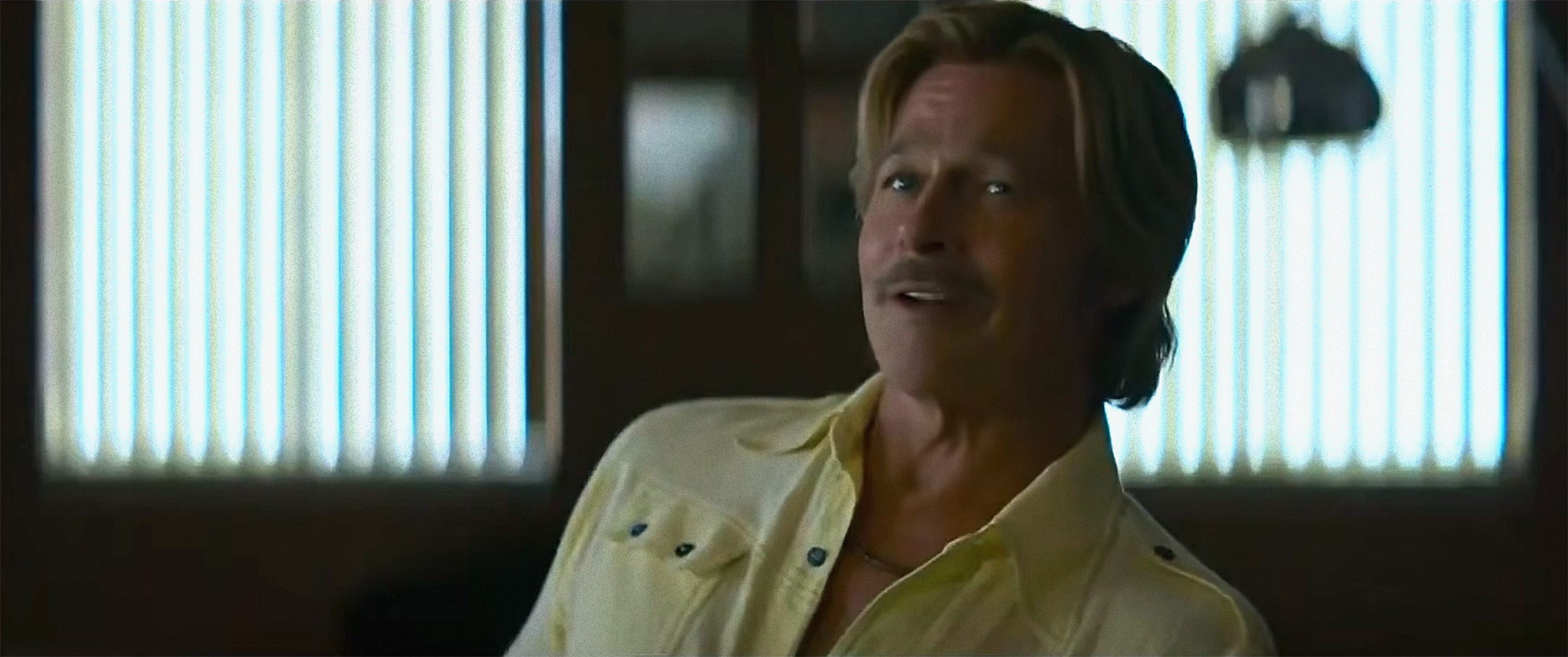
"The collaboration between David Fincher and Quentin Tarantino represents a rare convergence of two era-defining visions, transforming a discarded script into a high-stakes expansion of the Once Upon a Time in Hollywood universe."
The announcement of The Adventures of Cliff Booth—a project born from a discarded Quentin Tarantino script and brought to life by the meticulous direction of David Fincher—marks a pivotal moment in contemporary cinema. By reuniting Brad Pitt with his Oscar-winning role under the aegis of Netflix, the project bridges the gap between traditional auteur filmmaking and the modern streaming landscape, promising a stylistic synthesis of Tarantino’s historical revisionism and Fincher’s clinical, atmospheric precision.
The Genesis of an Improbable Alliance
In the annals of Hollywood lore, certain projects carry an air of myth before a single frame is ever captured. When news first broke on April 1, 2025, regarding a quasi-sequel to Quentin Tarantino’s 2019 masterpiece, Once Upon a Time in Hollywood, the industry reacted with a mixture of exhilaration and skepticism. The project, tentatively titled The Adventures of Cliff Booth, appeared to be the ultimate "what if" scenario for cinephiles. Tarantino, a director famously committed to a self-imposed ten-film limit, had originally penned the script as a potential final chapter to his storied career. However, as his creative interests pivoted, the script was shelved, seemingly destined to remain a lost relic of the "Tarantino-verse."
The resurrection of the project is credited largely to Brad Pitt. Having secured an Academy Award for his portrayal of the laconic, enigmatic stuntman Cliff Booth, Pitt remained deeply invested in the character’s trajectory. With Tarantino’s blessing, Pitt facilitated a deal that would see the script handed over to David Fincher. This transition is historically significant; while Tarantino has occasionally written scripts for others to direct—most notably True Romance (Tony Scott) and Natural Born Killers (Oliver Stone)—this marks the first time his work will be interpreted by a contemporary peer of Fincher’s stature.
The Super Bowl LX Revelation
Validation of the project’s reality arrived during Super Bowl LX in early 2026. Netflix, which holds an exclusive multi-year deal with Fincher, opted for a marketing strategy defined by restraint and atmosphere. The one-minute teaser lacked the standard industry tropes: there were no title cards, no release dates, and no explicit mentions of the high-profile creators involved. Instead, the footage leaned heavily into a "scratchy, dirty" 1970s aesthetic, signaling a departure from the sun-drenched, saturated palette of Tarantino’s original film.
This minimalist approach reflects a supreme confidence on the part of Netflix. By allowing the imagery and the character of Cliff Booth to speak for themselves, the streaming giant is betting on the inherent "cool" of the brand. The teaser presented a gritty, celluloid-heavy look that suggests Fincher may be stepping outside his usual digital precision to honor the period-accurate grime of the 1970s stuntman subculture.

Stylistic Synthesis: The Fincher Lens on the Tarantino Page
The primary intrigue of The Adventures of Cliff Booth lies in the collision of two distinct directorial philosophies. Quentin Tarantino’s writing is characterized by its loquaciousness, pop-culture obsession, and explosive bursts of violence. David Fincher, conversely, is known for his technical perfectionism, cold palettes, and a thematic preoccupation with obsession and the darker machinations of the human psyche.
Fincher has a proven track record of elevating high-caliber scripts through his specific lens. His work on Aaron Sorkin’s The Social Network demonstrated an ability to take dense, rhythmic dialogue and frame it within a sleek, compelling visual narrative that feels uniquely his own. In The Adventures of Cliff Booth, Fincher is tasked with navigating the "stuntman world" that Tarantino built—a world defined by masculinity, unspoken trauma, and the fading glitz of old Hollywood.
While Tarantino’s Once Upon a Time in Hollywood served as a love letter to a lost era, Fincher’s interpretation may lean into the more procedural or shadowy elements of Cliff Booth’s life. Booth is, after all, a character with a dark reputation; the original film teased a murky past involving the death of his wife and his experiences as a war veteran. Fincher, the man behind Se7en and Zodiac, is perhaps the only director capable of mining that darkness while maintaining the character’s effortless charisma.
The Return of the Stuntman: Brad Pitt in 2026
At 62, Brad Pitt remains one of the few true "movie stars" capable of anchoring a project of this magnitude. While his personal life has faced public scrutiny and controversy in recent years, his professional output continues to command respect. His recent filmography shows a deliberate balance between blockbuster spectacle and prestige drama. His 2025 project, F1, not only satisfied the demand for high-octane adventure but also secured a Best Picture nomination, reaffirming his status as a critical and commercial powerhouse.
In The Adventures of Cliff Booth, Pitt reprises a role that fits him like a second skin. The teaser reveals a Booth who has aged into a new era of Hollywood, now sporting a distinctive mustache and navigating a world where he has become something of a local legend. Having dispatched the Manson Family intruders in the previous film, Booth’s status in the industry has shifted from a pariah to a man of mystery. The film appears to follow his further exploits in the stunt community, likely interacting with the evolving landscape of 1970s cinema.
An Expanded Ensemble
While the focus remains on Pitt, the supporting cast suggests a broad narrative scope. Timothy Olyphant returns as James Stacy, the real-life actor and star of Lancer, providing a tangible link to the events of the 2019 film. New additions include Elizabeth Debicki, coming off the success of the period horror hit MaXXXine, and Yahya Abdul-Mateen II, whose presence suggests the film may explore the diversifying landscape of 1970s entertainment. Scott Caan also joins the cast, adding to the rugged, character-driven ensemble that Fincher typically assembles.
The inclusion of these actors hints at a story that moves beyond the immediate orbit of Rick Dalton (Leonardo DiCaprio’s character). While Dalton was the emotional core of the first film, The Adventures of Cliff Booth seems poised to explore the periphery of the industry—the bars, the backlots, and the dangerous side-gigs that defined the life of a Hollywood "go-fer" and stuntman.

The Netflix Paradigm and Auteur Freedom
The project also serves as a case study for the current state of the film industry. David Fincher has not released a film with a traditional box office footprint since 2014’s Gone Girl. His subsequent works—Mank, The Killer, and the series Mindhunter—have lived exclusively on Netflix. While this has deprived audiences of the "empirical data" provided by box office totals, it has granted Fincher a level of creative autonomy rarely seen in the studio system.
Netflix’s willingness to fund a Tarantino-scripted, Fincher-directed sequel to a Sony-produced film is a testament to the platform’s desire for "prestige IP." By securing the rights to this project, Netflix is not just buying a sequel; they are purchasing a piece of cinematic history. The lack of a release date in the marketing suggests a "when it’s ready" approach, allowing Fincher the time required for his legendary multi-take process and rigorous post-production.
Managing Expectations: Sequel or Standalone?
The inevitable question facing The Adventures of Cliff Booth is whether it can live up to its predecessor. Once Upon a Time in Hollywood was a lightning-in-a-bottle moment—a $377 million-grossing original film that captured the zeitgeist. In an era of "legacy sequels" and "reboots," there is a valid concern that expanding the story of Cliff Booth could dilute the character’s mystique.
However, the pedigree of the talent involved argues against a mere "cash-in." Tarantino does not relinquish his scripts lightly, and Fincher does not choose projects for their commercial ease. This collaboration is less about brand extension and more about a shared curiosity between two masters of the craft. They are exploring a character who represents a bygone era of American manliness, placed within a narrative framework that rewards patience and atmosphere over typical plot beats.
As the industry looks toward the eventual release of the film, the sentiment remains one of cautious optimism. The resumes of Pitt, Fincher, and Tarantino provide a foundation of excellence that few other projects can claim. If the Super Bowl teaser is any indication, The Adventures of Cliff Booth will be a visceral, stylish, and perhaps darker journey into the heart of 1970s Hollywood—a film that stands on its own merits while honoring the legend of the man who once fought Bruce Lee and lived to tell the tale.