

"Our daughter’s needless death from sepsis, six years ago, revealed a postcode lottery in critical care. We are haunted by the fact that mandatory, standalone sepsis training is still not universal in Wales, leaving countless lives at risk from this preventable killer."

The heart-wrenching loss of 21-year-old Bethan James to sepsis, pneumonia, and Crohn’s disease in 2020 has ignited a fervent campaign by her grieving parents, Jane and Steve James, for systemic change in how sepsis is recognised and treated across Wales. Their daughter’s story, marked by delayed diagnosis and missed opportunities for life-saving intervention, tragically underscores a critical failing within the Welsh healthcare system: a persistent lack of mandatory, comprehensive sepsis awareness training for frontline medical staff. A recent BBC investigation has starkly revealed that this vital education remains optional in many Welsh hospitals, including the very institution where Bethan passed away, raising profound questions about patient safety and the equitable provision of care.
Bethan James was a vibrant young woman, in the final year of her journalism degree at the University of South Wales, who once shared her dreams of a partner, a fulfilling job, and perhaps children by 2026 on her YouTube channel. Those aspirations were cruelly extinguished when she died at just 21, a devastating outcome her parents firmly believe could have been prevented. Her passing, six years ago this month, from a combination of sepsis, pneumonia, and underlying Crohn’s disease, was compounded by what they describe as a failure to spot the signs of sepsis early enough and a subsequent delay in life-saving care.

"She was just the kindest, most caring, loving person and she had so much to give," shared her mother, Jane, a physiotherapist from Cardiff. Her father, Steve James, a former England cricket international who captained Glamorgan and played two Test matches for England in 1998, echoed the profound grief: "It just pulls at your heartstrings thinking, where would Bethan be today and what would she be doing? We still go about daily things, but underneath there’s just this total devastation and so many dark, dark moments. It’s a totally abnormal life we live." Their anguish fuels their unwavering commitment to ensure no other family endures such a preventable tragedy.
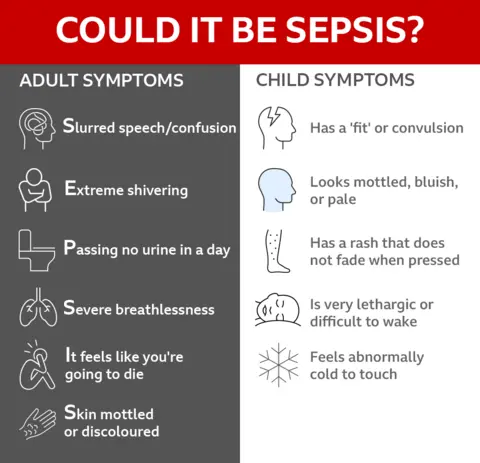
Sepsis, a severe and life-threatening complication of an infection, occurs when the body’s immune system overreacts to an infection, mistakenly attacking its own tissues and organs. It can lead to organ damage, septic shock, and death if not treated quickly. The UK Sepsis Trust estimates that approximately 48,000 individuals succumb to sepsis-related illnesses each year in the UK, with "thousands" of these deaths considered preventable. Early recognition and rapid administration of antibiotics are paramount, often referred to as the "golden hour" in critical care, as every hour of delay in giving life-saving treatment significantly diminishes a patient’s chance of survival, particularly in rapidly progressing cases like Bethan’s.

The BBC investigation’s findings illuminate a worrying inconsistency in sepsis awareness training across Wales. Despite the pervasive visual cues of "sepsis posters on lifts and walls" within hospitals, Jane James laments, "if their actual frontline staff can’t recognise the symptoms of sepsis, it just beggars belief." This stark disconnect between visible awareness campaigns and the actual competence of medical personnel is at the heart of the James family’s campaign. The University Hospital of Wales in Cardiff, where Bethan died, is notably among those where sepsis awareness training is not mandatory.
Bethan’s critical illness unfolded over ten days, during which she made five trips to hospital. Her parents observed alarming symptoms that were, to their dismay, repeatedly dismissed. "They were just quite dismissive of her symptoms," Jane recalled, highlighting Bethan’s high heart rate and low blood pressure—classic red flags for sepsis. Days later, her condition deteriorated further, prompting another hospital visit where she encountered the same doctor. Steve James vividly remembers a medic assuring them Bethan would recover within two weeks, an assurance that led him to travel to Ireland to cover a Six Nations rugby match. "Even on the Saturday when she died, [Bethan] kept saying to Jane ‘that doctor said I was going to be OK.’ I went to Ireland. That’s a decision I’ve got to live with the rest of my life – I regret it so deeply, but I just took his word."
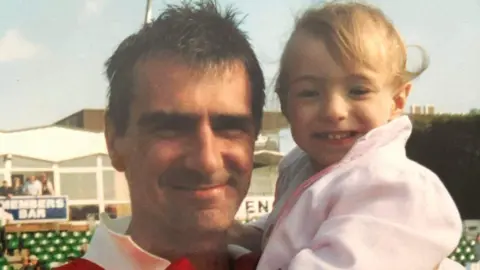
The critical turning point came when Bethan’s condition rapidly worsened, leading Jane to dial 999. A paramedic arrived at their Cardiff home, observing her temperature, grey complexion, cold skin, and chest pain. Crucially, the paramedic was unable to record Bethan’s blood pressure because it was dangerously low—all unmistakable indicators of severe infection. Despite these critical signs, and Bethan registering a National Early Warning Score (NEWS) of eight (anything above seven signals a severe risk of sepsis requiring urgent medical review in an acute care setting), the paramedic failed to recognise the potential for sepsis. Consequently, Bethan was not classed as a priority for ambulance transfer, nor was the hospital forewarned.
Upon their arrival at the University Hospital of Wales at almost 20:00 GMT, there was no resuscitation bed prepared for her. Jane described the scene in A&E as "chaos," with "no-one taking overall care of Bethan." She recounted Bethan’s deteriorating state: "Her blood pressure was so low, her lips were going blue, she was all blotchy, she was breathing really fast to try and get air in. The nurse that triaged her should have known that it was sepsis with a NEWS score of eight." It was almost an hour after admission before Bethan was transferred to the resuscitation unit, where tests finally confirmed sepsis and antibiotics were administered. Tragically, it was too late. "The doctor said to Bethan ‘we think you’ve got sepsis’," Jane recounted. "That’s the last thing she heard. They asked me to leave. She had a cardiac arrest about five minutes later and died at 22:00." Steve, frantically driving back from Heathrow, received the devastating news of his daughter’s death while on the M4.

The BBC’s Freedom of Information request to all health boards in Wales further exposed the systemic shortcomings. Where sepsis training existed, it was often embedded within broader modules rather than being a standalone, focused programme. Furthermore, the auditing of training completion rates was found to be "patchy," with some health boards not logging these crucial metrics at all. Dr. Ron Daniels, Chief Medical Officer for the UK Sepsis Trust, expressed profound dismay, labelling the situation "absolutely shocking." He stated, "This is one of the biggest killers we face. For hospitals not to ensure that their staff are regularly trained is almost negligent. It’s letting people die because their staff are not trained, but they also perceive that their organisation doesn’t take this condition seriously." The UK Sepsis Trust advocates strongly for mandatory, standalone sepsis awareness training for all clinical hospital staff to ensure the earliest possible detection and intervention.
Beyond training, the "postcode lottery" in pre-hospital care and patient advocacy mechanisms is another critical concern. In Wales, the "Call for Concern" scheme, allowing staff, patients, and carers to seek a second opinion for deteriorating inpatients, has been partially rolled out in some health boards, but notably excludes outpatient areas like A&E units. This contrasts sharply with England’s "Martha’s Rule," implemented after the death of 13-year-old Martha Mills from missed sepsis, which empowers families to seek an urgent second opinion for patients, including those in A&E. Bethan’s parents and the UK Sepsis Trust are vehemently calling for the adoption of Martha’s Rule, or an equivalent, in Wales that encompasses emergency departments.
Another stark disparity lies in the adherence to National Institute for Health and Care Excellence (NICE) guidelines, which advise ambulance services to administer antibiotics in sepsis cases where combined transfer and hospital handover times exceed one hour. A BBC survey of UK ambulance trusts revealed that only Scotland and the Isle of Wight fully adhere to this guideline, with one other, South Central in southern England, having partially implemented it. Dr. Daniels argues that given typical transit times, "pretty much every" ambulance service should be giving pre-hospital antibiotics. Steve James’s poignant observation, "If we lived in the Isle Of Wight, Bethan would be alive," encapsulates the devastating reality of this geographical disparity in care.
The Welsh Ambulance Service has apologised for "errors identified in Bethan’s case," stating that sepsis training is now mandatory and "meaningful changes" have been implemented. Cardiff and Vale University Health Board, overseeing the University Hospital of Wales, affirmed that "sepsis awareness and early recognition are priorities" and that they are "continuously reviewing sepsis training to improve consistency and accessibility." The Welsh government has also pledged that sepsis will be a "focus for NHS Wales improvement plans in 2026-27 to ensure consistent, high-quality care," citing "significant steps" including the use of National Early Warning Scores, new safety information for patients, and the rollout of Call4Concern in inpatient wards.

However, for Jane and Steve James, these assurances, while welcome, do not go far enough. They demand that the Welsh government mandate standalone, audited sepsis awareness training across all Welsh health boards and extend patient advocacy mechanisms like Martha’s Rule to cover A&E departments. "I think the worst thing is that I know she could have survived if she had the right treatment," Jane asserted. "I don’t want any other family to go through this – because she should still be here with us. We want changes to be made – and I feel like Bethan’s on my shoulder, saying this is what we need to do." Her fight is not just for Bethan, but for every potential victim of sepsis, urging the healthcare system to honour her daughter’s memory with tangible, life-saving reforms. The urgency for consistent, high-quality care, free from geographical lottery, has never been more evident.