
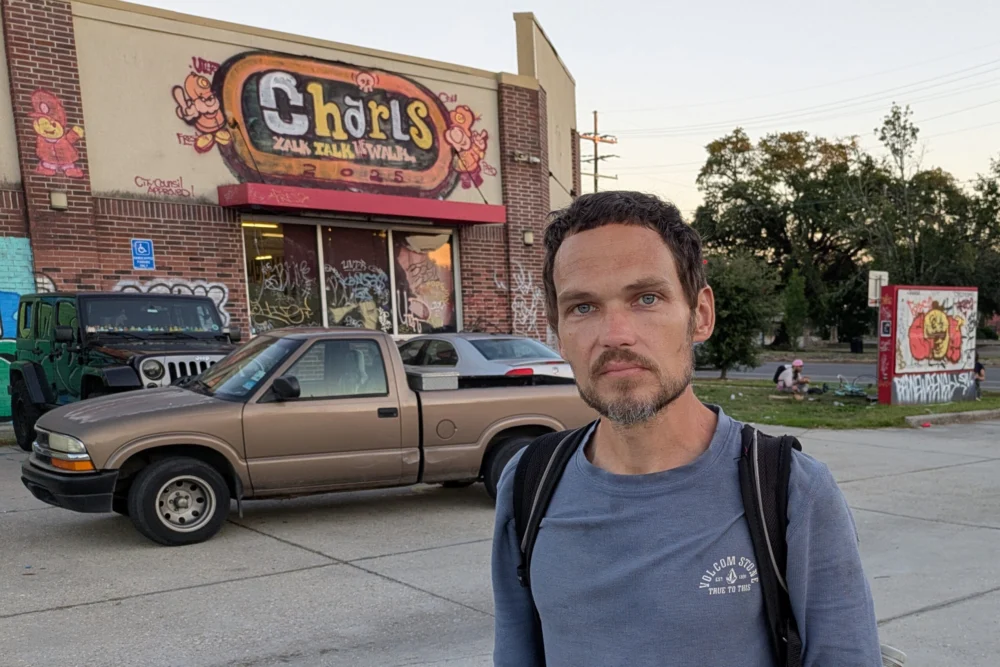
"This is something truly beautiful, to be able to share this space." This profound sentiment from Dan Bingler, the manager of the Fred Hampton Free Store, encapsulates the spirit of this vital community center. In a neighborhood still bearing the scars of Hurricane Katrina and facing increasing societal challenges, this former Family Dollar store has been transformed into a sanctuary of mutual aid and radical support. It stands as a stark contrast to its dilapidated exterior, offering a warm and functional haven for those often marginalized and underserved.
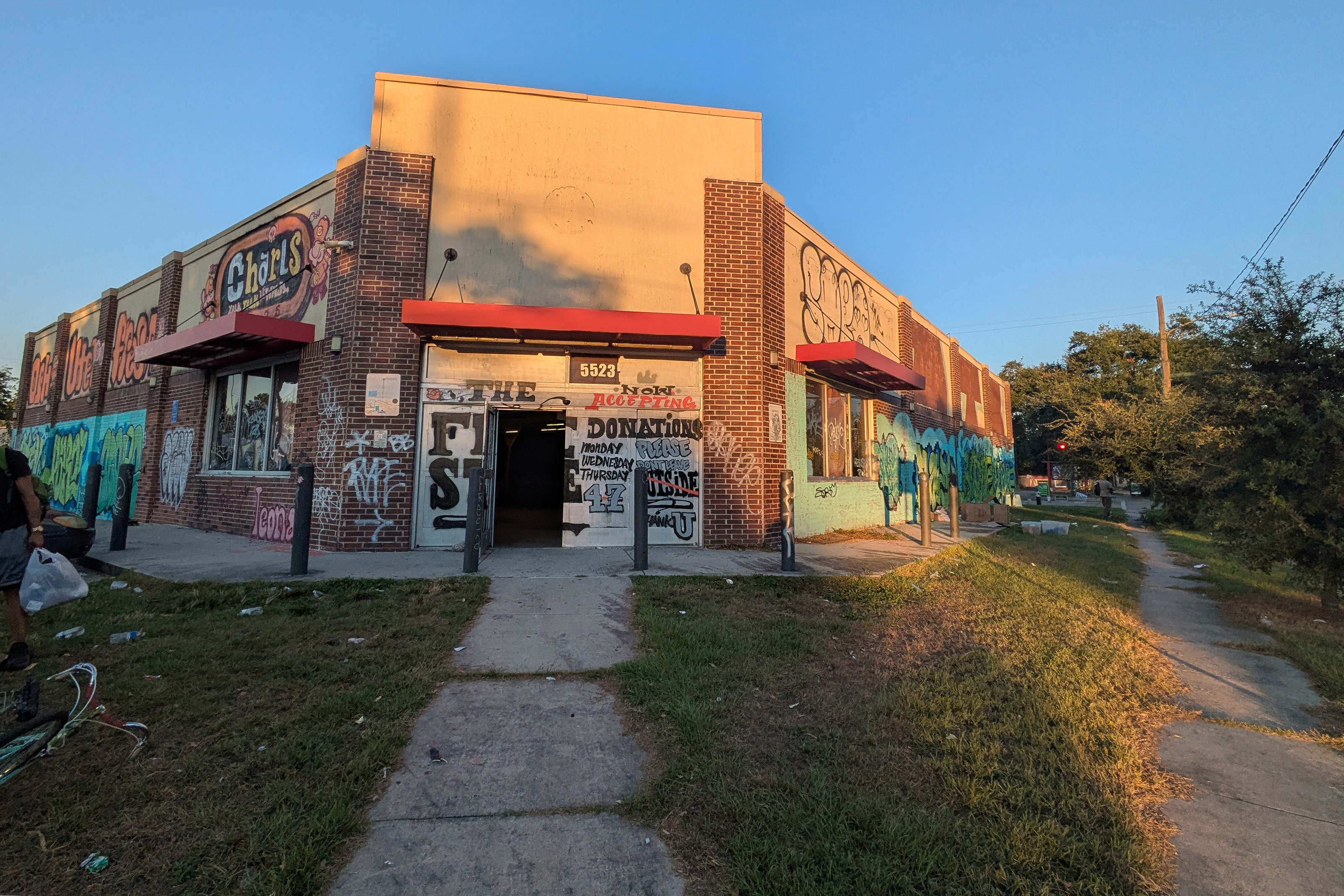
The transformation of the former Family Dollar store into the Fred Hampton Free Store presents a compelling narrative of resilience and community-driven care in the face of adversity. Located in New Orleans’ historically marginalized 9th Ward, an area still grappling with the long-term devastation of Hurricane Katrina, the unassuming building stands as a beacon of hope. From the outside, the graffiti-covered facade and littered parking lot might suggest abandonment, mirroring the persistent symbols of decay in a neighborhood that remains one of the city’s poorest. However, stepping inside reveals a dramatically different reality: a welcoming and resource-rich environment that serves as a critical lifeline for its community.
The interior of the Fred Hampton Free Store defies its exterior appearance, presenting a starkly contrasting atmosphere of warmth and utility. The space is meticulously organized, with hanging lights illuminating shelves stocked with donated clothing. Repositories overflow with children’s books, allergy medication, and essential personal hygiene items. A curtained-off section reveals a versatile lounge area, complete with a stage for local musicians and a neon roller skate sign, hinting at the weekly free roller skating nights that foster community engagement and joy. This multifaceted approach to community support is central to its identity.
Bingler, who also works as a waiter and bartender in New Orleans, founded the Greater New Orleans Caring Collective, a mutual aid organization that operates the space. He explained that the building’s owners generously allow the collective to use the property, provided they cover the costs of utilities and trash removal. This arrangement highlights a grassroots, self-sufficient model of operation, entirely reliant on community support rather than traditional funding streams.
The store functions as a dynamic hub, offering a free secondhand shop, an over-the-counter medicine dispensary, a venue for punk concerts, and, in Bingler’s words, "a radical community center." This description underscores its departure from conventional service models, embracing a more holistic and empowering approach to addressing community needs.
On Monday afternoons, the space buzzes with activity as volunteers from various community organizations converge. Some of these groups previously operated from the very parking lot that now hosts this indoor sanctuary. They provide essential services such as free sexually transmitted infection testing, basic medical care, hot meals, and sterile syringes and other supplies for individuals who use drugs. This consistent presence of vital harm reduction services is particularly crucial in an era of shifting federal policies.
Bingler’s stated mission for the center is refreshingly direct: "We are going to make sure we provide support to the community." This simple yet powerful declaration drives the organization’s operations and its significance in the current sociopolitical climate.
The Fred Hampton Free Store has become increasingly vital in recent months, a direct response to federal policy shifts under the Trump administration. Significant cuts to social service funding and an increasingly aggressive stance against homelessness and drug use have created a more challenging environment for vulnerable populations. In Washington D.C., the administration has taken measures such as clearing homeless encampments, pushing individuals out of public spaces, and advocating for mandatory treatment for drug users. Furthermore, the administration has signaled a move away from harm reduction strategies—methods widely recognized by public health experts as life-saving interventions for drug users, though criticized by some as enabling illegal substance use.
In this context, the Fred Hampton Free Store emerges as a crucial sanctuary, offering a stark contrast to these federal directives. Named in honor of Fred Hampton, a prominent Black Panther Party leader renowned for his efforts in uniting diverse groups for social reform, the center embodies his legacy of community empowerment and solidarity.
Bingler emphasized that the store operates entirely without federal funding, state or local grants, or financial backing from foundations. "It’s just neighbors helping neighbors," he stated, his voice thick with emotion. "It’s something truly beautiful, to be able to share this space." This reliance on peer-to-peer support underscores the power of community-based initiatives and their ability to fill critical gaps left by formal systems.
All the items available at the store are donations from individuals and organizations within the community. Bingler recounted an instance where a local hotel undergoing renovations donated 50 flat-screen televisions, illustrating the diverse and often unexpected ways the community contributes. On typical open nights, the store welcomes over 100 visitors, highlighting its significant reach and impact.
One autumn evening, dozens of people sought free clothing and over-the-counter medications. Others gathered on the lawn, engaged in conversation while keeping watch over their bicycles or grocery carts filled with their possessions. This scene illustrates the multifaceted nature of the community that utilizes the space, blending the practical exchange of goods with social connection and mutual support.
James Beshears, a user of sterile injection supplies from the harm reduction group operating in the parking lot, shared his experience. He spoke of his struggle with addiction, having relapsed after his doctor moved and he was referred to a clinic with prohibitively high daily costs. He noted that street drugs were more affordable than treatment, a stark reality for many facing financial barriers to care. Beshears expressed a strong desire to overcome his addiction, but until he can access affordable medical care, places like the Fred Hampton Free Store provide him with the support he needs to survive. He poignantly stated that without it, he would "have one foot in the grave."

Another individual, awaiting the arrival of Aquil Bey, a paramedic and former Army Special Forces member, expressed his need for assistance. Suffering from stage 4 kidney disease, he had scheduled hospital appointments but faced significant challenges in reaching them. Bey, a volunteer with Freestanding Communities, an organization dedicated to providing basic medical care and referrals to vulnerable populations, immediately began mobilizing resources. He and his team set up folding tables and medical equipment, offering to arrange transportation for the man and connecting him with low-cost transport programs.
Freestanding Communities maintains a consistent presence at the free store, offering vital services that bridge gaps in access to healthcare. On this particular evening, Bey’s team conducted blood pressure and blood sugar checks, treated infected wounds, and contacted clinics to schedule appointments for patients without phones. They are dedicated to identifying and addressing the myriad barriers that individuals face, working collaboratively to find solutions.
One man with a leg injury, who was sleeping on the concrete floor of an abandoned naval base, received a mattress from the store’s furniture section. Bey and another volunteer transported the mattress to the man’s makeshift shelter, demonstrating the practical and immediate impact of the store’s resources.
Stephen Wiltz, a lifelong resident of the Lower 9th Ward who has struggled with addiction since the age of 10, found crucial support at the free store’s clinic. Having experienced discrimination from healthcare providers who blamed him for his addiction, Wiltz had avoided treatment centers. However, after years of building trust with the store’s volunteers, he finally felt comfortable seeking guidance. At 56, Wiltz reported being in sustained recovery for the first time in his life, attributing his progress to the volunteers who "took care of people who had nobody to take care of them."
As dusk settled, the Fred Hampton Free Store transformed once again. A punk band prepared to perform in the same space that housed the medical clinic, the lights dimmed, and the music began to play loudly. This juxtaposition of a medical service area and a live music venue underscores the center’s unconventional yet effective approach. Bey, continuing his work, attended to a patient with gout, seemingly unfazed by the pulsating rhythms of the punk music. He remarked on his growing accustomed to the sound, even finding enjoyment in it, a testament to the unique and vibrant atmosphere of this radical community hub.