
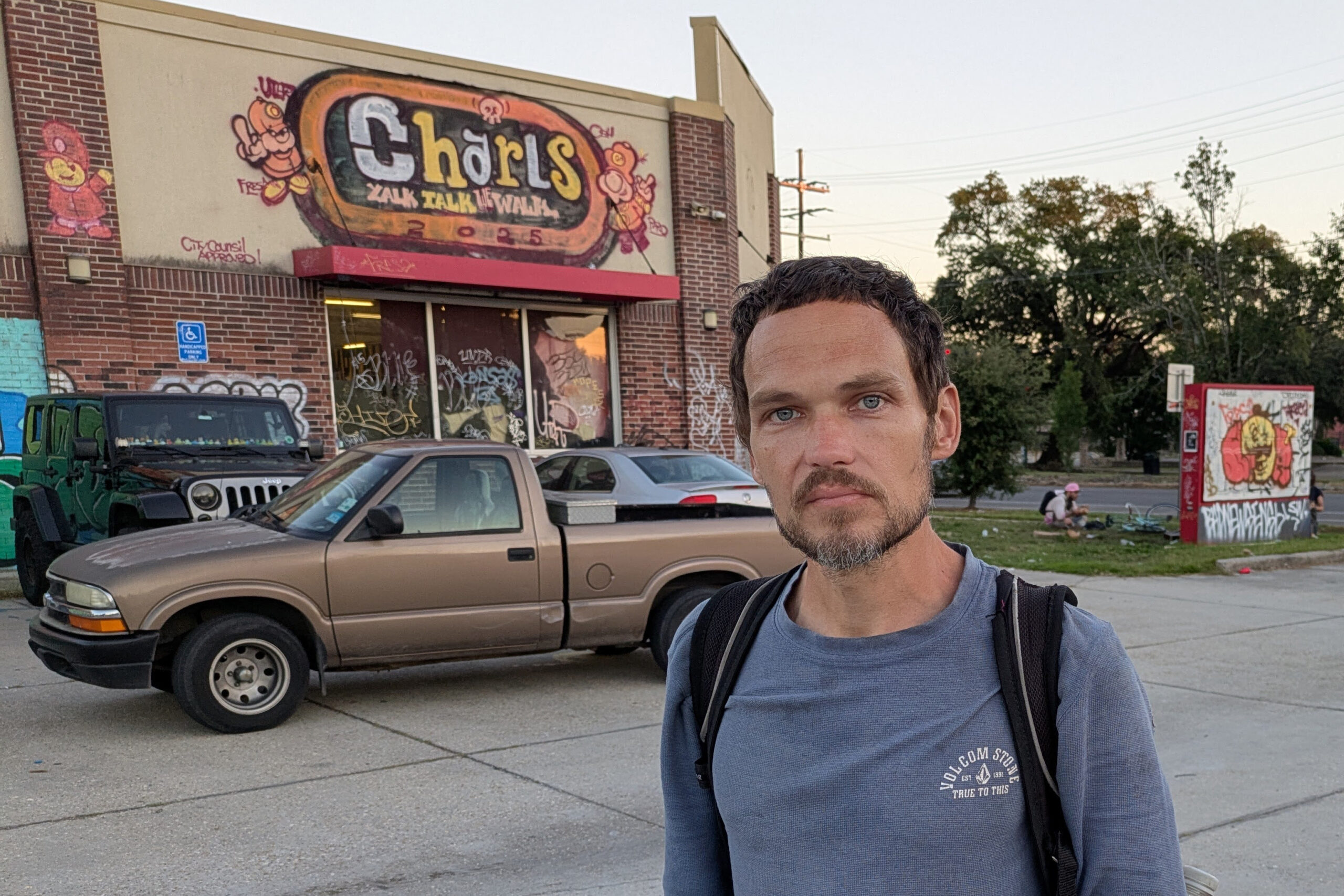
"In the heart of New Orleans’ Lower Ninth Ward, a former Family Dollar store transformed into a vibrant community center provides a crucial lifeline, offering everything from free clothing and healthcare to a space for radical self-expression, all while operating outside the reach of federal funding cuts and punitive social policies."
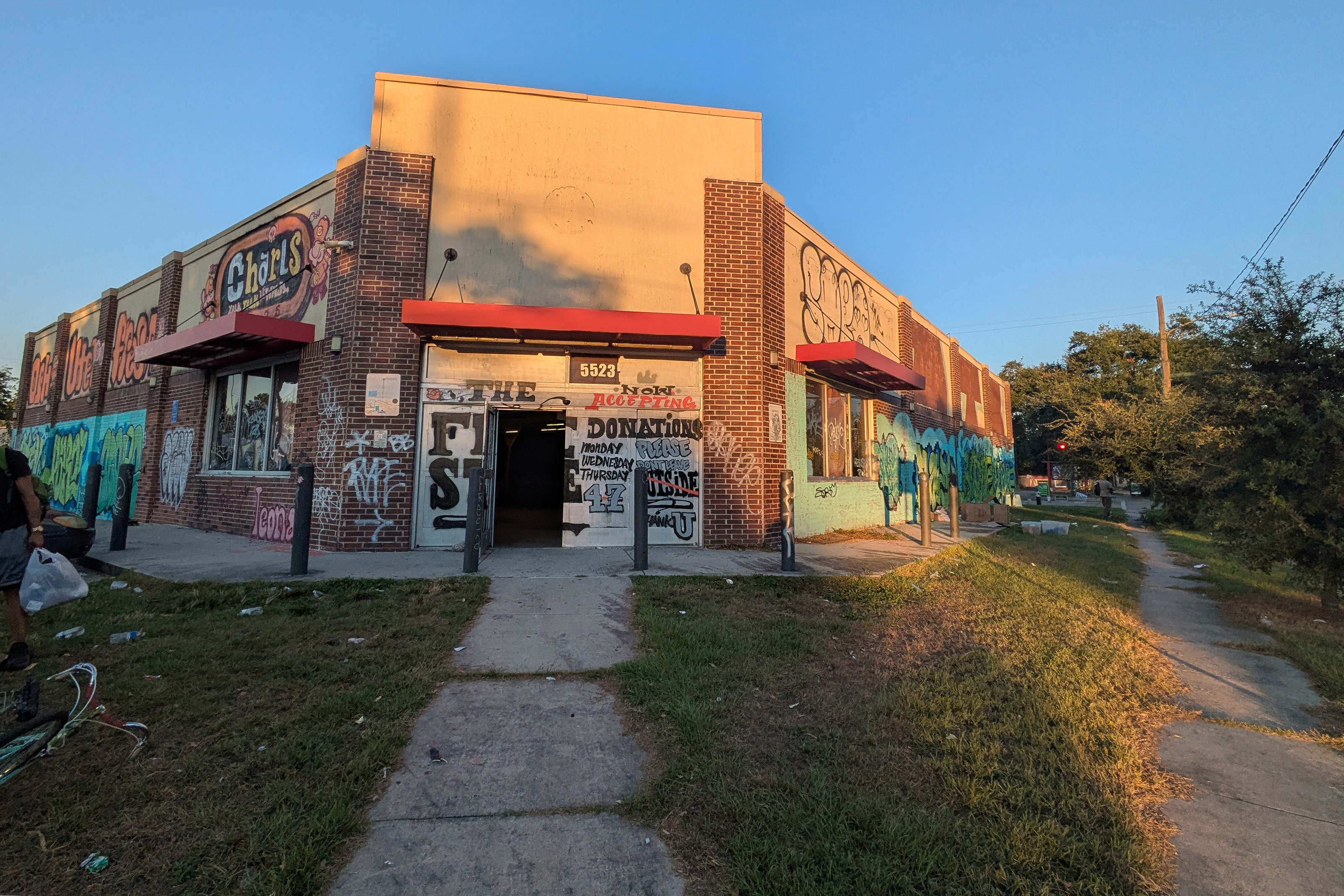
The stark contrast between the dilapidated exterior of the former Family Dollar store in New Orleans’ Lower Ninth Ward and its vibrant interior speaks volumes about its profound impact. Once a symbol of urban decay, marked by graffiti and scattered debris in its parking lot, this building now stands as a testament to resilience and community empowerment. Its transformation into the Fred Hampton Free Store represents a radical approach to social support, providing essential services and a sense of belonging in a neighborhood that has long borne the scars of systemic neglect and natural disaster. The store’s very existence is a quiet rebellion against broader societal trends that often criminalize poverty and addiction, offering a tangible sanctuary for those most vulnerable.
The Fred Hampton Free Store, located in a neighborhood that continues to grapple with the persistent devastation left by Hurricane Katrina, is more than just a physical space; it’s a beacon of hope and a hub for mutual aid. From the outside, the building’s current state of disrepair, with graffiti adorning its walls and refuse littering the parking lot, paints a grim picture. This is exacerbated by its location amidst vacant lots and crumbling structures, visual markers of the enduring struggles faced by one of the city’s most economically disadvantaged communities. Yet, stepping inside reveals a dramatically different reality. The interior is a welcoming haven, illuminated by decorative pendant lights that cast a warm glow on shelves stocked with donated clothing. Repositories overflow with children’s books, allergy medications, and personal hygiene items. Curtains delineate a versatile lounge area featuring a stage for musicians and a neon roller-skate sign, a nod to the weekly free skate nights that foster community engagement and joy.
Dan Bingler, the proprietor of this unique establishment, describes it as a "radical community center," a multifaceted space that functions as a free thrift store, an over-the-counter pharmacy, a venue for punk concerts, and much more. Bingler, who also works as a waiter and bartender in the city, founded the Greater New Orleans Caring Collective, an organization dedicated to mutual aid. He explained that the building’s owners generously allow him to use the space, provided he covers the essential utilities and waste removal costs. This arrangement underscores the grassroots nature of the operation, relying on community support rather than institutional funding.
On Monday afternoons, the space becomes a vital resource center, hosting volunteers from various community organizations. Some of these groups previously operated from the very parking lot that now serves as a gateway to the store. They offer critical services, including free testing for sexually transmitted infections, basic medical care, hot meals, sterile syringes, and other essential supplies for individuals who use drugs. Bingler’s simple yet powerful mission statement encapsulates the ethos of the center: "We are going to make sure that we provide support to the community." This commitment to direct, compassionate support stands in stark contrast to increasingly punitive approaches to social issues.
The Fred Hampton Free Store has become even more critical in recent months, a direct response to the shifting political landscape under the Trump administration. As federal funding for many social service organizations has been curtailed and the administration has adopted a more aggressive stance against homelessness and drug use, community-led initiatives like this one have become indispensable. In Washington D.C., the administration has engaged in efforts to clear homeless encampments, ostensibly to compel individuals to leave the city, and has advocated for mandatory treatment for those struggling with substance use and mental health issues. Furthermore, the administration has expressed skepticism towards harm reduction strategies – public health interventions aimed at minimizing the negative consequences of drug use, such as the provision of sterile syringes and overdose reversal drugs. While public health experts champion these strategies as life-saving and protective, critics argue they may inadvertently encourage illegal drug use.
In this context, the Fred Hampton Free Store, named in honor of the influential Black Panther Party leader Fred Hampton – a figure renowned for his ability to unite diverse groups for social reform – emerges as a vital sanctuary. Bingler emphasized that the center receives no federal funding, nor does it rely on state or local grants or foundation money. "It’s just neighbors helping neighbors," he stated, his voice thick with emotion, adding, "It’s a really beautiful thing to be able to share this space." The very sustenance of the store is a testament to the power of community solidarity.
All items available at the store are donations from individuals and organizations within the community. Bingler recounted an instance where a local hotel undergoing renovations donated 50 flat-screen televisions, illustrating the diverse range of contributions that sustain the center. On nights when the store is open, it typically draws more than 100 visitors, highlighting the significant demand for its services.
During a crisp autumn evening, dozens of individuals sought out free clothing and over-the-counter medications. Others gathered on the lawn, engaged in conversations while keeping watch over their bicycles or shopping carts filled with their belongings, a poignant scene of everyday life unfolding amidst challenging circumstances.
James Beshears, a user of sterile supplies for injecting heroin and fentanyl, visited the harm reduction group operating in the parking lot. He shared his journey, recounting years of treatment that were derailed when his doctor relocated, leading him to a clinic with prohibitively high daily fees. The cost of street drugs, he noted, was significantly lower than that of treatment. Beshears expressed a desire to stop using drugs, but until he can access affordable medical care, places like the Fred Hampton Free Store provide him with the support he needs to survive. "I’d have one foot in the grave" without it, he stated, underscoring the life-saving impact of the center.
In another corner of the parking lot, a man waited for Aquil Bey, a paramedic and former Army Special Forces member known for his work in helping individuals overcome obstacles to accessing healthcare. Upon spotting Bey’s black van, the man approached him with urgency. "I’m stage 4 kidney disease," he explained, mentioning scheduled hospital appointments that he struggled to reach. "Do me a favor," Bey responded, beginning to unload folding tables and medical equipment from his vehicle. "When our team gets here, come see us. Maybe we can get you transportation."

Bey is the founder of Freestanding Communities, a volunteer-run organization that provides free basic medical care and referrals to homeless individuals, drug users, and other vulnerable populations. His group maintains a consistent presence at the free store. On that particular day, Bey and his team connected the man with kidney disease to low-cost transportation programs. They also conducted blood pressure and blood sugar checks, treated infected wounds, and made calls to clinics on behalf of patients who lacked phone access.
Another individual, suffering from a leg injury and sleeping on the concrete floor of an abandoned naval base, was offered a mattress from the store’s furniture section. Bey and another volunteer loaded the mattress onto the roof of a car and delivered it to the man’s makeshift dwelling. "We are trying to identify all of these barriers" that people face and "figure out ways to solve them," Bey articulated, highlighting the proactive and problem-solving approach of his organization.
The clinic at the free store also played a pivotal role in connecting Stephen Wiltz with treatment for his addiction. A lifelong resident of the Lower Ninth Ward, Wiltz had been using drugs since the age of 10. Weary of the discrimination he experienced from healthcare providers who blamed him for his addiction, Wiltz had actively avoided treatment centers. However, after years of building trust with the volunteers at the free store, he finally felt comfortable seeking their guidance. At 56, he reported being in sustained recovery for the first time in his life, a significant achievement made possible by the compassionate support he received. "They took care of people who had no one to take care of them," he affirmed.
As dusk settled over the store, a punk band began setting up their performance on the opposite side of the lounge, adjacent to the medical clinic. The lights dimmed, and the music erupted at full volume, a powerful reminder that this is no ordinary clinic or community center. Bey continued to attend to a patient suffering from gout, seemingly unfazed by the energetic music. "I’ve gotten used to the sound," he commented on the rapid drum beats and powerful chords, adding, "Sometimes I even like it." This juxtaposition of essential medical care and vibrant, uninhibited artistic expression encapsulates the radical spirit of the Fred Hampton Free Store – a place that embraces the full spectrum of human needs and experiences, offering solace, support, and a sense of community in a world that often overlooks its most vulnerable members.