
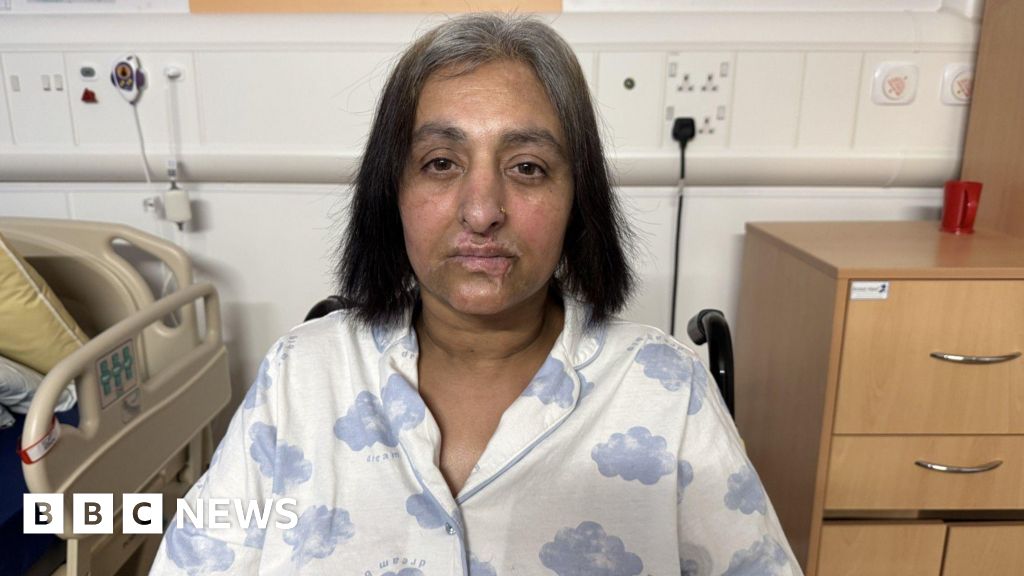
After enduring 32 weeks in hospital, multiple cardiac arrests, and the life-altering impact of a quadruple amputation, Manjit Sangha’s resilience shines as she returns home, inspiring a crucial call for widespread sepsis awareness.
This harrowing account chronicles Manjit Sangha’s battle against sepsis, a devastating condition that brought her to the brink of death and necessitated extensive medical interventions. Her extraordinary recovery, defying grim prognoses, underscores the critical importance of understanding sepsis’s rapid progression and severe consequences. Now, as she embarks on a new chapter, Manjit is committed to transforming her personal tragedy into a powerful public health message, emphasizing that such a severe illness can emerge from seemingly innocuous circumstances.
In a powerful testament to human resilience and the relentless dedication of medical professionals, Manjit Sangha, a 56-year-old from Penn, on the Wolverhampton/Staffordshire border, has finally returned home after a gruelling 32-week hospital stay. Her battle against sepsis, a life-threatening response to infection, saw her endure several cardiac arrests and, ultimately, a quadruple amputation, losing both her legs below the knee and both hands. Her discharge from Ward 9 at Moseley Hall in Birmingham on a recent Wednesday was met with a hero’s welcome from her family, marking the culmination of an arduous journey that defied all odds.
Manjit’s ordeal began in July last year, spiralling rapidly from feeling unwell on a Sunday afternoon to being unconscious by Monday morning. Her husband, Kam Sangha, vividly recalls the terrifying symptoms: ice-cold hands and feet, purple lips, and severe breathing difficulties. "Your mind is all over the place," Kam shared, reflecting on the shock of seeing his wife’s health deteriorate so dramatically in less than 24 hours. "One minute on a Saturday she’s playing with the dog, Sunday she’s gone to work, Monday night she’s in a coma." This rapid onset is a hallmark of sepsis, a condition where the body’s immune system, instead of fighting an infection, begins to attack its own tissues and organs, leading to widespread inflammation and organ damage.
Medical experts believe Manjit’s sepsis may have been triggered by something as seemingly harmless as a lick from her dog on a small cut or scratch. This highlights a critical, yet often overlooked, pathway for infection. Bacteria like Capnocytophaga canimorsus, commonly found in the mouths of dogs and cats, can cause severe infections, including sepsis, particularly in individuals with compromised immune systems or even minor skin abrasions. This serves as a stark reminder that even everyday interactions can carry hidden risks, underscoring the indiscriminate nature of sepsis.
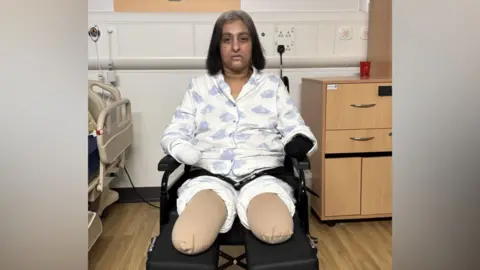
During her critical period, Manjit’s heart stopped six times while she was in intensive care at New Cross Hospital in Wolverhampton. Such a high number of cardiac arrests indicates the severity of her septic shock, a stage where blood pressure drops dangerously low, and organs begin to fail. The subsequent need for amputation at Russells Hall Hospital in Dudley was a devastating but necessary measure. In severe sepsis, the body diverts blood flow to vital organs, often at the expense of extremities. Additionally, powerful medications called vasopressors, used to maintain blood pressure, can constrict blood vessels in the limbs, leading to tissue necrosis and gangrene, necessitating amputation to prevent further spread of infection and preserve life. Beyond the amputations, Manjit also battled other severe complications, including the loss of her spleen, a vital organ for immune function, pneumonia, and the development of gallstones, which might require further surgical intervention. The first month of her hospitalization remains a blank, a common experience for patients who endure such profound critical illness and medical-induced comas.
Manjit, a former pharmacy worker who previously held down two jobs working seven days a week, is now beginning the long process of rebuilding her life. Her husband, Kam, 60, a distribution worker at Screwfix, took seven months off work to be by her side, a testament to their enduring bond. "She’s so strong," he remarked, filled with pride. "Every day was like ‘she’s going to go today’ but she proved us wrong every single day with what she’s been through." Their 37th wedding anniversary and Manjit’s birthday around Christmas were spent within hospital walls, underscoring the immense personal sacrifices made during this period. The psychological toll of such an ordeal—for both patient and family—is immense, often leading to post-traumatic stress disorder, depression, and anxiety, which require ongoing support.
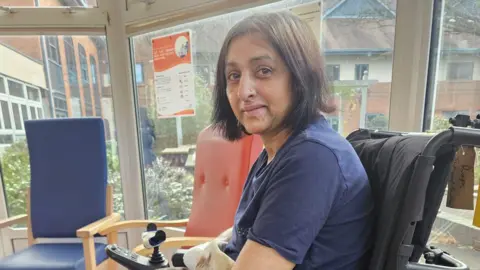
Now home, Manjit’s focus is firmly on the future. She is determined to regain her independence and advocate for greater awareness of sepsis. "It’s difficult to explain the experience," she said, reflecting on the profound impact of losing her limbs and hands. "It’s very serious and not to be taken lightly." Her immediate goals include learning to walk again with prosthetics and eventually returning to work. To achieve this, the couple is actively fundraising for advanced prosthetics, including potentially robotic hands, which can offer greater dexterity and functionality compared to conventional prosthetics. These sophisticated devices, however, come with a significant price tag, often costing tens of thousands of pounds. So far, their GoFundMe page and fundraising efforts at Screwfix, where Manjit also worked weekend shifts, have garnered over £22,000, demonstrating the incredible outpouring of community support.
The journey with prosthetics is multifaceted, involving extensive physical and occupational therapy. Learning to use prosthetic limbs and hands requires immense patience, strength, and adaptation. Advanced prosthetics, such as myoelectric hands that respond to muscle signals, can significantly improve a person’s quality of life, enabling them to perform daily tasks with greater ease. However, they demand a rigorous commitment to rehabilitation and ongoing adjustments. Despite the difficult road ahead, Manjit’s spirit remains unbroken. "I want to get walking," she declared. "I want to get my prosthetics [and] to go back to work. I’ve sat down in my chair and my bed enough. It’s time to walk now." This unwavering determination is a beacon of hope for others facing similar challenges.
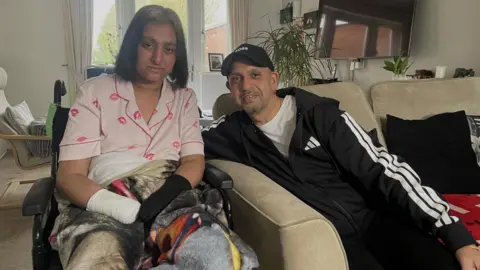
Manjit’s story serves as a powerful reminder of the urgency of sepsis awareness. Sepsis is a medical emergency that requires immediate recognition and treatment. Key symptoms to watch for include slurred speech or confusion, extreme shivering or muscle pain, passing no urine (in a day), severe breathlessness, mottled or discoloured skin, and feeling like you might die. Early diagnosis and prompt administration of antibiotics and fluids can dramatically improve outcomes and prevent the catastrophic consequences that Manjit endured. Organizations like the Sepsis Trust continually campaign to educate the public and healthcare professionals about this silent killer, emphasizing that "it could happen to anybody," as Manjit rightly asserts. Her willingness to share her deeply personal and traumatic experience will undoubtedly contribute significantly to these vital public health efforts, potentially saving countless lives and limbs.
Manjit Sangha’s return home is not just a personal triumph but a profound moment for public health. Her journey from the brink of death to a determined advocate for sepsis awareness embodies incredible courage and hope. As she embarks on the next chapter of her life, supported by her devoted husband and a generous community, her message resonates: sepsis is a formidable foe, but with awareness, vigilance, and unwavering spirit, recovery and renewed purpose are possible.