
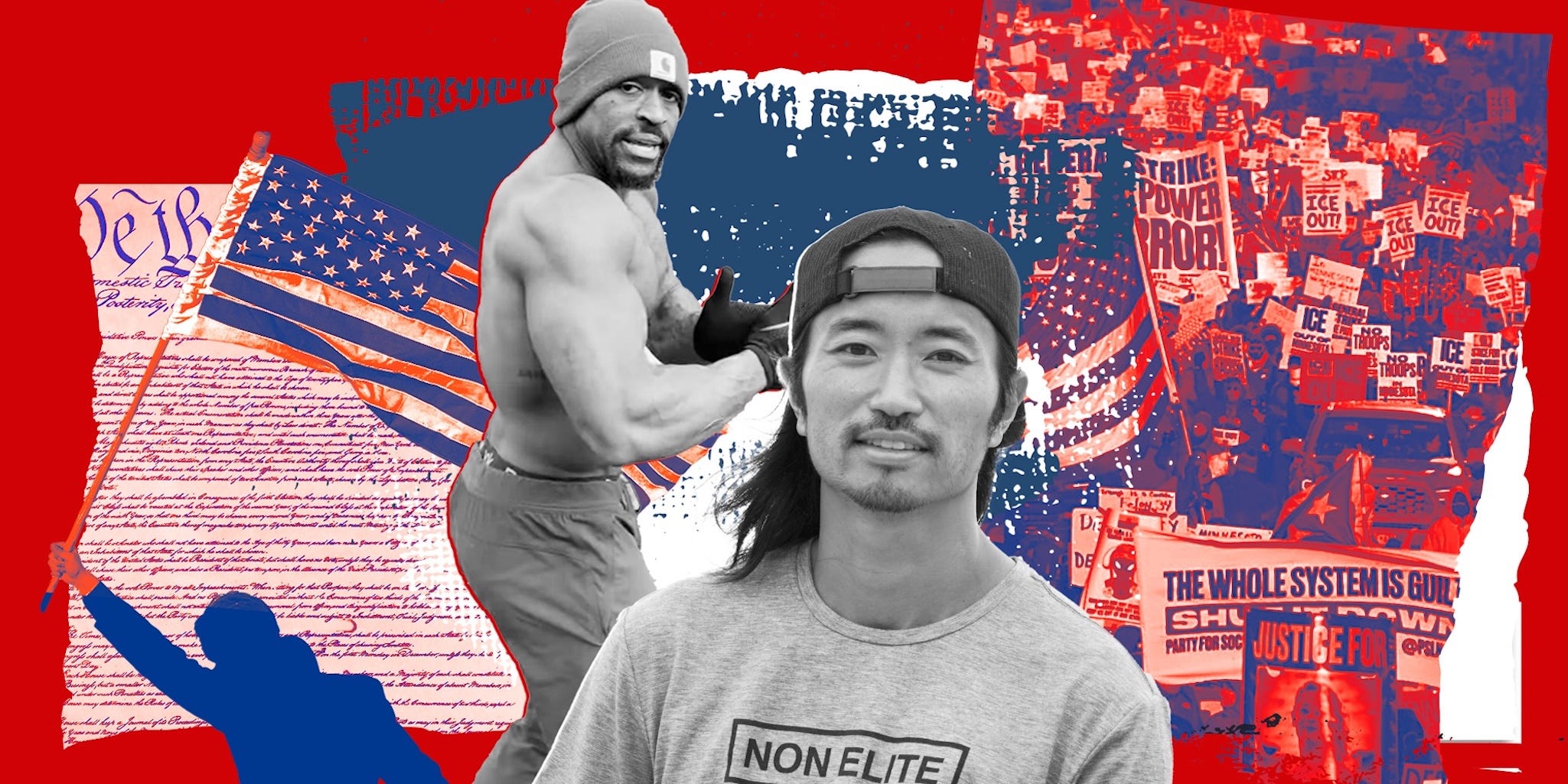
"For many fitness creators, the traditional boundary between wellness and politics has dissolved into a human rights imperative, proving that the platforms built on physical strength can no longer ignore the societal fractures threatening their communities."
The fitness industry has long prided itself on being an apolitical sanctuary, a digital space where physical self-improvement transcends ideological divides. However, the recent death of Alex Pretti, an ICU nurse at the Minneapolis VA Medical Center, at the hands of Immigration and Customs Enforcement (ICE) agents, has triggered an unprecedented shift in the landscape. As fitness influencers grapple with the ethics of silence, the transition from gym routines to social activism highlights a growing realization: the "wellness" of a community is inseparable from the safety and human rights of the people within it.
The Breaking Point: The Death of Alex Pretti
For years, the unspoken rule of the fitness influencer economy was simple: focus on the body, ignore the body politic. This strategy allowed creators to maximize their "total addressable market," appealing to followers across the political spectrum without the risk of alienation. But in late January, that silence began to shatter.
The catalyst was the killing of Alex Pretti. As an ICU nurse serving veterans at a federal facility, Pretti represented the intersection of public service and community care. His death during an ICE enforcement action in Minneapolis sent shockwaves through the Midwest and quickly reverberated across social media. For creators like Tom Schweers, a lifestyle and fitness influencer with over 100,000 followers, the event was too visceral to ignore.
Schweers, whose feed typically consists of "fit checks" with his wife and morning vlogs, pivoted entirely. Setting up his tripod not for a workout, but for a statement of conscience, he told his audience, "I am completely against this administration. I am completely against ICE. I’m always going to stand with immigrants." This was not a calculated brand move; it was an emotional reaction to a perceived violation of human dignity. Schweers’ shift reflects a broader trend where creators are beginning to view their platforms not just as businesses, but as civic responsibilities.
The Erosion of the "Apolitical" Fitness Space
The fitness world’s reputation for neutrality is being challenged by a wave of public dissent that mirrors shifts in other internet subcultures, from gaming to "BookTok." The central question has become: is silence a form of complicity?
Andre Crews, a prominent trainer and creator, articulated this dilemma by framing the current political climate as a human rights issue rather than a partisan one. For Crews, continuing to post standard lifting routines felt "forced" and "inauthentic" in the wake of escalating ICE enforcement. "It felt very forced for me to say, ‘hey guys, let’s work out and pretend that everything was fine,’ because it really wasn’t," Crews noted. This sentiment suggests that for a growing segment of the fitness community, "wellness" is no longer a vacuum. It is impossible to promote physical health while ignoring the systemic stress and violence affecting a portion of the population.
This shift is not confined to progressive or "left-leaning" creators. Dr. Jedidiah Ballard, an emergency room doctor and former Army Rangers Battalion Surgeon, represents a significant "middle-ground" demographic that is being pushed to speak out. Ballard, who was named the 2016 Men’s Health Ultimate Guy, describes himself as "right-middle" politically. Yet, the circumstances of Pretti’s death—which he characterized as a "street execution of a man already on the ground"—pushed him past his usual threshold for neutrality. Ballard’s involvement suggests that the current outcry is less about traditional partisan alignment and more about a shared sense of moral outrage among those who value the rule of law and human rights.
The "Stick to Sports" Counter-Argument
Not every creator believes that a fitness platform should be a pulpit for political discourse. Michael Smoak, known online as Higher Up Wellness, has become a vocal representative for the "stick to fitness" school of thought. Following the death of Pretti, Smoak released a video asserting his independence from audience expectations. "I’m not your puppet, I’m not your mouthpiece," Smoak told his followers, arguing that his expertise lies in wellness, not political commentary.

However, the reaction to Smoak’s stance illustrates the changing expectations of the digital audience. Despite receiving nearly 70,000 likes, his comments were flooded with criticism. Many followers argued that influencers "cash the checks of public attention" and therefore cannot act shocked when the public expects them to use that attention for social good. The financial ramifications were immediate: Social Blade data indicates that Smoak’s TikTok account lost approximately 100,000 followers following his refusal to address the ICE incident. This suggests that while "staying in your lane" was once a safe bet for brand longevity, it may now be a liability in an era of high-stakes social awareness.
The Ethics of Influence: Leadership vs. Performance
The debate over political posting often centers on the concept of "performative activism"—the idea that influencers post about social issues merely to avoid "cancellation" rather than out of genuine conviction. Ben Carpenter, a personal trainer and fitness educator, acknowledges the difficulty of navigating this landscape. He notes that a creator’s feed is a curated snapshot; many may be protesting or donating privately while maintaining a professional facade online.
However, Carpenter also points out the inherent danger of social media as a forum for complex discussion. "You can’t have very in-depth, serious adult conversations with tens of thousands… of people on social media," he says. The platform’s architecture often favors hostility over nuance, leading many creators to fear that any political statement will inevitably descend into a "hostile" environment for their community.
Conversely, Mike Ko, a running creator known as Kofuzi, views his platform through the lens of community leadership. He compares his role to that of a group run leader: "There are people that are falling behind and we’ve got to make sure we scoop them up and make sure they get back to where they started safely." For Ko, if a portion of the running community feels unsafe or targeted by government policy, it is his responsibility to address it, even if it disrupts the "commerce" of shoe reviews and race training.
The High Cost of Dissent
The risks of speaking out are not merely financial. While creators like Crews and Ko worry about unsubscribes and lost sponsorships, others face much darker consequences. One anonymous creator shared that a colleague with over a million followers ceased all political posting after receiving death threats and being "doxxed"—a process where private information, such as home addresses, is leaked online.
The "allure of staying apolitical," as Carpenter puts it, is the allure of peace. In a digital economy where a creator’s face and family are often part of the brand, the threat of physical violence or harassment is a significant deterrent. Furthermore, the financial model of the fitness industry—built on app subscriptions, affiliate links, and brand partnerships—is sensitive to controversy. Brands often prefer "safe" influencers who won’t spark a boycott, creating a systemic incentive for creators to remain silent.
A New Paradigm for the Fitness Industry
Despite these risks, the "genie is out of the bottle." The death of Alex Pretti has served as a turning point, revealing that the fitness community is not a monolith of gym-goers, but a collection of citizens. Creators like Tom Schweers admit to hesitating before hitting the "post" button, fearing the ramifications, yet they feel a compulsion to continue.
The fitness world is currently at a crossroads. One path leads back to the traditional "escapism" model, where the gym is a place to forget the world’s problems. The other leads toward a more integrated form of wellness, where physical health, mental health, and social justice are viewed as a single, interconnected web.
As Mike Ko poignantly noted, most creators would "love to go back" to just talking about shoes and race times. But in a climate where human rights are perceived to be under threat, the luxury of "just talking about shoes" is becoming harder to justify. The weight of the world, it seems, has finally become too heavy for the fitness industry to ignore.