
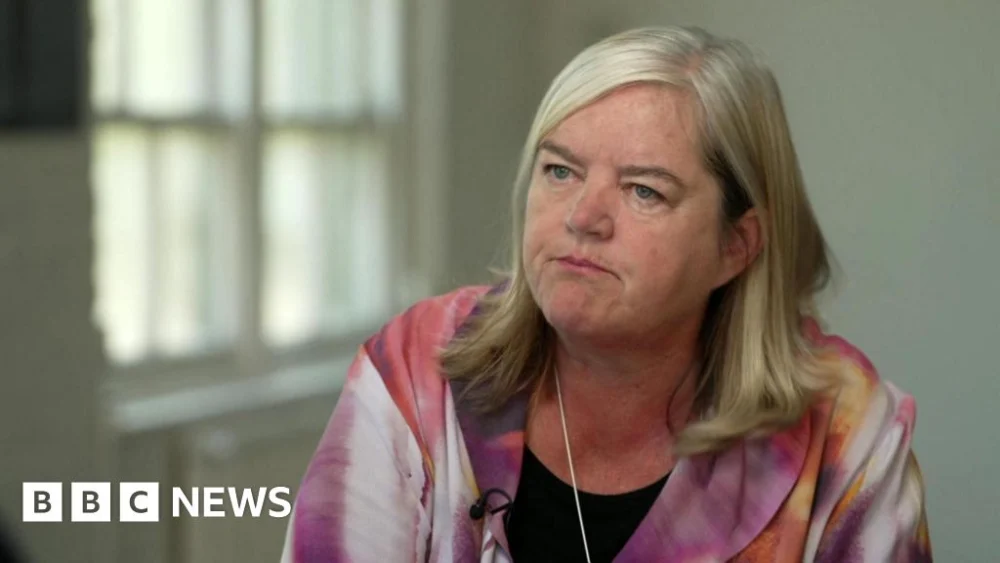
"England’s adult social care system is a ‘cobbled together’ and ‘horrendous’ labyrinth for users, fundamentally reliant on the exploitation of its dedicated workforce," warns Baroness Louise Casey, chair of the independent commission tasked with its reform. "Achieving the essential, systemic change required will demand unprecedented cross-party political unity."
This stark assessment from Baroness Casey underscores the profound dysfunction plaguing the framework designed to support older and disabled individuals across England. Her initial findings paint a picture of a system that is not only fragmented and confusing for those desperately seeking help but also inherently unsustainable due to its reliance on underpaid and undervalued care professionals. The call for cross-party collaboration highlights the deep-seated political inertia that has historically hampered meaningful reform in this critical public service.
Baroness Louise Casey, a figure renowned for her incisive critiques of public services, has delivered a damning indictment of England’s adult social care system, describing it as a chaotic, fragmented, and fundamentally exploitative structure. As the chair of the independent commission charged with its overhaul, her preliminary assessment reveals a landscape riddled with inefficiencies, inequities, and a profound human cost, impacting both those in need of care and the dedicated individuals who provide it. Her remarks, made on BBC Radio 4’s Today programme and ahead of a key conference address, signal a clear intent to push for radical, systemic transformation rather than incremental adjustments.
At the heart of Casey’s critique lies the experience of individuals and families navigating the care system. She vividly portrays a "horrendous" ordeal, where people spend "hours and hours and weeks and weeks" grappling with a bureaucratic maze. This involves a bewildering array of "multiple different letters, the multiple different assessments, multiple financial assessments" that breed anxiety and confusion rather than offering clear pathways to support. This fragmentation is not merely an administrative inconvenience; it represents a significant barrier to accessing timely and appropriate care, often at moments of acute vulnerability and distress for families. The current system, she argues, is not designed with the user at its centre but rather as a patchwork of services that struggles to cohere.
A central and deeply troubling aspect of Casey’s findings is the system’s reliance on the exploitation of its workforce. She states unequivocally that the adult social care sector is underpinned by the underpayment and poor working conditions of its staff. "We’ve still got people earning less than the minimum wage. They are often not paid for travel, they are often not paid for holidays," she revealed. This systemic exploitation of a predominantly female workforce, often working long hours with immense emotional and physical demands, creates a crisis in recruitment and retention. The contrast with the NHS, where staff generally receive better pay, terms, and conditions, is stark and contributes directly to the fragility of the social care sector. This disparity was highlighted by Casey’s observation that even NHS hospital trusts, attempting to establish their own care services, found them financially unviable because they could not match NHS-level remuneration for care staff, revealing a fundamental structural flaw in how care work is valued across the public sector.
This inherent divide between what is legally defined as ‘health’ and ‘social care’ is a critical impediment. "This divide between what is care and what is health does not exist to the public. It is our divide," Casey powerfully asserted. For individuals experiencing complex needs, such as those with dementia or Motor Neurone Disease (MND), the artificial institutional boundaries create immense suffering. Families caring for loved ones with dementia often "bear the brunt" of this fractured system, receiving inadequate information and support as they navigate progressive decline. Similarly, individuals diagnosed with MND, facing a tragically short life expectancy, are subjected to the indignity and futility of "multiple assessments and means tests" rather than immediate, comprehensive support tailored to their urgent needs. This institutional focus, rather than a person-centred approach, ultimately serves the administrative structures more than the people they are meant to support.
Baroness Casey’s commission, which commenced its work last summer, is tasked with conducting a thorough "stock-take" to design an adult social care system fit for the 21st century. This involves acknowledging and addressing the profound demographic shift towards an aging population with increasingly complex, multi-morbid health and care needs. The goal of the first phase, expected to culminate in a report this year, is to outline a blueprint for a "National Care Service." A second, more intricate phase, focusing on the long-term funding mechanisms for social care, is scheduled to report as late as 2028, underscoring the immense complexity and political sensitivity of this aspect of reform.
The magnitude of the required change necessitates an unprecedented level of political will and cross-party consensus. Casey’s mandate explicitly includes initiating "a national conversation" to build broad agreement on the future direction of care. She cautioned political parties against premature criticism, stating, "I would warn any party to be a little careful about throwing stones, until we actually know what we are doing." This call for unity acknowledges the historical pattern of successive governments failing to deliver sustainable social care reform, often due to political expediency or an inability to forge lasting agreement on funding and implementation. The social care crisis has long been a political hot potato, with promises of reform frequently made but rarely fully realised.
Responding to Casey’s intervention, Liberal Democrat Leader Ed Davey echoed her concerns, stating she was "right to highlight how broken the care system is." However, he questioned the government’s perceived inaction, lamenting that "Starmer and Streeting have wasted a whole year with nothing to show for it." Davey’s comments underscore the immediate political pressure on the current administration and opposition to demonstrate tangible progress, especially as elderly people continue to suffer and hospitals grapple with the consequences of delayed discharges due to a lack of available social care. The urgency articulated by both Casey and Davey highlights the critical need to move beyond political posturing to substantive action.
The challenge facing Baroness Casey and the UK government is monumental. Reimagining adult social care involves not only restructuring funding and delivery models but also fundamentally shifting societal perceptions of care work, valuing it appropriately, and integrating health and social provisions seamlessly. The aspiration for a "National Care Service" evokes parallels with the NHS, suggesting a move towards universal access based on need rather than ability to pay, a vision that carries profound implications for public expenditure and taxation. Casey’s initial assessment is not merely a diagnostic report; it is a clarion call for a societal reckoning with how England cares for its most vulnerable citizens and the workers who dedicate their lives to this essential service. The path ahead is fraught with political, economic, and ethical complexities, but the imperative for fundamental change has rarely been articulated with such clarity and urgency.