
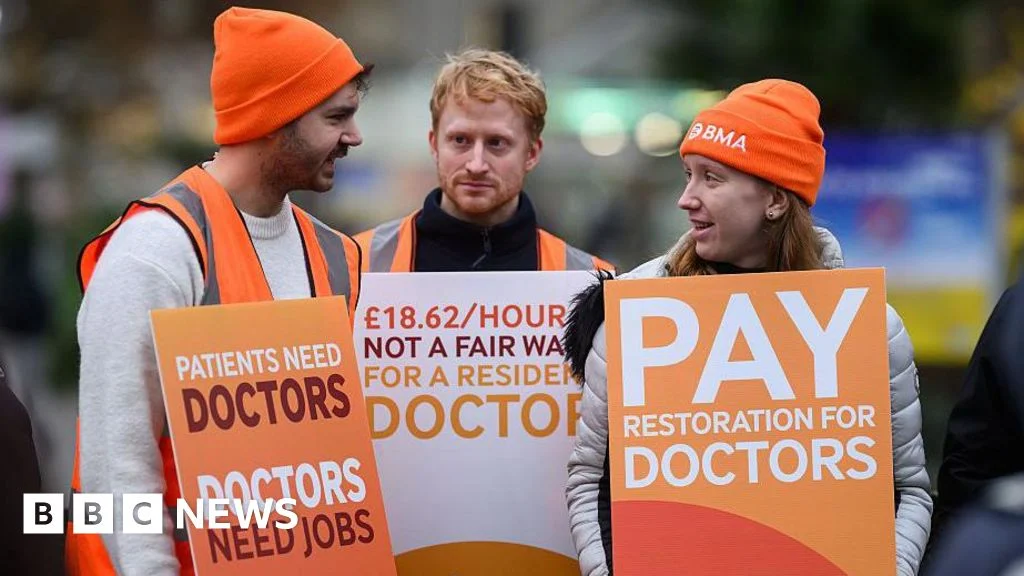
The upcoming six-day strike by resident doctors in England underscores a profound deadlock between medical professionals and the government, highlighting critical issues of pay erosion, workforce shortages, and the increasing strain on the National Health Service.
This protracted industrial action, now entering its fifteenth iteration since March 2023, reflects a fundamental disagreement over fair compensation and the future of the medical workforce. With talks having broken down, the unprecedented duration of this strike is set to further disrupt patient care and intensify pressure on an already overstretched healthcare system, bringing into sharp focus the long-term challenges facing the NHS.
Resident doctors in England are poised to stage their longest continuous walkout to date, a six-day strike scheduled for April, following the collapse of negotiations between their union, the British Medical Association (BMA), and the government. This latest industrial action, the fifteenth in a contentious dispute that began in March 2023, signals a deepening rift over pay restoration and critical concerns regarding job shortages within the National Health Service. The BMA contends that insufficient progress has been made to address what it describes as a significant real-terms decline in doctors’ pay and the growing scarcity of specialized training posts. Conversely, the government maintains that the doctors’ financial expectations are unrealistic and that substantial pay increases have already been awarded.
The impending strike, set to commence immediately after the Easter bank holiday weekend, will undoubtedly exert immense pressure on an NHS already grappling with seasonal demands, persistent backlogs, and an ongoing workforce crisis. Healthcare leaders and patient advocacy groups are expressing profound concern over the cumulative impact of such prolonged disruptions on patient care, safety, and the overall stability of the health service.
Understanding the Role of Resident Doctors in the NHS
Formerly known as junior doctors, resident doctors are qualified medical practitioners who have successfully completed their university medical degrees. They form the backbone of the NHS, constituting nearly half of all doctors across England and playing an indispensable role in every facet of healthcare delivery, from emergency departments (A&E) and intensive care units to general practice surgeries and highly specialized hospital wards.
Their career trajectory typically begins with a demanding five or six-year medical degree, followed by a mandatory two-year foundation programme of post-graduate training. This foundational period provides broad exposure across various medical specialties, after which many resident doctors embark on highly competitive and often lengthy specialist training pathways in fields such as surgery, cardiology, paediatrics, or general practice. The duration of this specialized training can be extensive, often spanning many years. Consequently, while some resident doctors may indeed be relatively new graduates, others possess over a decade of practical clinical experience, bearing significant responsibility for patient diagnosis, treatment, and ongoing care, frequently leading multi-disciplinary teams and supervising less experienced colleagues. The shift in terminology from "junior doctor" to "resident doctor" aims to better reflect this diverse range of experience and the critical responsibilities these professionals undertake daily.
The Economic Landscape of Resident Doctor Earnings
The basic salary for a resident doctor in their first foundation year (F1) in England currently stands at £38,831. This increases to £44,439 in their second year (F2). However, the nature of medical practice often necessitates working unsocial hours, including night shifts, weekends, and extended shifts, for which doctors receive additional payments. As resident doctors progress through their training and gain more experience, their basic salaries can gradually rise. After eight or more years of service and specialized training, a resident doctor’s basic salary can reach approximately £73,000, excluding additional payments for unsocial hours or on-call duties.
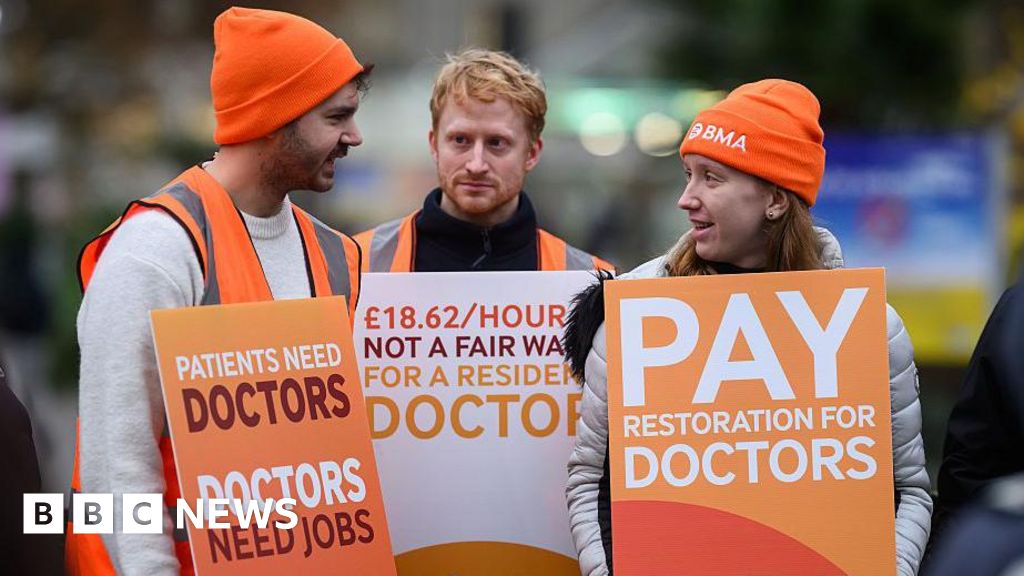
In recent years, the government has implemented several pay adjustments. Resident doctors received cumulative pay rises totalling 22% across 2023 and 2024. This was followed by an additional 5.4% increase in 2025, bringing the total increase over the three-year period to nearly 30%. While the government highlights these increases as substantial, the BMA argues that they fail to compensate for a more significant, long-term erosion of real-terms pay.
The Core Disagreement: Pay Erosion and Inflation Metrics
The central point of contention in this dispute revolves around the perceived real-terms value of resident doctors’ salaries, particularly when viewed against the backdrop of historical pay levels and contemporary inflation. The BMA asserts that, despite recent increases, resident doctors’ pay has effectively fallen by 20% in real terms since 2008. This calculation is predominantly based on the Retail Price Index (RPI), a measure of inflation that includes housing costs such as mortgage interest payments.
The government, conversely, utilizes the Consumer Prices Index (CPI) as its preferred metric for calculating public sector pay increases. CPI, which excludes housing costs, generally tends to be lower than RPI. Using the CPI measure, the government contends that resident doctors’ current pay is fair and that their pay has, in fact, kept pace more closely with inflation. However, an analysis conducted by the Nuffield Trust, a respected health think tank, suggests that if CPI is used, resident doctors’ pay has still fallen by approximately 5% since 2008. The disparity becomes starker when RPI is applied, indicating a nearly 20% drop, as highlighted by the BMA.
This distinction between CPI and RPI is not merely academic for many resident doctors. The BMA emphasizes that a significant proportion of its members carry substantial student loan debts, the interest rates for which are often linked to RPI. This means that while their salaries may be benchmarked against CPI, their financial obligations are often indexed to the higher RPI, creating a double bind that exacerbates their financial strain. Furthermore, the BMA argues that the unique demands of medical training, including the need to undertake placements in different, often expensive, parts of the country with little control over location, add further financial burdens not always accounted for in standard pay calculations. The BMA’s call for "pay restoration" aims to reverse this long-term decline and bring salaries back to a level commensurate with their value in 2008, adjusted for inflation.
Government’s Stance and Latest Offer
Health Secretary Wes Streeting has consistently defended the government’s position, reiterating that resident doctors have received the most significant pay increases among all public sector employees over the past three years. He has maintained that the government cannot offer any further pay increases beyond those already implemented, citing fiscal responsibility and the broader economic context.
In its latest attempt to resolve the dispute, the government presented an offer that did not include additional pay rises. Instead, it focused on addressing other concerns raised by the BMA, particularly around career progression and job security. The offer pledged to accelerate the expansion of specialist training posts, which are crucial for resident doctors transitioning from their foundational years into specific medical or surgical specialties. These posts are highly competitive, with over 30,000 applicants vying for approximately 10,000 positions in 2025, many from international candidates. The government committed to increasing the number of these posts by 4,000 by 2028, with the first 1,000 new positions becoming available from 2026.
Crucially, the deal also included provisions for emergency legislation designed to prioritize doctors who have studied and worked in the UK when filling these expanded specialist posts. This measure aims to address concerns about the competitiveness of the job market for domestically trained doctors. Additionally, the government restated an earlier offer to cover the cost of certain professional expenses, such as examination fees, which can be substantial for doctors undergoing specialized training.
BMA’s Rejection and Political Fallout
Despite these concessions on training posts and expenses, the BMA unequivocally rejected the government’s offer. Dr. Jack Fletcher, chairman of the BMA’s resident doctors committee, stated that the proposal "does nothing to restore pay for doctors, which remains well within the government’s power." The union emphasized that while improvements to training pathways and reduced exam fees were welcome, they did not address the fundamental issue of pay erosion, which remains the primary driver of the industrial action. The BMA believes that without meaningful pay restoration, the NHS will continue to struggle with recruitment and retention, ultimately compromising patient care.
The breakdown of talks and the announcement of the strike drew strong reactions from political figures. Prime Minister Sir Keir Starmer expressed his disappointment, describing the outcome as "gutted" and the BMA’s decision as "irresponsible," particularly given the rising pressures faced by the NHS, including soaring flu cases and existing winter demands. This highlights the political sensitivity of the dispute and the government’s desire to avoid further disruption to public services. The BMA’s current mandate for industrial action is set to expire in early January, but the union has already begun the process of balloting its members to extend the dispute, signaling a determination to continue their fight for pay restoration.
Impact on Patients and NHS Operations
The upcoming six-day strike is scheduled to run from 07:00 GMT on 7 April until 06:59 GMT on 13 April. The NHS has consistently urged patients not to delay seeking necessary medical care during industrial action. The standard advice remains: for life-threatening emergencies, individuals should call 999 or attend the nearest emergency department. For urgent but non-life-threatening issues, the NHS 111 website or helpline is the recommended first point of contact. GP surgeries are expected to remain open and operate as normal.
However, despite these measures, the extended duration of this strike is anticipated to cause significant disruption across the health service. While hospitals are typically advised to cancel routine appointments only in exceptional circumstances during strikes, the sheer number of resident doctors involved means that thousands of appointments, procedures, and elective operations are likely to be postponed or cancelled. This will inevitably exacerbate existing waiting lists and add to the immense backlog of care that has accumulated over recent years, impacting patients awaiting everything from diagnostic tests to life-changing surgeries. It is crucial to note that this planned walk-out will specifically affect services in England, with healthcare systems in Scotland, Wales, and Northern Ireland operating independently and not subject to this particular industrial action.
Broader Implications and the Path Forward
The ongoing dispute with resident doctors is symptomatic of deeper, systemic challenges facing the NHS. Beyond the immediate issue of pay, the BMA’s concerns about job shortages and the competitiveness of specialist training posts underscore a wider workforce crisis. High levels of burnout, increasing administrative burdens, and a perceived lack of appreciation contribute to a climate where doctors may consider leaving the NHS or even the profession entirely. An unresolved dispute risks further demoralizing the medical workforce, impacting recruitment of new talent, and accelerating the departure of experienced professionals, thereby weakening the NHS’s capacity to deliver care in the long term.
While the government has pointed to pay rises for other public sector staff as context, the BMA consistently argues that the unique circumstances of medical training – its length, the associated debt, and the demanding nature of the work with limited control over placements – warrant specific consideration. The prolonged nature of this conflict suggests that a resolution will require more than just short-term concessions. A comprehensive, long-term strategy for workforce planning, fair remuneration, and improved working conditions is essential to secure the future of the NHS and ensure that England can retain and attract the medical talent it desperately needs. Without a durable agreement, the cycle of industrial action, patient disruption, and escalating pressure on healthcare services is likely to continue.