
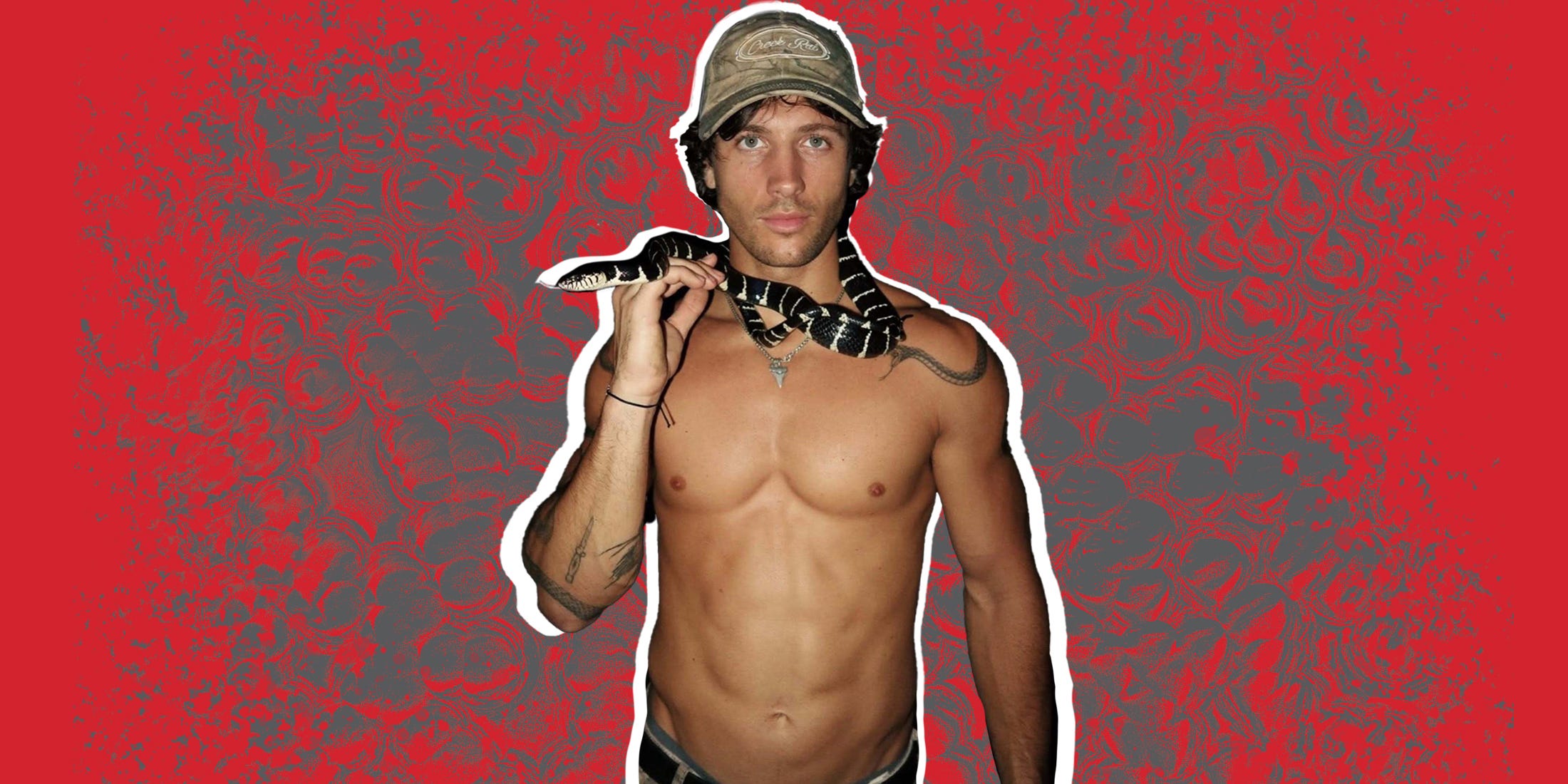
"By bridging his strategic acumen on The Traitors with his professional expertise as a snake wrangler, Rob Rausch provides a unique lens into the psychological and behavioral traits of his fellow contestants through the specialized science of herpetology."

The high-stakes atmosphere of Alan Cumming’s castle in the Scottish Highlands is often described as a "pit of vipers," a metaphor for the deception and predatory strategy inherent in the hit reality series The Traitors. Rob Rausch, a 27-year-old Alabama native and standout contestant, possesses a unique professional background that allows him to interpret this environment with literal precision. As a professional snake wrangler and educator, Rausch has spent years studying the nuances of reptilian behavior, camouflage, and predatory instincts—traits that mirror the social dynamics required to survive the game of The Traitors. By categorizing his fellow players through a herpetological lens, Rausch offers more than mere nicknames; he provides a sophisticated analysis of how these public figures navigate the "turret" and the "roundtable."
The Wrangler in the Castle: Rob Rausch’s Dual Identity
Rob Rausch entered the third season of the U.S. version of The Traitors as a multifaceted threat. To his fellow competitors, he was a physical powerhouse, dominating the show’s grueling outdoor challenges with a "rock under pressure" demeanor. To the audience, he was a wily strategist, navigating the treacherous waters of the Traitors’ turret with a calculated calm. However, Rausch’s life outside the Scottish Highlands is defined by his passion for herpetology. On social media, he serves as a scientific ambassador, posting videos of his "slithering finds" and educating a broad audience on the biological facts of scaly critters.

When asked to apply his professional knowledge to the cast of The Traitors, Rausch’s findings suggest that the players’ social strategies often mimic the evolutionary adaptations of specific snake species. From the elegant stoicism of the host to the "judgmental" gaze of the observers, Rausch’s taxonomy reveals the hidden nature of the game’s most prominent figures.
Alan Cumming: The Emerald Tree Boa (Corallus caninus)
For the show’s host, Alan Cumming, Rausch selects the Emerald Tree Boa. Found primarily in the rainforests of South America, the Emerald Tree Boa is renowned for its striking appearance and its highly specialized lifestyle.

"He’s an Emerald Tree Boa, all day," Rausch explains. "It’s just an elegant snake. They’re so ornate, but they’re also almost stoic." This comparison highlights the balance Cumming strikes as the master of ceremonies. Known for his avant-garde, highly stylized wardrobe and theatrical flair, Cumming nevertheless maintains a rigid, authoritative presence that anchors the show’s tension. Much like the Emerald Tree Boa, which spends its life draped over branches in a perfect, symmetrical coil, Cumming manages to be visually spectacular without "doing too much." The snake’s vibrant green scales and white lightning-bolt patterns mirror Cumming’s flamboyant yet controlled aesthetic.
Lisa Rinna: The Paradise Tree Snake (Chrysopelea paradisi)
Lisa Rinna, a veteran of reality television and a master of social navigation, is likened to the Paradise Tree Snake. This species is famous for its unique ability to "fly"—or more accurately, glide—through the air by flattening its body and spreading its ribs to create a concave wing-like surface.

Rausch notes that this "gliding" ability is a perfect metaphor for Rinna’s social game. "She would be a Paradise Tree Snake. They have these beautiful colors, and they’re the only snakes that can actually glide. That’s very Lisa—she just kind of glides in." In the context of The Traitors, the ability to move effortlessly between alliances and navigate high-pressure situations with grace is a vital survival trait. Rinna’s presence is colorful and impossible to ignore, yet she possesses a fluidity that allows her to bypass obstacles that might ensnare more grounded players.
Eric Nam: The Sunbeam Snake (Xenopeltis unicolor)
In one of the more scientifically specific comparisons, Rausch identifies K-pop star Eric Nam as a Sunbeam Snake. This species is fossorial, meaning it lives primarily underground (subterranean), and is rarely seen by the casual observer. However, when the Sunbeam Snake emerges into the light, its smooth scales produce a breathtaking, iridescent "oil-slick" shimmer.

Rausch sees a parallel in Nam’s "low-key" but undeniable star power. "Eric is a low-key guy—he’s humble, and I like that about him—but then I’ll see a clip of him on TikTok and think, ‘What the heck! This guy’s a star!’" The Sunbeam Snake’s strategy is one of quiet competence and hidden brilliance. In a game like The Traitors, being a "low-key" player who possesses a "shimmering" talent for observation can be a winning strategy, allowing a player to remain beneath the radar until the opportune moment to strike.
Tara Lipinski and Johnny Weir: The Asian Vine Snakes (Ahaetulla prasina)
The iconic figure-skating duo of Tara Lipinski and Johnny Weir are categorized as a pair of Asian Vine Snakes. These snakes are characterized by their incredibly slender bodies and elongated snouts, which provide them with excellent binocular vision—a rarity among serpents.

Rausch points to the snake’s internet reputation as the "judgmental shoelace" to describe the duo’s sharp, analytical nature. "They have this nickname, ‘the judgmental shoelace,’ because they give you this little look," Rausch says. He envisions the pair as expert observers of the castle’s ecosystem, "eyeing the other snakes and chatting about them." Just as the Vine Snake uses its superior vision to track prey from a distance, Lipinski and Weir utilize their long-standing partnership and keen eyes for detail to dissect the behavior of their fellow contestants.
Maura Higgins: The Rainbow Boa (Epicrates cenchria)
For Maura Higgins, Rausch selects the Rainbow Boa, a species known for the microscopic ridges on its scales that refract light, creating a rainbow effect similar to the Sunbeam Snake, but with the added muscle of a constrictor.

Despite being powerful constrictors, Rainbow Boas are often described by keepers as being relatively docile if handled correctly. Rausch notes this duality: "They’re constrictors, but they’re relatively chill. And they’re very beautiful." This mirrors Higgins’ reputation; she is a formidable presence who can "squeeze" the truth out of a situation when necessary, yet she maintains a "chill" and approachable exterior that belies her strategic strength.
Michael Rapaport: The Brahminy Blind Snake (Indotyphlops braminus)
In a humorous yet insightful comparison, Rausch likens actor Michael Rapaport to the Brahminy Blind Snake. This is one of the world’s smallest snake species and is unique for being "everywhere"—it is found on almost every continent because it often hitches a ride in the soil of potted plants (earning it the nickname "the flowerpot snake").

"You can find it on every single continent except for Antarctica," Rausch observes. "It has little, tiny eyes, but I don’t even know if they work." The Brahminy Blind Snake is persistent, ubiquitous, and moves in its own idiosyncratic way. By comparing Rapaport to a snake that is both everywhere and seemingly oblivious to its surroundings, Rausch captures the actor’s loud, pervasive energy and his tendency to move through the game with a singular, sometimes tunnel-visioned focus.
The Evolutionary Game of Survival
Rausch’s herpetological taxonomy serves as a reminder that The Traitors is, at its core, a study in evolutionary psychology. Just as snakes have evolved venom, camouflage, and specialized movement to survive in diverse environments, the contestants in Alan Cumming’s castle must adapt their personalities to survive the "selection pressure" of the roundtable.

Rob Rausch’s ability to see his fellow players as biological entities—each with their own "defense mechanisms" and "predatory styles"—is perhaps what made him such a formidable player. In the wild, understanding the nature of the snake is the only way to avoid the bite. In the Scottish Highlands, that same knowledge is the key to winning the prize. As Rausch continues to educate his followers on the wonders of the reptilian world, his time on The Traitors stands as a masterclass in how professional expertise can be translated into reality TV dominance.