
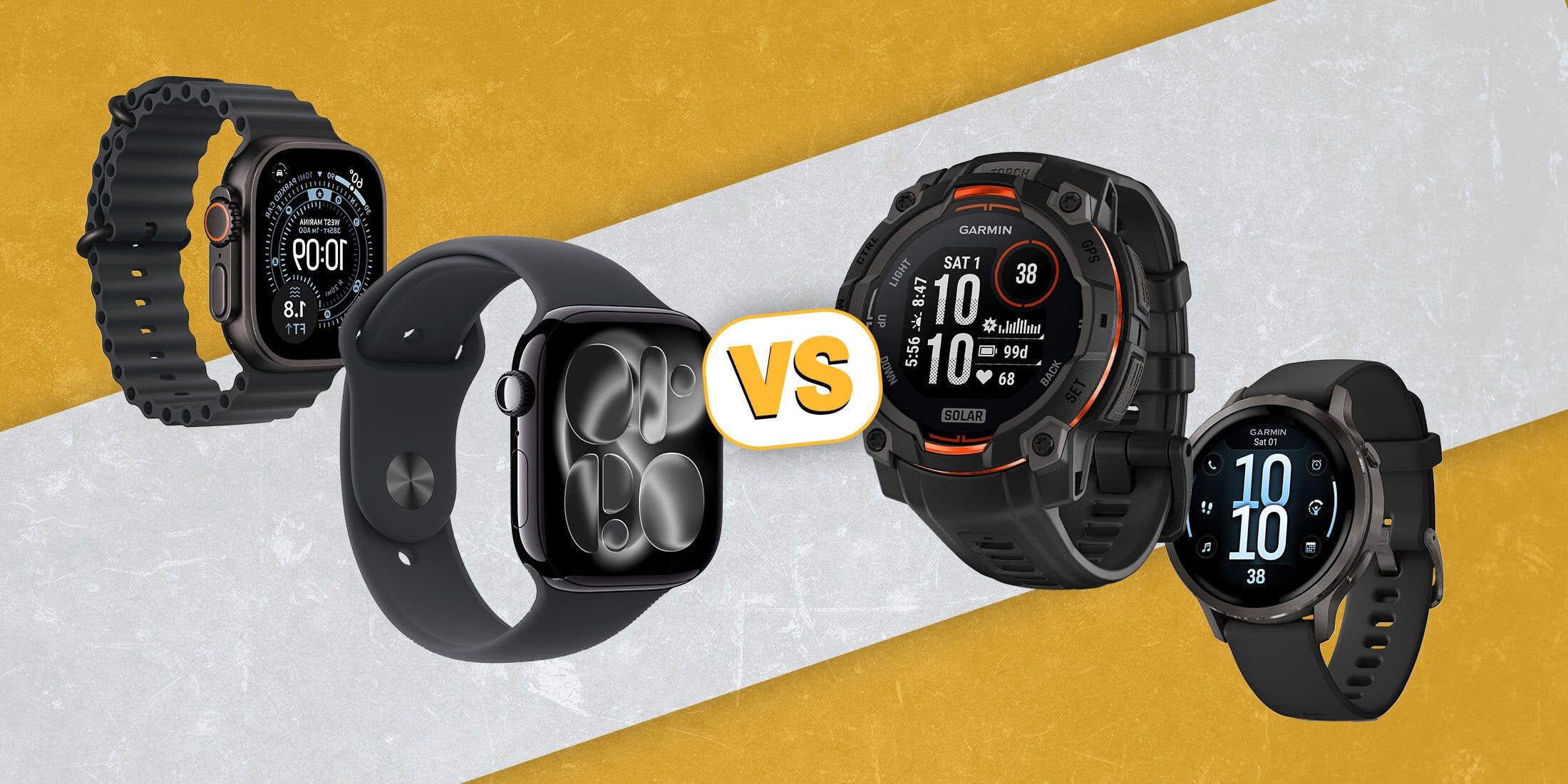
"The choice between Garmin and Apple Watch has evolved from a simple debate over accuracy into a fundamental decision between a dedicated training tool built for the elements and a high-performance extension of the digital ecosystem."
As wearable technology matures, the gap between fitness trackers and smartwatches continues to blur, yet the philosophies driving Garmin and Apple remains distinct. For the modern athlete, selecting a wrist-bound companion requires balancing the need for deep, actionable physiological data against the convenience of seamless smartphone integration. While both brands now offer high-end multisport capabilities, the nuances of their battery management, navigation logic, and recovery metrics define two very different user experiences: one optimized for the "always-on" connected life, and the other for the focused pursuit of endurance and outdoor exploration.
The Philosophy of Performance Tracking
At the core of the Garmin experience is a data-first methodology. For years, Garmin has positioned itself as the gold standard for athletes who speak the language of "Training Load," "Vertical Oscillation," and "HRV Status." Features like Training Readiness and Body Battery are not merely aesthetic dashboards; they are predictive algorithms designed to tell an athlete when to push and when to pull back.
Marty Munson, Fitness Director at Men’s Health, has spent extensive time with various Garmin models, including the Forerunner 570, during triathlon training. Munson notes that while the data is robust, it occasionally lacks the "emotional intelligence" of a human coach. For instance, Garmin’s software may flag a scheduled rest week as "detraining" because it detects a drop in volume, failing to recognize the periodization of a training block. Despite this, the depth of the metrics remains unparalleled for those who want to micromanage their physiological response to stress.

Apple, conversely, has spent the last several years closing the performance gap. With the introduction of the Ultra series and the Series 11, Apple has moved beyond simple step counting and "closing rings." Senior Fitness Editor Brett Williams, NASM, who tested both the Ultra 3 and Series 11, highlights the ability to manually customize workout plans as a turning point for advanced exercisers. This allows for complex interval sessions and distance goals that were previously the sole domain of dedicated sport watches. While Apple’s native interface leans toward wellness and general health, the integration of third-party apps like Training Today allows users to mirror many of the readiness insights that come native to Garmin.
The Battery Life Paradox
The most significant architectural difference between the two brands lies in power management. Garmin’s hardware is designed for longevity, often utilizing more efficient display technologies and aggressive background process management. In a review of the Garmin Instinct 3, Korin Miller observed that the device easily exceeded its advertised 18-day battery life, reaching 21 days when GPS usage was moderated. For an ultra-marathoner or a multi-day hiker, this reliability is not just a convenience—it is a safety requirement.
Apple has made strides in this department, but the "all-day" smartwatch philosophy remains. The Apple Watch Ultra 3 can stretch to 42 hours under specific conditions, but for most users, a daily charging cadence is still necessary. Apple compensates for this with industry-leading charging speeds. Williams noted that the Series 11 could gain 18 percent of its battery in just 15 minutes, making it possible to top off the device during a morning shower or a brief sit-down at a desk. The trade-off is clear: Garmin offers "set it and forget it" longevity, while Apple offers a high-resolution, high-drain experience that requires a more disciplined charging routine.
Connectivity and the Ecosystem Lock-In
Connectivity is where the "smart" in smartwatch truly differentiates these devices. Apple’s integration with the iPhone is vertical and absolute. Every notification, call, and map direction is mirrored with zero friction. For many, the Apple Watch serves as a "phone lite," allowing users to leave their primary device behind during a run while staying reachable via cellular connectivity. The ability to respond to messages via voice or a miniature keyboard, use Apple Pay, and control HomeKit devices makes it a central hub for daily life.
Garmin’s approach to connectivity is more horizontal. It focuses on playing well with the broader world of fitness technology. Munson praises Garmin’s ability to sync seamlessly with third-party training platforms like TrainingPeaks, Form, and Elemnt. While Garmin watches can receive notifications and control music, the experience is more passive. You are "informed" by a Garmin, whereas you "interact" with an Apple Watch. For the athlete who views their workout as a sanctuary from digital noise, Garmin’s slightly more distant connectivity can actually be a selling point.
Navigation: Urban Sprawl vs. The Backcountry
When it comes to finding one’s way, both brands utilize sophisticated GPS chipsets, but their execution differs. Garmin’s high-end models, such as the Fenix and Epix lines, offer full topographic mapping and breadcrumb routing that functions entirely offline. This is critical for trail runners and hikers who move through "dead zones" where cellular signals vanish. The reliability of Garmin’s multi-band GPS ensures that even under heavy tree canopy or in deep canyons, the signal remains locked.
Apple excels in the urban environment. Its mapping is vibrant, intuitive, and integrated with haptic feedback that "taps" your wrist when a turn is approaching. The Ultra 3 has significantly improved GPS accuracy, bringing it closer to Garmin’s precision. However, Apple’s mapping still feels tethered to a more "connected" world. While it handles city marathons and park loops with grace, it lacks the rugged, offline-first navigation tools that define Garmin’s outdoor-focused DNA.
Head-to-Head: The Heavy Hitters
Apple Watch Ultra 3 vs. Garmin Instinct 3
The Ultra 3 is a marvel of engineering, featuring a 3,000-nit display that remains legible in the harshest desert sun. It is a tool for the "hybrid" athlete—someone who might run a 10K in the morning and lead a boardroom meeting in the afternoon. Its safety features, including a dedicated siren and international emergency calling, provide a layer of security that Garmin’s more utilitarian Instinct 3 lacks.
The Garmin Instinct 3, however, is built for the "purist." With its AMOLED screen and rugged, fiber-reinforced polymer case, it is designed to take a beating. It prioritizes data density, jamming a wealth of stats onto the home screen without cluttering the user interface. It also includes a built-in LED flashlight—a feature that sounds gimmicky until you are fumbling for gear in a dark tent or finishing a trail run at dusk.
Apple Watch Series 11 vs. Garmin Venu 4
For the everyday user, the Series 11 represents the pinnacle of the intuitive smartwatch. Features like "Workout Buddy" and refined sleep scoring make it an excellent entry point for those looking to improve their health without a steep learning curve. It is a lifestyle tool that happens to be a very good fitness tracker.
The Garmin Venu 4 is the counter-argument. It offers a similarly beautiful display and smartphone notifications but keeps the focus squarely on the body’s metrics. It lasts nearly two weeks on a single charge, dwarfing the Series 11’s battery life. For the user who wants the "Garmin data" but in a chassis that looks more like a traditional watch and less like a rugged outdoor instrument, the Venu 4 is the ideal middle ground.
The Final Verdict: Choosing Your Flow
Ultimately, the decision between Team Garmin and Team Apple Watch is determined by where you find your value. If you are a data nerd who wants to analyze heart rate variability trends over a six-month period, or if you frequently find yourself in environments where a charging outlet is a luxury, Garmin is the logical choice. It is a specialized instrument for specialized pursuits.
If, however, your fitness is one component of a busy, interconnected life, the Apple Watch is difficult to beat. It rewards the user with a frictionless experience that makes the transition from the gym to the office invisible. While Garmin helps you master your training, Apple helps you master your day. Both are top-tier performers; the "best" one is simply the one that disappears most effectively into your personal routine.