
"The unexpected eruption of the US-Israeli war with Iran has left numerous British holidaymakers stranded across the globe, grappling with mounting financial burdens, critical medical treatment delays, and the emotional toll of uncertainty. This unprecedented disruption highlights the severe limitations of standard travel insurance policies in ‘acts of war’ scenarios and the critical need for travelers to understand their rights and the geopolitical risks inherent in international travel."
The recent escalation of tensions, characterized by missile strikes across the Middle East, has plunged global air travel into chaos, severely restricting airspace and grounding commercial flights through vital hub airports. This unforeseen geopolitical event has left a significant number of British citizens in precarious situations, far from home, facing unforeseen expenses for accommodation, food, and essential supplies that often fall outside the scope of conventional travel insurance coverage. The personal stories emerging from locations as diverse as the Maldives, Thailand, and Sri Lanka paint a stark picture of the human cost of international conflict on innocent travelers.
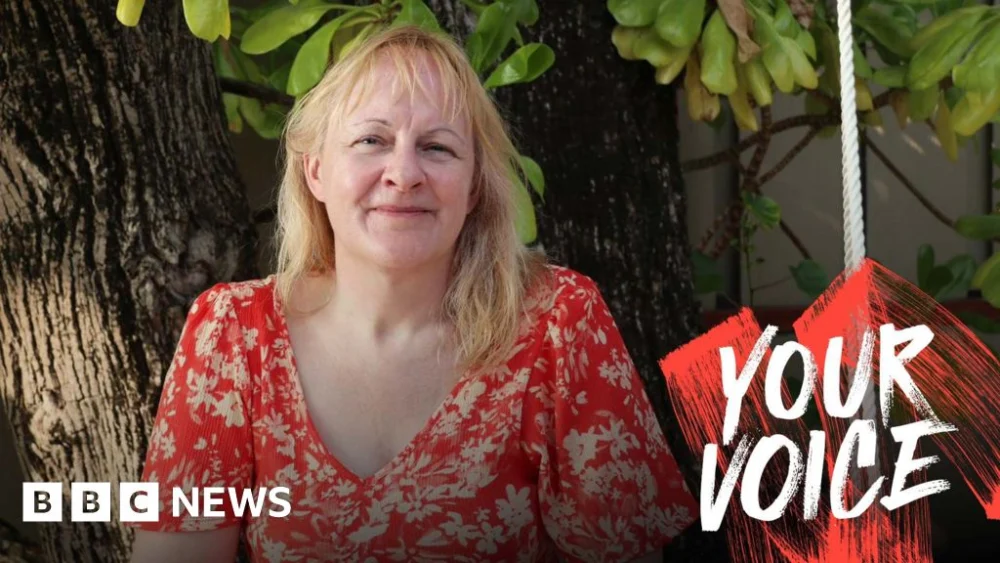
Andrea Pendrey and her partner, for instance, found their idyllic holiday in the Maldives abruptly transformed into a stressful ordeal. Their return flight, scheduled for Sunday, March 1st, was cancelled just hours after the conflict intensified. Andrea, who was due to commence critical breast cancer treatment upon her return to the UK, was met with a stark reality at the airport. "Emirates just told us we need to find a room, at our own cost, and the airport was filling up with more and more people," Andrea recounted, highlighting the immediate and unassisted burden placed on passengers.
The couple managed to secure alternative accommodation at a resort, but the financial implications have been devastating. Andrea estimates an additional cost of approximately £12,000 by the time they can depart. This sum is particularly crushing given her partner had recently lost his job, exacerbating their financial vulnerability. "The money is stressing me out," she admitted, revealing the necessity of relying on a credit card to cover these unexpected expenditures. This situation underscores a critical gap in many travel insurance policies: there is no universal definition or standard requirement for providers to cover expenses incurred due to acts of war or civil unrest. Claims for additional costs are entirely dependent on the specific wording and clauses within individual policies, often excluding such geopolitical events as ‘force majeure’ circumstances, absolving airlines and insurers of liability for compensation beyond rebooking.
For Andrea, the delay carried a far graver consequence than financial strain alone. Her chemotherapy treatment was scheduled to begin the previous Thursday in the UK. "I’m trying not to think about it too much. I need to get home for my chemo. It’s not helping being here," she expressed, illustrating the profound emotional and medical distress caused by the situation. The couple dedicated nearly a week to rebooking efforts, enduring hours of daily attempts with no success. It was only after Andrea’s insurance company recognized the severity of her medical condition and classified it as a medical emergency that a viable solution emerged. They were eventually scheduled to fly back to the UK via Frankfurt on Monday, offering a glimmer of hope amidst despair. Despite being in a tropical paradise, Andrea confessed, "Even though this place is paradise, we’ve been crying and feel really upset," a poignant reflection of how even the most beautiful surroundings can be overshadowed by profound stress and anxiety.

Thousands of miles away in Southeast Asia, Ashley Jones, 26, and his partner Trang Nguyen, 25, from Crawley, West Sussex, experienced a similar disruption to their two-week holiday in Ko Samui and Bangkok, Thailand. Ashley stated that the outbreak of the conflict "ruined" the latter half of their trip. "We started panicking about how we’d get home and fearing we’d run out of money," he explained. Their British Airways flight, also scheduled for the Sunday of the initial strikes, was cancelled. Faced with limited options, Ashley reported that British Airways informed him all other flights were "fully booked" until March 28th, leaving him no alternative but to accept a rescheduled flight.
The couple’s new itinerary involved a flight in the early hours of Friday, with a layover in Muscat, the capital of Oman. This proposed route, however, brought new anxieties. "It feels dodgy," Ashley remarked. "I don’t want to go via Muscat… it’s a war zone. The UK Foreign Office advises against going to Oman." This highlights a significant concern for travelers forced into routes that traverse regions deemed high-risk by their own governments, potentially voiding insurance or exposing them to further danger. Ashley’s frustration was compounded by the bureaucratic maze he encountered: "I spoke to his travel insurance company, his airline and travel agent and they all passed the buck." This lack of clear accountability or assistance left them in a dire state, essentially "homeless" until family support provided emergency funds. The emotional toll extended to their families, who were "worried about us travelling to the Middle East."
The plight of Debbie and Ardon Rainbird, retirees from Northallerton, North Yorkshire, exemplifies the protracted nature of such disruptions. They embarked on a two-week tour of Sri Lanka, flying out of Manchester on February 17th. Their planned return on Tuesday, March 3rd, via Doha, Qatar, was cancelled due to the conflict. What was intended to be a fortnight’s vacation stretched into an entire month. "Ultimately we’ve been away for a month when we were supposed to be away for two weeks," Debbie, 63, stated.

The couple, along with approximately 20 other travelers on the same tour, found themselves stranded in a basic hotel, incurring costs of $160 per night for dinner, bed, and breakfast. Simple necessities became challenges, with clothes requiring handwashing. The uncertainty surrounding insurance coverage added to their stress. "Few of us can find out if we are covered on insurance and only receive auto replies to any questions," Debbie noted, underscoring the inadequacy of customer service during a crisis. Beyond the financial strain, health issues arose, with Debbie contracting a respiratory tract infection and incurring doctors’ fees, while some elderly members of their group had to purchase replacement medication when their supplies ran out. Despite the trying circumstances, Debbie lauded the group’s camaraderie, mentioning how they organized quizzes and daily Tai Chi sessions, fostering a sense of community amidst the anxiety. Their tour operator, Distant Journeys, eventually secured a charter flight for Sunday night, offering a potential path home, albeit with lingering uncertainty regarding its confirmation.
These individual experiences coalesce into a broader narrative about the vulnerabilities inherent in modern international travel, especially in an increasingly volatile geopolitical landscape. The immediate grounding of flights due to airspace restrictions in the Middle East, a critical transit hub for East-West travel, triggered a domino effect across global aviation networks. Major airlines, including Emirates, British Airways, and Qatar Airways, which rely heavily on these corridors, were forced to make extensive cancellations and re-routings, leading to massive backlogs and limited availability.
The issue of travel insurance coverage is particularly complex. While many policies offer protection against unforeseen events, "acts of war," "civil unrest," or "terrorism" are frequently listed as exclusions. This means that while an airline might have a duty of care to provide alternative flights or accommodation under certain circumstances (e.g., EU261/UK261 regulations for delays/cancellations within their control), compensation for extended stays or additional expenses directly resulting from a conflict is rarely covered by standard travel insurance. Policies often differentiate between an airline’s fault and external, uncontrollable events. Travelers are typically responsible for additional costs if their policy explicitly excludes such events, or if they fail to obtain appropriate coverage. The "passing the buck" described by Ashley Jones is a common frustration, as airlines, insurers, and travel agents often point to different clauses or responsibilities, leaving the traveler to navigate a confusing and unsupportive system.

Furthermore, government travel advisories, such as those issued by the UK’s Foreign, Commonwealth & Development Office (FCDO), play a crucial role. If the FCDO advises against "all but essential travel" to a particular region, traveling there or having a layover in such an area can invalidate insurance policies. This creates a Catch-22 for stranded travelers who may be re-routed through regions now deemed unsafe.
The psychological impact of being stranded, especially under the shadow of geopolitical conflict, cannot be overstated. Beyond the financial strain and logistical nightmares, the uncertainty, fear for personal safety, separation from loved ones, and the disruption of crucial life events (like Andrea’s cancer treatment) inflict significant emotional distress. These experiences serve as a powerful reminder for future travelers to scrutinize their travel insurance policies, understand the implications of FCDO advice, and consider the geopolitical stability of their chosen routes and destinations. As the world remains interconnected yet volatile, the onus increasingly falls on individuals to be acutely aware of the multifaceted risks associated with international travel and to plan accordingly for contingencies far beyond typical holiday disruptions.