
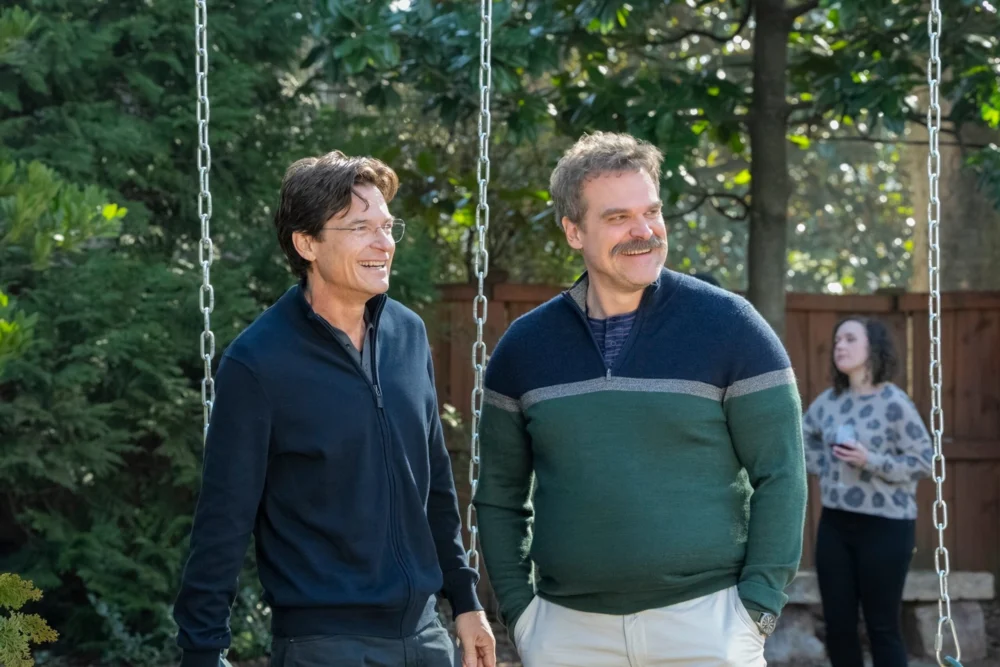
"By blending the absurdity of local celebrity with the tension of a neo-noir mystery, DTF St. Louis redefines the modern dramedy through a lens of unexpected male friendship and suburban disillusionment."
As the latest entry in HBO’s storied lineage of "water cooler" television, DTF St. Louis leverages the high-caliber performances of Jason Bateman, David Harbour, and Linda Cardellini to explore the complexities of adult life. The series serves as a spiritual successor to the network’s history of character-driven dramas, utilizing a unique mixture of dark humor and investigative intrigue to deconstruct the stable, if stagnant, lives of its Midwestern protagonists.
HBO has long held a monopoly on the cultural zeitgeist. From the sprawling fantasy epics like Game of Thrones to the intimate, high-stakes domesticity of The Sopranos, the network has mastered a specific alchemy: the ability to turn niche character studies into universal conversation starters. Whether it is the biting social satire of The White Lotus or the gritty, atmospheric tension of Mare of Easttown, HBO shows possess an innate "stickiness" that compels viewers to dissect every frame in group chats and office breakrooms. The newest addition to this prestigious catalog, DTF St. Louis, proves that this formula is not only intact but evolving.
At the center of this narrative is Clark, portrayed by Jason Bateman with the signature dry wit and simmering internal crisis that defined his work in Ozark. Clark is a television weatherman in St. Louis, a position that affords him a peculiar brand of local quasi-celebrity. He is a man whose face is known in every household in the metropolitan area, yet he remains fundamentally unfulfilled, trapped in the predictable rhythms of a mid-life plateau. His life is a series of green-screen forecasts and polite recognitions at the grocery store—until a near-death experience shatters his monotony.
The catalyst for Clark’s transformation is Floyd, played by David Harbour. Floyd is a jovial, larger-than-life American Sign Language (ASL) interpreter who saves Clark’s life during a live on-air broadcast. This incident creates an immediate, visceral bond between the two men, sparking an intense and often hilarious friendship that serves as the emotional core of the series. Harbour brings a warmth and spontaneity to Floyd that acts as the perfect foil to Bateman’s more reserved, neurotic Clark. Their chemistry explores a rarely seen side of adult male friendship—one born of trauma, mutual need, and a shared desire to break free from the roles society has assigned them.

However, the domestic landscape of DTF St. Louis is far from simple. The introduction of Floyd’s wife, Carol, played by the versatile Linda Cardellini, complicates the central dynamic. As a love triangle begins to take shape, the show subverts traditional television tropes. Rather than leaning into the predictable melodrama of infidelity, the series uses this triangle to examine the "zig-zag" nature of human desire and the messy realities of long-term commitment. Cardellini’s Carol is not a mere plot device; she is a fully realized character whose own frustrations and aspirations add layers of depth to the show’s exploration of mid-life malaise.
Beyond the domestic drama, DTF St. Louis distinguishes itself by incorporating a compelling mystery angle that leans into the neo-noir genre. The investigation is anchored by two formidable law enforcement figures: a veteran agent played by the legendary Richard Jenkins and a rising star portrayed by Joy Sunday, who recently rose to prominence in Netflix’s Wednesday. This investigative thread provides the "hook" that keeps audiences theorizing week after week. The mystery isn’t just a background element; it is inextricably linked to the bad behavior and secrets of the main trio, forcing the characters to confront the darker corners of their own lives.
The setting of St. Louis itself plays a crucial role in the show’s atmosphere. Unlike the glitz of Los Angeles or the frantic energy of New York, St. Louis provides a grounded, "Middle America" backdrop that heightens the themes of the show. It is a city with its own history, its own brand of local fame, and its own unique shadows. By placing these high-stakes emotional and criminal conflicts in a relatable, suburban environment, the creators of DTF St. Louis make the absurdity feel more poignant and the danger feel more immediate.
The show’s writing is particularly noteworthy for its tonal balance. It manages to be "very funny" in one moment, utilizing sharp, observational humor regarding local news culture and the indignities of aging, only to pivot sharply into earnest, philosophical musings on the nature of happiness. This "zig-zag" narrative style ensures that the audience is never quite sure where the story is headed, mirroring the unpredictable nature of the characters’ own lives. Each episode is crafted to make every minute count, building a dense web of relationships and secrets that demand the viewer’s full attention.
For those looking to keep up with the series, the release schedule is designed for maximum engagement. Airing on Sunday nights at 9:00 P.M. on both HBO and the Max streaming platform, the show occupies the network’s premier time slot—a space historically reserved for its most significant cultural offerings. The seven-episode structure allows for a tight, focused narrative that avoids the "filler" often found in longer seasons, ensuring that the mystery remains taut and the character development remains impactful.
As of early March, the series has already established its groundwork with the first two episodes. The premiere, titled "Cornhole," introduced the audience to the inciting incident and the initial meeting between Clark and Floyd. This was followed by "Snag It," which delved deeper into the burgeoning friendship and the introduction of Carol. The upcoming third episode, "The Go Getter," scheduled for March 15, is poised to escalate the tension, particularly as the investigative efforts of Jenkins and Sunday’s characters begin to close in on the central trio.

The fourth episode, titled "Missouri Mutual Life & Health Insurance Company," suggests a deeper dive into the bureaucratic and perhaps fraudulent underpinnings of the characters’ lives, hinting that the "mystery" may involve more than just a simple crime of passion. With five weeks remaining in the season, the show is currently at a critical juncture where the "laughs, mystery, bad behavior, and male friendship" promised by the creators are beginning to converge in unexpected ways.
DTF St. Louis is more than just a comedy or a thriller; it is an examination of what happens when the life you have built no longer feels like enough. It asks whether it is possible to reinvent oneself in the middle of the journey, and what the collateral damage of that reinvention might be. With a powerhouse cast and a narrative that refuses to play by the rules, it has solidified its place as one of the year’s most essential viewing experiences.
The Complete Release Schedule for HBO’s DTF St. Louis:
To ensure you don’t miss a single moment of this evolving mystery, here is the full broadcast and streaming schedule:
- Episode 1, "Cornhole" – Premiered March 1. (Currently available for streaming)
- Episode 2, "Snag It" – Premiered March 8. (Currently available for streaming)
- Episode 3, "The Go Getter" – Airing on HBO and streaming on Max on March 15 at 9:00 P.M. ET.
- Episode 4, "Missouri Mutual Life & Health Insurance Company" – Airing on HBO and streaming on Max on March 22 at 9:00 P.M. ET.
- Episode 5 – Airing on HBO and streaming on Max on March 29 at 9:00 P.M. ET.
- Episode 6 – Airing on HBO and streaming on Max on April 5 at 9:00 P.M. ET.
- Episode 7 (Season Finale) – Airing on HBO and streaming on Max on April 12 at 9:00 P.M. ET.
As the series progresses toward its April finale, the stakes for Clark, Floyd, and Carol are only expected to rise. In the tradition of HBO’s greatest hits, DTF St. Louis is proving that the most interesting stories aren’t just about what happens, but about who we become when everything we thought we knew starts to shift. Whether you are in it for the dark comedy, the neo-noir mystery, or the exploration of male friendship, this is one show that demands a spot on your weekly watchlist.