
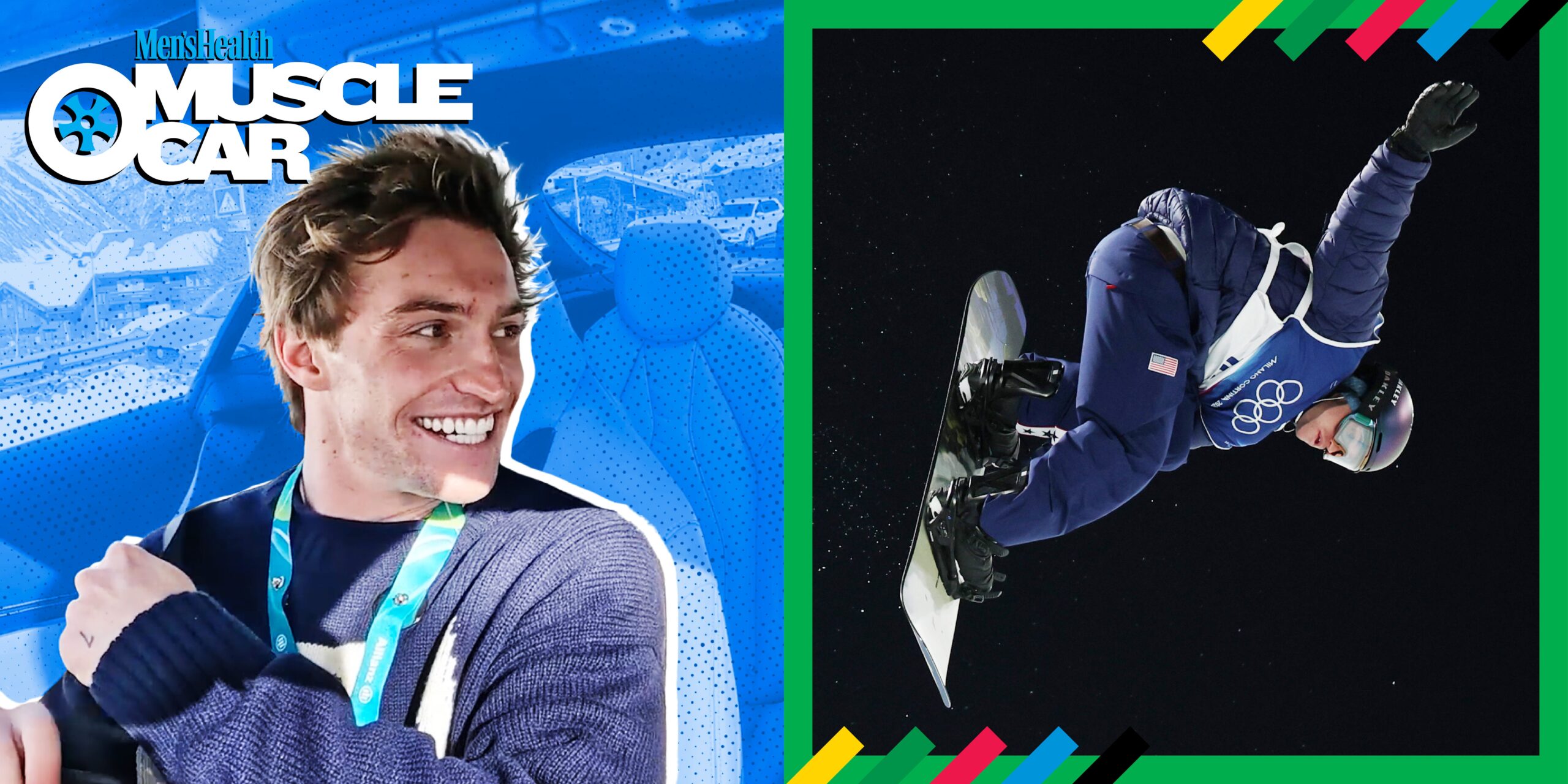
"Success in the halfpipe is a delicate balance of explosive lower-body power and meticulous neurological recovery, proving that an athlete’s longevity depends as much on ‘sneaky’ functional movement as it does on high-flying aerials."
As the international sports community turns its gaze toward the 2026 Milano-Cortina Winter Games, American snowboarder Jake Pates is redefining the archetype of the extreme athlete through a philosophy that marries high-performance physics with holistic wellness. Following a journey that saw him rise to the top of the Olympic ranks as a teenager, navigate the harrowing recovery of a traumatic brain injury, and emerge as a leading advocate for mental health, Pates provides a blueprint for how modern competitors manage the brutal physical demands of the halfpipe while safeguarding their long-term well-being.
The Physics of the Halfpipe
To the casual observer, halfpipe snowboarding appears to be a series of gravity-defying stunts performed with effortless grace. However, as Pates explains, the reality is far more industrial and physically punishing. The "pipe" is essentially a massive U-shaped structure carved out of dense, injected ice, designed to maximize speed and transition. Athletes "strap a piece of wood" to their feet and navigate these frozen walls using metal edges that function similarly to ice skates.
The mechanics of the sport require a profound understanding of centrifugal force and vertical velocity. As a rider descends the transition, they must "pump" the transition to maintain speed. This movement is not unlike a child on a playground swing, but amplified by massive G-forces and the requirement to launch twenty feet or more above the lip of the pipe. Because the landing surface is just as unforgiving as the launch point, the athlete’s body must act as a sophisticated shock absorber. For Pates, this reality dictates every aspect of his off-snow preparation.
The Power of the Posterior Chain
When discussing the primary engine of a snowboarder, Pates is unequivocal: the glutes are the foundation of everything. In the world of sports science, the glutes are the largest and most powerful muscle group in the human body, responsible for hip extension and stabilization. For a halfpipe rider, strong glutes are the difference between a successful "pop" off the lip and a catastrophic "decking"—hitting the flat top of the pipe wall.

Interestingly, Pates has moved away from the traditional heavy-weight protocols often associated with elite strength training. While many athletes rely on heavy back squats and deadlifts, Pates has adapted his routine to accommodate his specific physiological needs, specifically citing "messed up hips" and lower back strain as reasons to avoid heavy external loading. Instead, he utilizes "sneaky Pilates" and glute bridges.
Pilates, often undervalued in extreme sports, focuses on the "powerhouse" of the body—the deep abdominal muscles, the lower back, and the pelvic floor. By integrating these movements "sneaky" style—often alone or as part of a larger functional circuit—Pates builds the rotational stability required to spin four times in the air (1440 degrees) without losing his center of gravity. His preference for bodyweight exercises like pushups, dips, and pullups ensures that he maintains a high power-to-weight ratio, which is critical for maximizing height in the air.
Neurological Resilience and Mental Health
Jake Pates’ career is not just a story of physical triumph, but one of neurological survival. After finishing eighth at the 2018 PyeongChang Games at just 19 years old, Pates suffered a significant concussion that fundamentally altered his approach to the sport. In the high-stakes world of professional snowboarding, where "sending it" is the cultural norm, Pates’ subsequent pivot to advocacy for brain health and mental wellness marked a significant shift in the industry.
The recovery from a traumatic brain injury (TBI) is often more arduous than healing a broken bone. It requires cognitive rest, sensory management, and a slow recalibration of the vestibular system. Having navigated this path, Pates now views his training through a lens of longevity. His return to Team USA for the 2026 cycle is a testament to the efficacy of his recovery protocols, which prioritize the brain’s health as much as the body’s strength.
The Intersection of Ancient Practice and Modern Tech
In preparation for the frigid conditions of Milano-Cortina, Pates utilizes a unique blend of high-tech recovery tools and ancient movement arts. While the Theragun—a percussive therapy device—is a staple for maintaining blood flow in freezing temperatures, Pates has recently adopted Qigong under the guidance of a US Team physical therapist who is also a karate master.
Qigong is a centuries-old Chinese system of coordinated body posture and movement, breathing, and meditation. For an Olympic snowboarder, the benefits are twofold. Physically, Qigong promotes "flow" and joint mobility, which is essential for an athlete who spends hours in a crouched, high-tension stance. Mentally, the breathwork associated with Qigong helps regulate the nervous system, allowing Pates to remain calm in the "start gate"—perhaps the most high-pressure environment in sports.

Nutrition and the Professional Ecosystem
The life of a modern Olympian is a constant balancing act between training and the "business of being an athlete." Nutrition plays a pivotal role in this ecosystem. Pates emphasizes a "clean" approach, prioritizing high-quality protein to facilitate muscle repair after the intense eccentric loading of a day on the slopes. In a landscape where supplement safety is paramount due to strict anti-doping regulations, Pates relies on "clean" and approved brands like Momentous, ensuring that his fuel does not compromise his eligibility.
Furthermore, the financial realities of professional snowboarding require a savvy approach to sponsorships. While traditional gear sponsors remain the backbone of the sport, Pates looks toward the future, expressing interest in emerging sectors like cryptocurrency (specifically Renzo). This forward-thinking mindset extends to his "Olympic GOAT" (Greatest of All Time) selection, Ayumu Hirano. Hirano, the Japanese gold medalist known for his technical perfection and the historic "Triple Cork," represents the ceiling of what is possible in the sport—a ceiling Pates intends to reach in 2026.
The Mamba Mentality and the Road Ahead
When asked about his hypothetical dream opponent, Pates points to the late Kobe Bryant. This choice reveals the competitive fire beneath Pates’ laid-back exterior. Bryant’s "Mamba Mentality"—a relentless pursuit of excellence and attention to detail—resonates with Pates as he prepares for his second Olympic appearance.
The road to Milano-Cortina is paved with both physical and mental challenges. Pates must maintain his "sneaky" Pilates routine to protect his back, continue his Qigong practice to stay centered, and push the technical boundaries of his runs to impress judges who are increasingly looking for a combination of massive amplitude and flawless style.
As he heads toward the Italian Alps, Jake Pates stands as a symbol of the modern, "complete" athlete. He is someone who understands that to win gold, one must first master the self—protecting the mind, strengthening the "booty," and embracing the quiet, unseen work that happens long before the world starts watching. In the 2026 halfpipe, the wood strapped to his feet will be guided by a body and mind that have been meticulously rebuilt for the highest level of competition.