
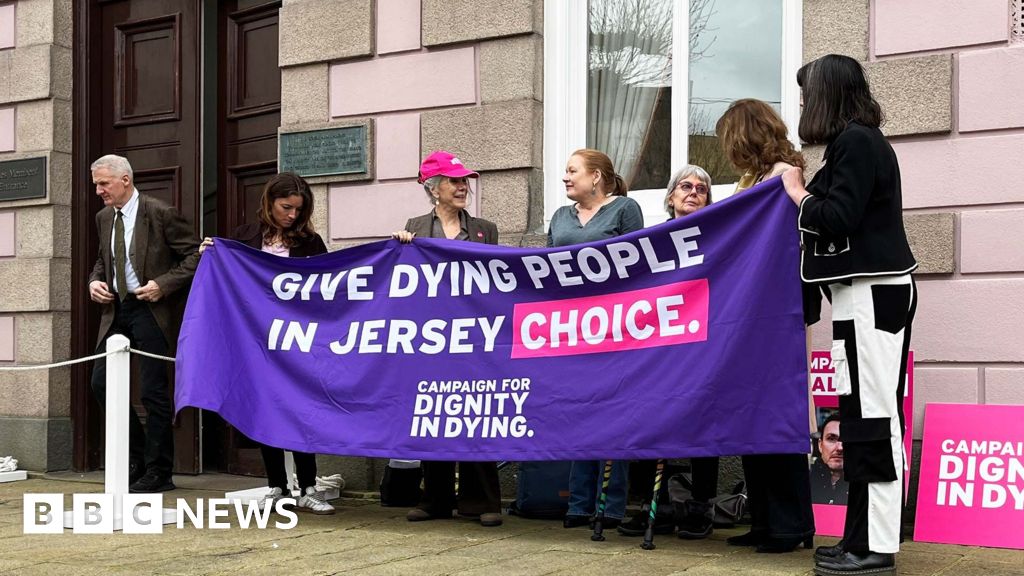
"Jersey’s approval of doctor-administered assisted dying marks a significant divergence from proposals elsewhere in the British Isles, highlighting a complex and evolving debate over end-of-life choices and legal frameworks."
The recent decision by Jersey’s parliament to legalise assisted dying for terminally ill adults, uniquely including provisions for physician-administered euthanasia, represents a pivotal moment in the ongoing discourse surrounding end-of-life care across the British Isles. This move places Jersey at the forefront of legislative reform in the region, contrasting sharply with the differing stages and approaches taken by Westminster, Holyrood, and Tynwald, and reigniting crucial discussions about patient autonomy, medical ethics, and the safeguards necessary in such sensitive legislation.
The Channel Island of Jersey, with its proud 800-year history of legislative autonomy, has become the first jurisdiction in the British Isles to pass a law allowing terminally ill adults the right to choose to end their own lives. This landmark decision brings the total number of parliaments across the British Isles that have actively engaged with the divisive issue of assisted dying to five. The question now shifts to the specifics of each proposal, their current legislative standing, and the potential timeline for the first assisted death under these new frameworks.
Jersey’s Pioneering Approach: Embracing Voluntary Euthanasia
What truly sets Jersey’s newly approved legislation apart from the proposals currently being considered in Westminster, Holyrood (Scotland), and Tynwald (Isle of Man) is its inclusion of voluntary euthanasia. Under the Jersey law, eligible individuals will have the option for a doctor to administer a lethal dose intravenously. This method, where a medical professional directly facilitates the death, aligns Jersey with jurisdictions such as Spain, Canada, New Zealand, and several Australian states, where it has become a preferred method of assisted dying due to its perceived reliability, speed, and reduction of patient burden. Proponents argue it offers a more dignified and controlled end for those unable or unwilling to self-administer.
In contrast, legislative proposals in the United Kingdom’s Parliament, the Scottish Parliament, and the Tynwald on the Isle of Man, have so far limited assisted dying to self-administration – typically meaning the individual must ingest a prescribed lethal dose themselves. This approach is more akin to the model adopted by more than a dozen US states that have legalised medical aid in dying. Advocates of self-administration often argue it maintains a clearer distinction between assisted dying and euthanasia, placing the final act squarely with the patient and potentially mitigating concerns about the direct involvement of medical professionals in ending a life. It is seen by some as upholding the traditional Hippocratic oath more closely.
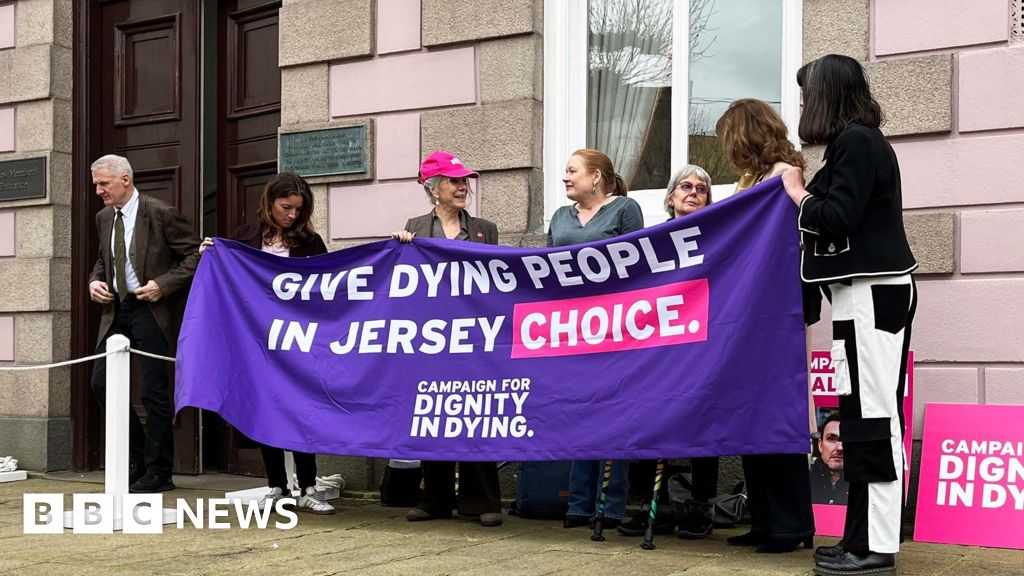
Jersey’s parliament, following three days of intense debate and voting on a series of amendments, firmly endorsed its more expansive approach. Members decisively rejected attempts to restrict doctor-administered lethal doses only to cases where individuals were physically unable to self-administer the drugs. Furthermore, a crucial vote upheld a provision allowing for a "waiver." This controversial clause permits doctors to administer a lethal drug infusion even if the eligible person has subsequently lost mental capacity, potentially meaning they are no longer conscious. This provision raises significant ethical questions regarding sustained informed consent and the definition of autonomy at the very end of life. While designed to respect a patient’s earlier wishes, it necessitates exceptionally robust safeguards, clear advance directives, and rigorous oversight to prevent potential misuse or misinterpretation of intent.
The Path to Implementation: Royal Assent and Beyond
Having successfully navigated the parliamentary stages, Jersey’s assisted dying bill will now be submitted for Royal Assent. While this process is largely considered a formality for most legislation passed in the British Isles, signifying the sovereign’s ceremonial approval, it carries particular weight for Crown Dependencies like Jersey. For these self-governing islands, Royal Assent involves scrutiny by officials at the Ministry of Justice (MoJ) in London. This review focuses on ensuring the legislation is consistent with international obligations, such as the European Convention on Human Rights, and that it contains adequate safeguards, particularly concerning issues like coercion, capacity assessments, and post-death reviews. The MoJ’s role is not to block policy but to ensure legal robustness and compliance with overarching legal principles.
Jersey finds itself in a similar holding pattern to the Isle of Man, which passed its own assisted dying bill 11 months prior and is still awaiting Royal Assent. The delay for the Isle of Man is understood to stem from queries regarding the specific mechanisms for post-death reviews, the adequacy of safeguards against coercion, and full compliance with the European Convention on Human Rights. These queries underscore the meticulous nature of the scrutiny applied to such sensitive legislation. It is important to note that there is no indication or expectation that the UK Justice Secretary, David Lammy, intends to block either the Jersey or Isle of Man legislation, as these laws do not directly impact the UK mainland’s legal framework.
Both Crown Dependencies have incorporated strict residency requirements into their bills – 12 months for Jersey and five years for the Isle of Man. These provisions are explicitly designed to prevent "death tourism," a concern where individuals might travel to these islands solely for the purpose of accessing assisted dying, similar to the phenomenon observed with places like Dignitas in Switzerland. Indeed, for those in the UK with sufficient financial means, an assisted death at Dignitas in Zurich remains an option, operating entirely outside the legislative scrutiny of the British Isles and highlighting an existing inequality in access to end-of-life choices.
Once Royal Assent is granted, both Jersey and the Isle of Man will enter an intensive implementation phase. This period, often underestimated, involves the meticulous preparation of their respective health services. It encompasses the development of clear clinical protocols, comprehensive training for medical staff (including physicians, nurses, and counsellors), the establishment of robust ethical guidelines, the creation of counselling and support services for patients and their families, and potentially the provision of dedicated facilities or pathways within existing healthcare infrastructure. Jersey’s Health Minister, Tom Binet, has indicated that the first assisted death on the island, which has a population of just over 100,000, could occur within 18 months. He anticipates a modest number of cases initially, estimating between two and four deaths in the first year, with this figure potentially growing over time as the system matures and public awareness increases. The Isle of Man, with a slightly smaller population of around 85,000, similarly expects a very small annual number of assisted deaths, reflecting the strict eligibility criteria typically applied.
The Complex Landscape of Mainland UK and Devolved Nations
The legislative journey for assisted dying in England, Wales, and Scotland presents a far more intricate and protracted picture.
Westminster (England and Wales): A Persistent Uphill Struggle
In the UK Parliament, a Private Member’s Bill seeking to legalise assisted dying for England and Wales, championed by Baroness Meacher in the House of Lords and later by Dame Sarah Leadbeater in the Commons, has faced significant hurdles. Despite passing initial stages in the House of Commons, the Leadbeater bill is currently in deep trouble in the House of Lords. The primary challenge is a parliamentary tactic known as "filibustering," where opponents table an exceptionally large number of amendments to effectively run down the parliamentary clock. More than 1,200 amendments have been tabled in the Lords, with a staggering 700 of these introduced by just eight peers. This strategy makes it highly probable that the bill will run out of time before the end of the current parliamentary session, leading to its collapse. Private Member’s Bills are particularly vulnerable to this tactic as they rely on limited parliamentary time and typically lack explicit government backing, which is often crucial for navigating complex legislation.
If the bill fails, it would require a new MP to reintroduce it after the next King’s Speech, necessitating it to go through all its Commons stages again before returning to the Lords. While theoretically, the Parliament Act could be invoked to prevent the upper house from blocking Commons bills for more than one session, this is a rarely used and politically charged mechanism, particularly for a Private Member’s Bill. Its deployment often signifies a constitutional clash and requires strong government political will, which has been conspicuously absent on this issue.
The situation in Wales adds another layer of complexity. Many Members of the Senedd (MSs) lament the fact that, unlike Scotland or the Crown Dependencies, the Welsh Parliament does not possess the legislative power to introduce its own assisted dying law. This is due to the specific devolution settlement, where health policy is devolved but criminal law, which covers assisted dying, remains a reserved matter for Westminster. This means that any legalisation in Wales would be entirely dependent on Westminster legislation. A particularly concerning scenario for Welsh proponents is that if a Westminster bill were to pass, but without provisions for NHS involvement, assisted dying in Wales might only be available through private providers. This raises significant concerns about equitable access, affordability, and the potential for a two-tier system in a publicly funded healthcare landscape.
Scotland: Making Steady Progress
In Scotland, a Member’s Bill introduced by Liam McArthur MSP is at Stage 3 of the Scottish parliamentary process. This stage represents the final opportunity for amendments and debate before a conclusive vote by MSPs. Should the bill pass this critical stage, it would then proceed for Royal Assent. The Scottish Parliament has a history of independent action on social issues, and this bill reflects a sustained effort by campaigners and politicians.

A notable difference in the Scottish proposal compared to some earlier Westminster discussions is the absence of a requirement for a multi-disciplinary panel, comprising a lawyer, psychiatrist, and social worker, to review each case. This streamlined approach aims to reduce bureaucratic hurdles and potentially expedite the process, though it also raises questions about the robustness of safeguards compared to more elaborate review mechanisms. Instead, the Scottish model typically relies on assessments by two independent doctors. The Scottish debate has been informed by extensive public consultation and a strong cross-party interest in the issue, suggesting a potentially clearer path to legislative success than its Westminster counterpart.
Northern Ireland: A Stalled Debate
Finally, in Northern Ireland, assisted dying remains a devolved issue, meaning any legislation would fall under the remit of the Northern Ireland Assembly. However, given the current political landscape, which has often been characterised by periods of suspended government and complex power-sharing arrangements, the introduction and passage of such contentious legislation appear unlikely for the foreseeable future. Socially conservative views also tend to hold more sway in the Assembly on issues like this.
The Broader Ethical and Societal Context
The ongoing debates across the British Isles reflect a profound societal struggle with fundamental questions of individual autonomy, the sanctity of life, the role of medicine, and the potential for vulnerability and coercion. While proponents emphasize compassion, dignity, and choice for those facing intractable suffering, opponents raise concerns about the "slippery slope" – the potential for the scope of such laws to expand over time, and the imperative to prioritize robust palliative care as a humane alternative. The inclusion of physician-administered options and waivers for capacity in Jersey’s law will undoubtedly intensify these ethical discussions.
Jersey’s bold move, particularly its inclusion of voluntary euthanasia and the waiver for loss of capacity, will undoubtedly serve as a critical case study for other jurisdictions considering similar reforms. The implementation phase, and the real-world experiences that emerge, will offer invaluable insights into the practicalities, challenges, and societal impacts of such profound legislative change. As the British Isles continue to grapple with these complex ethical and legal questions, the varied legislative paths underscore a deeply divided yet increasingly pressing public conversation about how societies should best support individuals at the very end of their lives, balancing compassion with protection.