
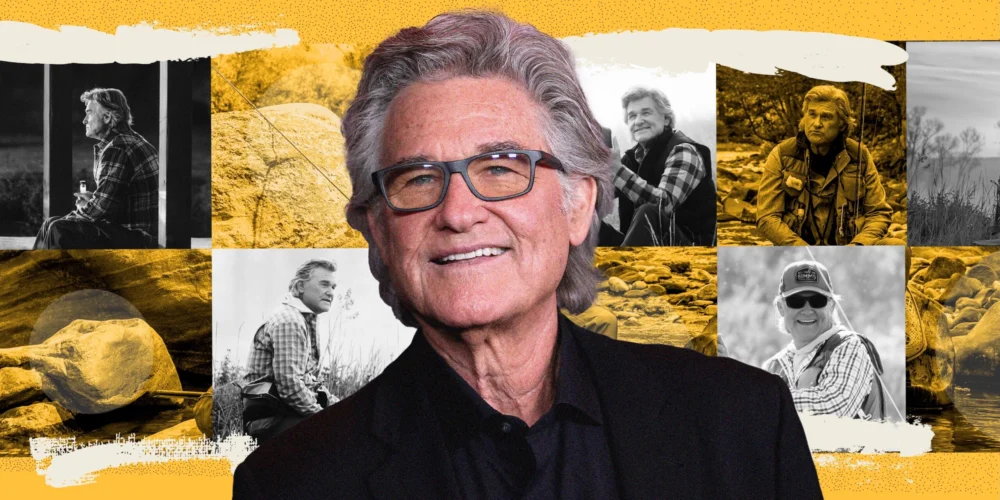
"In The Madison, Kurt Russell finds a rare intersection between his cinematic legacy and his private life, portraying a version of masculinity defined by emotional depth and enduring partnership rather than mere ruggedness."
The arrival of Taylor Sheridan’s latest series, The Madison, marks a significant shift in the landscape of modern television drama, moving away from the high-stakes power struggles of the Yellowstone ranch and into a more intimate exploration of grief and legacy. Starring Kurt Russell and Michelle Pfeiffer, the series utilizes the rugged backdrop of Montana not just as a setting, but as a catalyst for emotional reckoning. For Russell, the role of Preston Clyburn is more than just another entry in a storied career; it is a character that mirrors his own transition from a Hollywood leading man to a person who prioritizes the authenticity of a life lived away from the cameras. By examining the intersections of Russell’s personal history, his collaboration with Sheridan, and his long-standing influence on the Western genre, we gain insight into why The Madison stands as a pivotal moment in contemporary storytelling.
The Evolution of a Hollywood Icon
Kurt Russell’s career has spanned over five decades, beginning as a child star for Disney and evolving into one of the most versatile actors of his generation. His filmography reads like a map of American genre cinema. He has navigated the icy terror of John Carpenter’s The Thing, defined the post-apocalyptic anti-hero as Snake Plissken in Escape from New York, and delivered the definitive portrayal of Wyatt Earp in the 1993 Western classic Tombstone.

Throughout these roles, Russell has often personified a specific brand of American masculinity: capable, stoic, and occasionally cynical. However, his work has always been underscored by a certain charm and relatability. Whether playing the legendary U.S. Olympic hockey coach Herb Brooks in Miracle or the psychopathic Stuntman Mike in Quentin Tarantino’s Death Proof, Russell possesses a unique ability to ground even the most extreme characters in a sense of reality.
In The Madison, Russell steps into a role that requires a different kind of strength. As Preston Clyburn, a New York finance executive with a profound connection to the Montana wilderness, he portrays a man whose presence is felt through the memories and regrets of those he left behind. The series begins with a tragedy that forces his wife, Stacy (played by Michelle Pfeiffer), to leave her sophisticated Manhattan life and confront the land her husband loved. This narrative structure allows Russell to explore a softer, more emotionally resonant version of the rugged individualist—a man who finds peace in the mountains but struggles to bridge the gap between his two worlds.
The Sheridan Touch: Redefining the Modern West
Taylor Sheridan has become the primary architect of the "Neo-Western," a subgenre that blends traditional Western themes of land and honor with modern political and social anxieties. While Yellowstone is characterized by its operatic violence and dynastic conflict, The Madison represents a tonal shift for the writer-producer. It is a story focused on the internal landscape of its characters, particularly the experience of women navigating a world traditionally dominated by men.
Sheridan’s decision to cast Russell and Pfeiffer—two actors with immense gravity and established histories of portraying strong, complex individuals—signals a commitment to a more mature form of storytelling. For Russell, entering the "Sheridan-verse" felt like a natural progression. Sheridan’s writing often celebrates the "man of the land," a trope Russell has embodied since his early days in television Westerns. However, The Madison adds layers of domesticity and vulnerability to this archetype. The show depicts a successful, loving marriage—a rarity in a television landscape often obsessed with dysfunction. This authenticity is bolstered by the real-life experiences of the leads: Russell’s 42-year partnership with Goldie Hawn and Pfeiffer’s long-standing marriage to writer-producer David E. Kelley.

Art Imitating Life: The Colorado Connection
One of the reasons Russell’s performance in The Madison feels so grounded is the parallel between the character’s life and his own. At the age of 26, at the height of his rising fame, Russell made the conscious decision to move to Colorado. He sought a life that wasn’t solely defined by the film industry, choosing instead to raise his family in the mountains.
This personal history with the American West informs every frame of his performance. Russell is an avid outdoorsman, a fly-fisherman, and a pilot—skills that are not just hobbies but foundational elements of his identity. In The Madison, Preston Clyburn’s love for Montana is presented as a spiritual necessity, a sentiment Russell understands intimately. He has often spoken about the "split life" of an actor who lives in the wilderness but works in Los Angeles, and he brings that nuanced perspective to the screen.
Furthermore, Russell’s venture into winemaking with Gogi Wines, a Burgundian-style Pinot Noir produced in Central California, reflects his dedication to craft and land. This commitment to quality and authenticity is a trait he shares with Preston, making the character’s preferences—such as his love for the Robert Redford-directed film A River Runs Through It—feel like genuine extensions of Russell’s own personality.
The Redford Legacy and the Philosophy of Work
The first episode of The Madison is dedicated to the late Robert Redford, a titan of cinema who, like Russell, became synonymous with the American West and the preservation of its spirit. Redford’s A River Runs Through It is cited in the show as Preston’s favorite movie, serving as a thematic touchstone for the series. The film, which explores the bond between brothers and the meditative power of fly-fishing, mirrors the themes of legacy and nature that Sheridan weaves into The Madison.

Russell’s own brief encounter with Redford—delivering a bottle of his wine to the set of The Horse Whisperer—serves as a symbolic passing of the torch. Both actors represent a lineage of Hollywood leading men who used their influence to champion stories about the environment and the human condition.
Central to Russell’s approach to both his career and his life is the mantra quoted by his character in the series: "Love what you do and you’ll never work a day in your life." For Russell, this wasn’t always a given. His first passion was professional baseball, a career that was cut short by injury after three years in the minor leagues. This early heartbreak forced him to re-evaluate his path, leading him to fully commit to acting—a craft he had practiced since childhood but hadn’t yet embraced as his life’s work. That transition from athlete to artist instilled in him a profound appreciation for the longevity of his career and the importance of choosing projects that resonate on a personal level.
Grief, Regret, and the Montana Wilderness
At its core, The Madison is a meditation on the things left unsaid. The tragedy at the heart of the show serves as a "sliding doors" moment for Michelle Pfeiffer’s Stacy. She is forced to inhabit the space her husband cherished, realizing too late the depth of the peace he found there. Russell’s portrayal of Preston, primarily seen through the lens of Stacy’s memory and the physical remnants of his life in Montana, emphasizes the weight of missed opportunities.
The show challenges the traditional "rugged" masculine trope by showing that true strength lies in the ability to foster a deep, emotional connection. Preston’s masculinity isn’t defined by his ability to dominate the land, but by his desire to share its beauty with the person he loves. The regret Stacy feels—the realization that she avoided the very place that made her husband whole—is a universal human experience that transcends the Montana setting.

Conclusion: A Full-Circle Moment
Kurt Russell’s involvement in The Madison represents a full-circle moment for an actor who has spent his life navigating the myths and realities of the American West. By collaborating with Taylor Sheridan and Michelle Pfeiffer, Russell has found a project that allows him to synthesize his professional skills with his personal values.
The series stands as a testament to the power of authentic storytelling. It eschews the easy tropes of Western conflict in favor of a nuanced look at how we process loss and how the places we love define us. For Russell, The Madison is not just another role; it is a reflection of a life lived with intention, a career built on versatility, and a legacy rooted in the enduring spirit of the mountains. As audiences follow Stacy Clyburn’s journey into the heart of Montana, they are also witnessing a masterclass from an actor who has finally found a character that speaks his own language.