
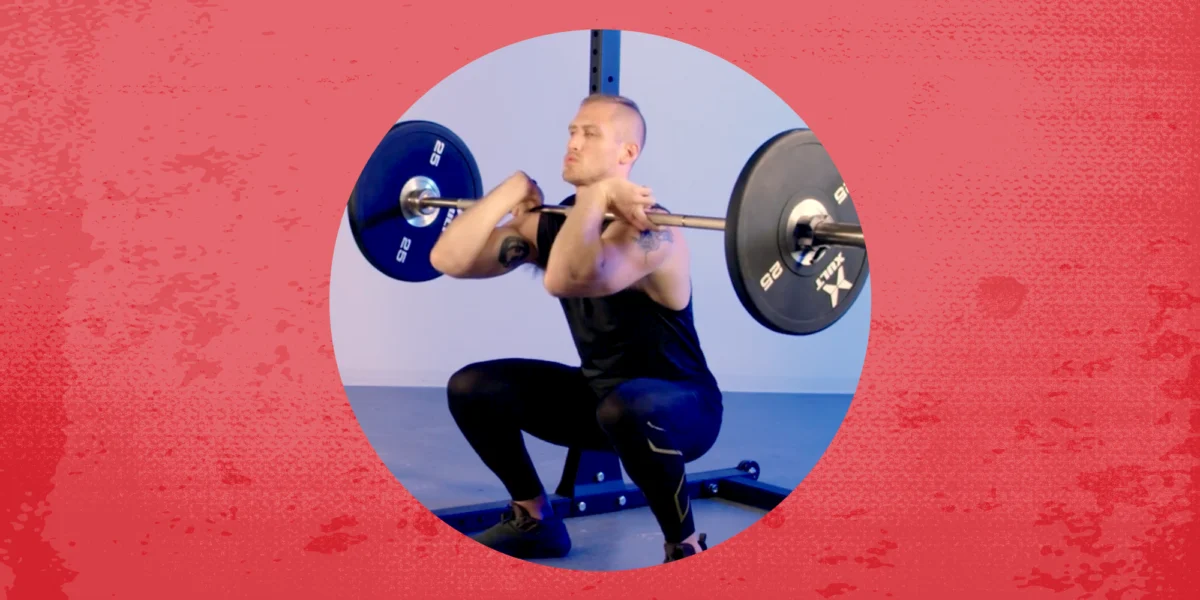
“By shifting the load to the anterior, the front squat transforms a traditional leg exercise into a comprehensive test of core bracing, postural integrity, and quad-dominant power.”
While the barbell back squat remains the industry standard for sheer weight capacity and posterior chain development, the front squat offers a unique biomechanical challenge that demands a higher degree of technical proficiency. By repositioning the barbell from the trapezius to the anterior deltoids, the lifter is forced to maintain a near-vertical torso, which significantly increases the recruitment of the quadriceps and the muscles of the core. This shift not only builds lower body strength but also serves as a diagnostic tool for identifying weaknesses in thoracic extension and abdominal bracing, making it an indispensable movement for athletes and fitness enthusiasts alike.
The Biomechanics of the Anterior Load
The fundamental difference between the back squat and the front squat lies in the center of mass. In a back squat, the weight sits behind the center of gravity, allowing the lifter to lean forward slightly and engage the hips and hamstrings more aggressively. In contrast, the front squat places the barbell across the front of the shoulders. To prevent the weight from pulling the torso forward and crashing to the floor, the lifter must fight to stay upright.
This upright positioning places the knees in a more forward-traveling path, which creates a greater degree of knee flexion. Consequently, the quadriceps—specifically the vastus medialis and vastus lateralis—are forced to do a larger share of the work. Furthermore, the anterior load requires the rectus abdominis and the internal and external obliques to fire with immense intensity to stabilize the spine. This makes the front squat as much a "core" exercise as it is a "leg" exercise.
Choosing Your Grip: Stability vs. Mobility
One of the primary barriers to entry for the front squat is the grip. Fitness experts Ebenezer Samuel, C.S.C.S., and Brett Williams, NASM-CPT, emphasize that there is no "correct" grip, only the one that allows the lifter to remain stable and comfortable.

The most common grip among athletes is the "clean grip" or "front rack position," derived from Olympic weightlifting. This involves placing the fingers under the bar with the elbows driven high and parallel to the floor. While this offers the most control over the barbell, it requires significant mobility in the wrists, triceps, and latissimus dorsi. For those lacking this mobility, the "bodybuilder grip" or "cross-arm grip" is a viable alternative. In this version, the lifter crosses their arms over the bar, pinning it against the deltoids.
Samuel notes that proficiency in both is ideal. "You’re always an injured wrist away from having to use the bodybuilder grip for a few weeks," he explains. The goal, regardless of the grip, is to ensure the bar is secure and the lifter is not distracted by discomfort in the upper body, which could lead to "bouncing" at the bottom of the rep or rushing the movement.
The Art of the "Shelf"
The barbell should rest on the "meaty" part of the anterior deltoids, very close to the neck. For many beginners, this sensation can feel restrictive or even slightly claustrophobic. However, Samuel warns that allowing the bar to drift too far forward is a recipe for failure. If the bar moves away from the midline, it places undue stress on the smaller muscles of the shoulders (the anterior deltoids) rather than the skeletal structure.
A bar that is positioned too far forward also makes it nearly impossible to "sit back" into the squat, as the weight will pull the lifter onto their toes. The fingers should act as a guide rather than a support system; the shoulders are the primary "shelf" holding the weight. Keeping the fingers wrapped around the bar, regardless of the grip, ensures that the bar remains locked in place throughout the eccentric and concentric phases of the lift.
Engaging the Posterior Chain for Anterior Success
Though the front squat is an anterior-chain-dominant movement, it cannot be performed safely without active engagement of the back muscles. Maintaining tension in the upper and mid-back is critical for keeping the shoulders in a safe position and preventing the thoracic spine from rounding. When the mid-back collapses, the elbows drop, and the barbell inevitably rolls forward, forcing the lifter to dump the weight.
Furthermore, the lower back extensors must remain "live" to prevent "butt wink" or rounding of the lumbar spine at the bottom of the movement. This total-body tension ensures that the force generated by the legs is efficiently transferred through the torso and into the barbell.
The "Think Up" Mentality
Success in the front squat is often a matter of mental cues. Samuel suggests a "Think Up" approach: throughout the entire range of motion, the lifter must battle to keep the chest and shoulders high. This is particularly difficult during the "transition" or the "hole"—the very bottom of the squat where the mechanical advantage is lowest.
As the lifter begins to power up from the bottom, the natural tendency is for the torso to lean forward. To counteract this, one must squeeze the mid-back and lower back muscles with maximum intention. Samuel recommends a mental check-in at three distinct points: at the top of the rep, at the very bottom, and at the moment of ascent. If the chest stays up, the rep is likely to be successful.
Aesthetic and Functional Benefits
For those training for aesthetics, the front squat is often superior to the back squat for developing the "quad sweep." Because the glutes and hamstrings are less involved than in a low-bar back squat, the quadriceps are forced to handle the brunt of the load.
From a functional standpoint, the front squat has a higher carryover to real-world movements and other sports. Whether it is a football player exploding off the line or an Olympic lifter catching a clean, the ability to stabilize a heavy load in front of the body is a critical athletic skill. Additionally, for beginners, the front squat is a self-correcting movement. Unlike the back squat, where a lifter can "good morning" a weight up using their lower back, the front squat will simply fall if the form is incorrect, protecting the spine from improper loading.
Muscular Architecture
The primary movers in the front squat are the quadriceps, glutes, and hamstrings. However, the secondary stabilizers are equally important. The spinal extensors (erector spinae) work overtime to maintain an upright posture, while the rectus abdominis acts as a pillar of support. Even the upper back and traps are recruited to stabilize the "shelf" created by the shoulders. This makes the front squat a truly "substantial compound movement" that taxes the central nervous system and the muscular system simultaneously.
Programming and Integration
Due to the high technical demand and the stress it places on the core and upper back, the front squat should be prioritized in a workout. Experts recommend placing it at the beginning of a session, either on a dedicated leg day or during a full-body workout, when the legs and stabilizer muscles are fresh.
A standard protocol involves 3 sets of 8 to 10 reps, performed once or twice a week. Because the load is typically lighter than what one can back squat, the focus should be on tempo, depth, and postural rigidity rather than chasing a maximum weight.
The Gateway: The Goblet Squat
For those who do not yet have the mobility for a barbell front squat or lack access to a squat rack, the goblet squat serves as an excellent regression. By holding a dumbbell or kettlebell at chest height, the lifter can reap the postural and quad-dominant benefits of the front squat in a more accessible format. The goblet squat is often programmed for 3 to 4 sets of 6 to 8 reps, focusing on deep hip sinks and keeping the elbows inside the knees to reinforce proper squat mechanics.
Expert Insights
The guidance provided in this article is backed by the expertise of industry leaders. Ebenezer Samuel, C.S.C.S., the fitness director of Men’s Health, brings over a decade of experience training high-level athletes. Brett Williams, NASM-CPT, a former pro football player, provides the practical perspective of an elite mover. Together with Cori Ritchey, C.S.C.S., they emphasize that while the front squat is challenging, the rewards in terms of strength, core stability, and injury prevention are unparalleled in the world of strength training.