
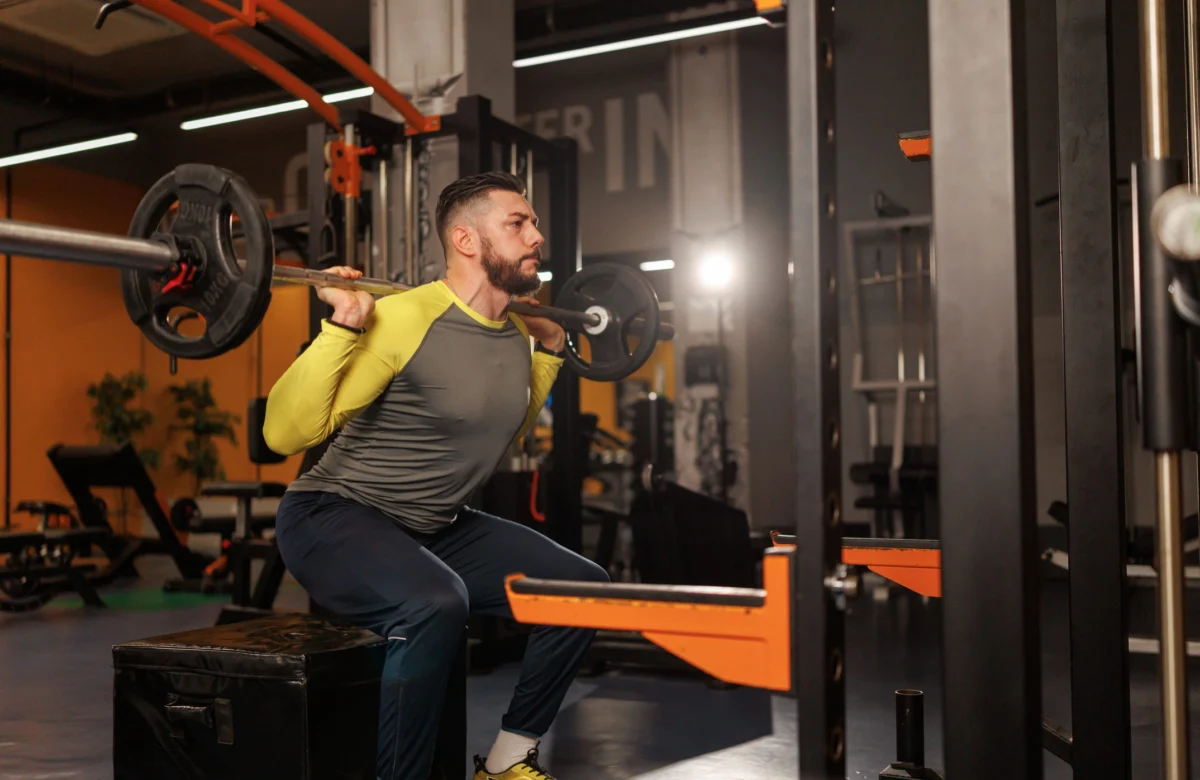
"By eliminating momentum and enforcing a vertical shin, the box squat transforms a traditional leg exercise into a precision tool for building explosive power and preserving knee health."
The box squat is far more than a regressed version of the traditional barbell back squat; it is a sophisticated strength-training modality that offers unique biomechanical advantages. While the standard squat is often hailed as the "king of exercises," its technical demands and the stress it places on the patellofemoral joints can be prohibitive for some athletes. The box squat addresses these challenges by providing a tactile depth gauge and shifting the mechanical load toward the posterior chain, making it an essential tool for powerlifters seeking explosive strength, fitness enthusiasts managing joint discomfort, and beginners looking to master foundational movement patterns.
The Evolution and Utility of the Box Squat
For decades, the box squat has been a staple in the world of elite powerlifting, most notably popularized by the Westside Barbell system. Its reputation as a premier strength builder stems from its ability to break the "stretch-shortening cycle." In a traditional squat, the muscles use elastic energy—a "bounce" at the bottom of the movement—to help propel the lifter back up. The box squat interrupts this momentum. By coming to a controlled stop on the box, the lifter must generate force from a static position, which builds immense "starting strength" and explosive power.
Beyond the world of competitive lifting, the box squat serves as a vital corrective exercise. It teaches the "hip hinge" pattern, encouraging lifters to sit back into their hips rather than simply dropping their knees forward. For the modern trainee, who may spend hours a day sitting and consequently suffer from tight hip flexors or weak glutes, the box squat serves as a functional antidote, re-patterning the way the lower body handles load.
The Biomechanical Advantage: Protecting the Knees
One of the primary reasons Ebenezer Samuel, C.S.C.S., recommends the box squat is its impact on knee health. In a standard squat, as the hips descend, the knees naturally track forward to maintain balance. This creates an acute angle at the knee and increases shear force on the joint. While healthy knees can typically handle this stress, those with pre-existing injuries or limited mobility often find it painful.
The box squat solves this by allowing for a vertical shin. Because the lifter is sitting back onto a platform, the center of gravity shifts. The shins remain perpendicular to the floor throughout the entire range of motion. This positioning transfers the majority of the weight to the hips, glutes, and hamstrings—muscles designed to carry heavy loads—thereby sparing the connective tissues of the knee. Furthermore, because the box provides a definitive end-point, it removes the "fear of the fall," allowing lifters to focus entirely on their mechanics rather than worrying about how deep they can safely go.
Targeted Muscle Engagement
While the box squat is a compound movement that recruits the entire body, it places a specific emphasis on the posterior chain.
- Glutes and Hamstrings: Because the movement requires a wider stance and a deeper "sit back," the glutes and hamstrings are under constant tension during the eccentric (lowering) phase. When rising from the box, these muscles must fire rapidly to achieve hip extension.
- Hip Abductors: A wider stance necessitates greater engagement from the hip abductors to prevent the knees from caving inward (valgus collapse). This strengthens the lateral stabilizers of the hip, which are often neglected in standard linear movements.
- Core Stability: Maintaining a rigid torso while paused on the box requires significant intra-abdominal pressure. The core must remain "locked" to protect the spine and ensure that the force generated by the legs is efficiently transferred to the barbell.
Technical Execution: A Step-by-Step Breakdown
To reap the full benefits of the box squat, precision in execution is paramount. It is not merely a matter of sitting down and standing up; it is about controlled tension and explosive intent.

The Setup and Stance
Traditional squats often utilize a shoulder-width stance. For the box squat, Samuel recommends a wider-than-normal stance with the toes pointed slightly outward. This wider base provides the necessary clearance for the hips to move backward while keeping the shins vertical. The box should be positioned so that when you sit, your thighs are at or slightly above parallel to the floor, depending on your mobility and goals.
The Controlled Descent
The eccentric phase of the box squat is where much of the muscle-building "work" happens. Rather than dropping quickly, aim for a tempo of three to five seconds. This slow descent forces the hamstrings and glutes to act as brakes, building eccentric strength. The goal is to "kiss" the box with your glutes rather than crashing onto it. A hard impact can compress the spine and cause a loss of core tension.
The Pause and Torso Angle
Once contact is made with the box, the lifter must resist the urge to relax. You should be sitting on the box, but your muscles must remain active. A common mistake is the "rocking horse" effect—where a lifter leans back to a vertical torso and then rocks forward to gain momentum. Instead, maintain a slight forward lean in the torso, mirroring the angle of a traditional back squat. This keeps the center of mass over the mid-foot and ensures the muscles, not momentum, do the work.
The Explosive Drive
The ascent should be the opposite of the descent: fast and powerful. From the dead stop on the box, drive your feet into the floor, engage the glutes, and propel the bar upward. This transition from a static state to a dynamic state is what builds the explosive "pop" out of the hole that many lifters struggle with in traditional squats.
Common Pitfalls to Avoid
Even experienced lifters can fall into bad habits with the box squat. The most prevalent error is using the box as a crutch rather than a tool. If a lifter relaxes their core or "plops" onto the box, they lose the structural integrity required to move heavy weight safely.
Another frequent mistake is improper box height. If the box is too high, the lifter never reaches a range of motion sufficient to challenge the glutes. If it is too low, the lifter may lose the vertical shin angle, negating the joint-sparing benefits of the exercise. Finding the "Goldilocks" height—usually where the hip crease is just above or at the knee—is essential for most trainees.
Integrating the Box Squat into Your Routine
The box squat is remarkably versatile and can be programmed in several ways depending on an individual’s fitness objectives.
- As a Primary Lift: For those with knee issues, the box squat can entirely replace the standard barbell squat. In this context, it can be performed for lower reps (3 to 5) with heavier loads to build maximum strength.
- As a Technique Builder: If you struggle with squat depth or "butt wink" (posterior pelvic tilt), use the box squat as a secondary movement. Performing 3 sets of 8 to 10 reps with a moderate load allows you to practice the "sit back" mechanic without the fatigue of a max-effort lift.
- As a Power Accessory: Athletes looking to increase their vertical jump or sprinting speed can use the box squat with lighter weights (50-60% of max) performed with maximum explosive intent.
Final Thoughts on Longevity and Performance
The box squat stands as a testament to the idea that training smarter often yields better results than simply training harder. By introducing a physical constraint—the box—lifters are forced to confront their technical weaknesses. Whether it is a lack of hip mobility, weak hamstrings, or a tendency to collapse under pressure, the box squat reveals and corrects these issues.
For the aging athlete or the individual recovering from injury, the box squat offers a pathway back to heavy loading without the associated joint tax. For the elite lifter, it offers a way to shatter plateaus by building raw, unadulterated power from a dead stop. By mastering the nuances of the vertical shin, the wide stance, and the controlled pause, any trainee can turn the box squat into a cornerstone of their lower-body development.