
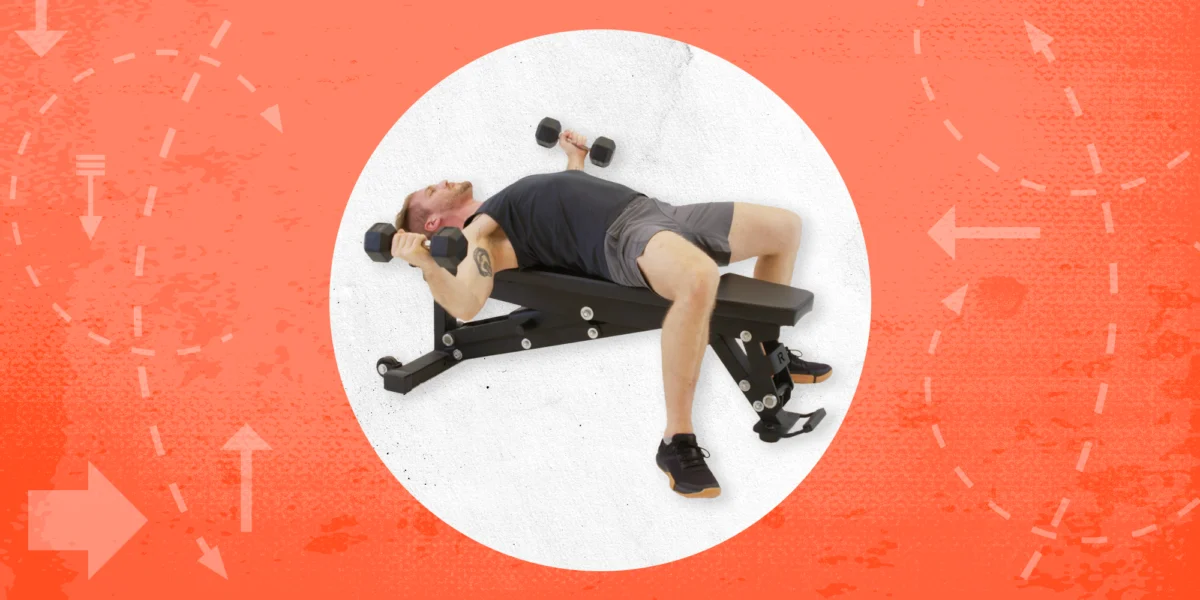
"While pressing movements build raw power, the dumbbell chest fly targets the essential function of adduction, isolating the pectoral fibers through a concentrated squeeze that defines the inner chest."
The dumbbell chest fly remains one of the most enduring exercises in the bodybuilding repertoire, celebrated for its ability to isolate the pectoralis major in a way that compound presses cannot. By shifting the mechanical focus from vertical pushing to horizontal adduction, the fly allows athletes to target the chest’s ability to bring the arms toward the midline of the body. However, despite its popularity, the movement is frequently misunderstood and improperly executed, leading to a high rate of shoulder instability and diminished muscular returns. Understanding the nuance of this exercise requires a deep dive into functional anatomy, joint safety, and the specific technical cues that separate a productive set from a risky one.
The Functional Anatomy of the Chest
The human chest, or pectoralis major, is a thick, fan-shaped muscle that performs several critical functions. While the fitness industry often prioritizes its role in pushing—facilitated by the bench press and pushup—the muscle is equally responsible for internal rotation and, crucially, horizontal adduction. Adduction occurs when the humerus (upper arm bone) moves toward the center of the torso.
In a traditional bench press, the triceps and anterior deltoids provide significant assistance, often "taking over" the movement if the chest begins to fatigue. The dumbbell fly, conversely, is an isolation exercise. By maintaining a relatively fixed, slightly bent elbow position, the lifter removes the triceps from the equation, forcing the pectoral fibers to bear the brunt of the load. This isolation is particularly effective for targeting the sternocostal head of the pectoralis—the "inner" chest—which is responsible for the peak contraction at the top of the movement.
The Biomechanical Risk-Reward Ratio
The dumbbell chest fly is often a polarizing topic among kinesiologists and strength coaches. The primary concern lies in the "lever arm" effect. As the arms move away from the body during the eccentric (lowering) phase, the distance between the weight and the shoulder joint increases. According to the laws of physics, this increases the torque on the shoulder, making a 20-pound dumbbell feel significantly heavier at the bottom of the arc than at the top.
For individuals with limited shoulder mobility or pre-existing rotator cuff issues, this creates a high-risk environment. If the weights are lowered too far, the anterior capsule of the shoulder is placed under extreme tension, which can lead to impingement or even labral tears. To mitigate this risk, experts like Ebenezer Samuel, C.S.C.S., emphasize that the "magic" of the movement is not found in the stretch at the bottom, but in the contraction at the top.

Technical Mastery: The Squeeze and the Arc
Executing the perfect dumbbell fly requires a departure from the "more weight is better" mentality. The goal is tension, not total load.
The Importance of Peak Contraction
One of the most common errors in the gym is the "clanking" of dumbbells at the top of the rep. While it may feel satisfying, touching the weights together actually removes the tension from the pectoral muscles. Gravity acts vertically; when the dumbbells are stacked directly over the shoulder joints, the chest no longer has to work to keep them there.
To maximize hypertrophy, the lifter should stop the dumbbells just short of touching, maintaining a "micro-gap." This allows for a deliberate, one-second isometric squeeze where the lifter consciously tries to flex the chest fibers. This mind-muscle connection is what drives the "inner chest" development that many trainees seek.
Controlling the Depth
The eccentric phase of the fly is where many injuries occur. Many lifters attempt to mimic the extreme range of motion seen in "Golden Era" bodybuilding photos, lowering the weights until they are nearly touching the floor. For the modern trainee—especially those who spend hours at a desk with internally rotated shoulders—this is a recipe for disaster.
The optimal depth for a dumbbell fly is reached when the upper arms are parallel to the floor. Going deeper than this does not significantly increase pectoral activation but does significantly increase the stress on the biceps tendon and the glenohumeral joint. If a lifter feels a "pulling" sensation in the front of the shoulder or the crook of the elbow rather than the belly of the chest muscle, they have exceeded their safe range of motion.
Scapular Stability and Shoulder Health
Safety in the fly begins with the shoulder blades (scapulae). Before starting the set, the lifter must retract and depress their shoulder blades, "pinning" them into the bench. This creates a stable platform and opens up the joint space in the shoulder, protecting the rotator cuff tendons.
Maintaining this scapular squeeze throughout the entire rep is vital. A common mistake occurs as the weights are brought together; lifters often allow their shoulders to round forward to "reach" for the top. This shifts the load to the anterior deltoids and collapses the chest. By keeping the shoulder blades retracted even at the peak of the movement, the lifter ensures that the pectoral muscles are doing 100 percent of the work.
Programming for Success
Because the dumbbell fly puts the shoulder in a vulnerable position, it should never be treated as a primary "heavy" lift. It is best utilized as a supplemental or finishing exercise.
Weight Selection
A general rule of thumb provided by Ebenezer Samuel is to start with approximately 50 percent of the weight used for a standard dumbbell bench press. If a lifter can press 60-pound dumbbells for ten reps, they should begin their fly sessions with 25 or 30 pounds. This allows for total control over the arc of the movement and ensures the form does not degrade into a "cheat press."
Volume and Frequency
The fly is most effective when performed for moderate to high repetitions. A standard protocol of three sets of 10 to 12 repetitions is ideal for inducing metabolic stress and muscular hypertrophy. It should be performed after heavy compound movements—such as the barbell bench press or incline press—when the chest is already fatigued but the stabilizing muscles are still capable of maintaining form.
Alternatives and Evolutions
For those who find the dumbbell fly uncomfortable due to joint mechanics, there are several effective alternatives that utilize the same principle of adduction.
- The Cable Fly: Unlike dumbbells, which lose tension at the top of the rep, cables provide constant tension throughout the entire range of motion. Because the resistance is lateral rather than purely vertical, the chest must work even when the hands are together.
- The Floor Fly: By performing the movement lying on the floor instead of a bench, the floor acts as a natural "stop" for the elbows. This prevents the lifter from going too deep and overstretching the shoulder, making it a safer alternative for those with mobility issues.
- The Machine Pec Deck: This provides the most stability, allowing the lifter to focus entirely on the contraction without having to stabilize two independent weights.
Conclusion
The dumbbell chest fly is a surgical tool in a world of sledgehammers. While the bench press builds the foundation of the torso, the fly provides the refinement, targeting the adduction function that is essential for a complete physique. By prioritizing the "squeeze" at the top, respecting the limits of shoulder depth, and maintaining strict scapular tension, lifters can reap the benefits of this classic exercise while avoiding the pitfalls of injury. In the pursuit of muscle growth, precision will always trump ego, and nowhere is that more evident than in the execution of the fly.