
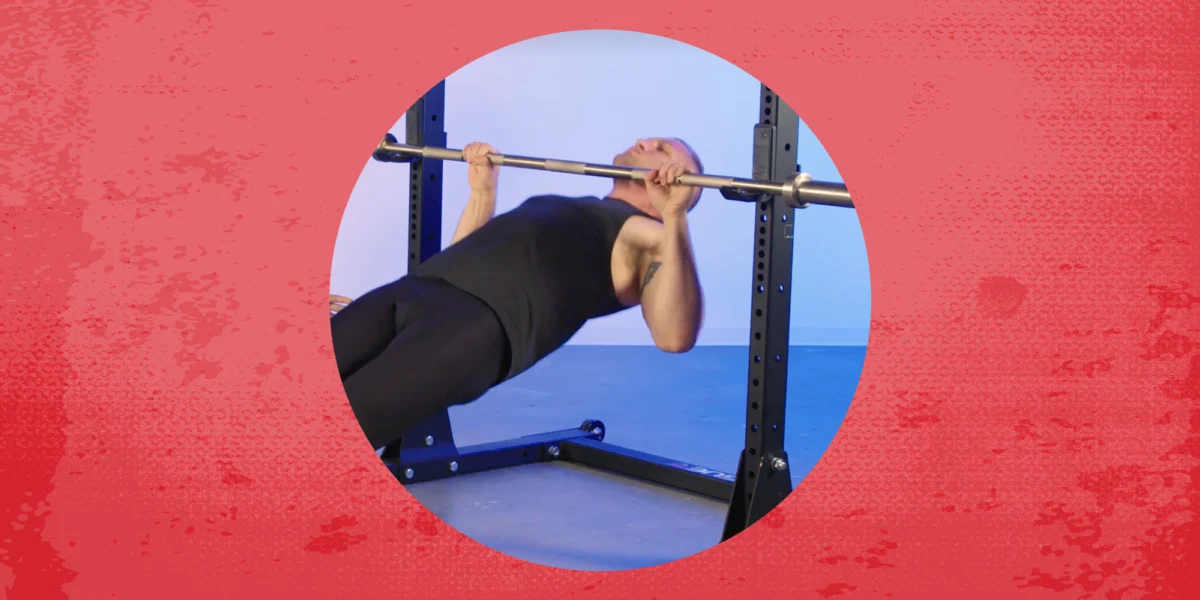
"The inverted row is far more than a simple pulling motion; it is a total-body calibration tool that builds a resilient posterior chain while teaching the core and glutes to maintain a rigid, athletic posture."
While the pullup is often heralded as the gold standard of bodyweight back training, its high barrier to entry frequently leaves many gym-goers struggling to find effective ways to target the upper body’s posterior muscles without external weights. The inverted row emerges as the critical solution to this gap, offering a highly scalable, technically nuanced movement that builds the foundational strength necessary for advanced calisthenics while providing a potent stimulus for muscle hypertrophy and postural correction.
The Foundation of Bodyweight Back Training
Bodyweight back training is notoriously difficult to program. Unlike the chest or legs, which can be easily targeted through various pushup and squat progressions, the back requires a pulling mechanism. In a gym setting, most athletes gravitate toward lat pulldowns or seated cable rows, but the ability to manipulate one’s own body weight through space remains a hallmark of functional fitness. The inverted row, often colloquially referred to as the "Australian pullup," serves as the horizontal counterpart to the vertical pullup.
The movement is deceptively simple: you lie under a bar, grasp it, and pull your chest toward it. However, as noted by Men’s Health fitness director Ebenezer Samuel, C.S.C.S., and senior editor Brett Williams, NASM, the simplicity of the setup often masks a high degree of technical demand. To perform the inverted row correctly, one must treat it not just as a back exercise, but as a "moving plank" that requires total-body tension.
The Biomechanics of the Horizontal Pull
The primary movers in an inverted row are the latissimus dorsi (lats), the trapezius (traps), and the rhomboids. Secondary assistance comes from the rear deltoids and the biceps. However, what distinguishes a high-quality inverted row from a wasted rep is the involvement of the "stabilizing chain"—the core, the glutes, and the spinal erectors.

When an athlete initiates a row, the goal is to retract the scapula (shoulder blades) and then pull. This retraction is vital for shoulder health. By squeezing the shoulder blades together before the arms begin to bend, the athlete pulls the shoulder joints back into their sockets. This creates sufficient space for the rotator cuff tendons to operate, preventing the impingement that often occurs when people row with "rounded" shoulders.
Samuel points out that the inverted row is essentially an "upside-down pushup." Just as a pushup requires a rigid torso to prevent the hips from sagging, the inverted row demands that the body remain in a perfectly straight line from the head to the heels. If the core or glutes relax, the pelvis drops, leading to what coaches call "energy leaks." These leaks diminish the force production of the primary pulling muscles and place unnecessary strain on the lower back.
The Critical Role of Glute Activation
A common misconception in upper-body training is that the lower body remains passive. In the inverted row, this could not be further from the truth. To maintain the aforementioned straight-line posture, the glutes must be aggressively engaged.
Squeezing the glutes drives the pelvis into a neutral position, which in turn allows the abdominal muscles to brace more effectively. This creates a stable platform from which the lats and rhomboids can pull. Without this gluteal tension, the body tends to "break" at the hips, leading to a "kip" or a hitching motion where the athlete uses momentum rather than muscle fiber recruitment to reach the bar. For a truly effective set, the glutes and abs should remain under tension from the first repetition to the last.
The Nuance of Range of Motion
One of the most debated aspects of the inverted row is whether the chest must touch the bar. Samuel offers a pragmatic, expert-level perspective: the goal is to pull the bar toward the chest, but the "touch" is not a universal requirement.
For many individuals, particularly those with sedentary desk jobs, chest flexibility and shoulder mobility are often compromised. If an athlete forces their chest to the bar beyond their natural range of motion, the head of the humerus (the upper arm bone) may glide forward in the socket. This "anterior humeral glide" can lead to shoulder instability and pain over time.

Instead of chasing a "chest-to-bar" standard at the expense of form, athletes should focus on pulling as high as their mobility allows while maintaining retracted shoulder blades. A brief pause at the top of the movement, followed by a controlled eccentric (lowering) phase, ensures that the muscles are doing the work rather than momentum. Over time, as chest flexibility improves through stretching and consistent rowing, the functional range of motion will naturally increase.
Scalability and Progression
The beauty of the inverted row lies in its inherent scalability. By adjusting the angle of the body, a trainer can make the exercise accessible to a total beginner or challenging for an elite athlete.
The most basic version involves performing the row with the bar set at waist height or higher, with the feet planted on the floor and knees bent. This shortens the lever of the body, making the load lighter. To increase the difficulty, the bar is lowered, and the legs are straightened. The most advanced variation involves elevating the feet on a bench or box so that the body is parallel to the floor—or even at a decline—placing a higher percentage of the body’s weight onto the pulling muscles.
Grip Variations and Their Impact
The standard double-overhand, shoulder-width grip is the starting point for most trainees. However, the inverted row allows for significant experimentation with hand placement:
- Underhand (Supinated) Grip: This shifts more of the emphasis onto the biceps and the lower fibers of the traps.
- Wide Grip: By moving the hands further apart, the athlete increases the demand on the rear deltoids and the upper lats.
- Narrow Grip: This can increase the range of motion and focus on the mid-back (rhomboids).
- Mixed or Neutral Grip: Using gymnastic rings instead of a fixed bar allows for a neutral grip (palms facing each other), which is often more comfortable for those with existing shoulder issues and allows for natural rotation of the wrist during the pull.
These variations not only prevent training boredom but also ensure that the musculature of the back is developed from multiple angles, leading to better functional strength and a more balanced physique.
Common Pitfalls and Energy Leaks
To maximize the benefits of the inverted row, one must avoid the "mini-kip." This occurs when an athlete uses a slight thrust of the hips to generate momentum to reach the bar. While this might allow for more repetitions, it robs the back muscles of the tension required for growth.
Another frequent error is the "head poke." As the muscles fatigue, many people instinctively reach their chin toward the bar, craning their neck forward. This creates unnecessary cervical strain and breaks the "board-like" alignment of the spine. The head should remain in a neutral position, with the gaze directed upward or slightly toward the anchor point of the bar.
Integrating the Row into a Routine
The inverted row is a versatile tool that can serve various roles in a workout program. For beginners, it is a primary strength-builder. For advanced athletes, it functions as an excellent "finisher" or a high-volume accessory move to complement heavy deadlifts or weighted pullups.
A standard starting point is three sets of 8 to 10 repetitions, focusing exclusively on the quality of the contraction. Because the exercise is less taxing on the central nervous system than a heavy barbell row, it can be performed with higher frequency—two to three times per week—to help "undo" the postural damage caused by prolonged sitting.
Ultimately, the inverted row is more than just a substitute for the pullup. It is a fundamental movement that builds a thick, powerful back, improves shoulder health, and reinforces the total-body tension necessary for all athletic endeavors. By mastering the nuances of the glute squeeze, scapular retraction, and controlled range of motion, any gym-goer can unlock a new level of posterior chain development.