

"Despite an ‘unprecedented’ meningitis outbreak in Kent, Health Secretary Wes Streeting reassures the public that the general risk remains ‘low’ and widespread private vaccination is ‘not necessary,’ emphasizing a focused public health response over panic."
An alarming and "unprecedented" outbreak of meningitis in Kent has led to significant public concern, particularly among students and parents, following a cluster of cases primarily linked to the University of Kent in Canterbury. With 20 confirmed and suspected cases, including two tragic fatalities – a 21-year-old university student and a sixth-form pupil named Juliette – public health authorities have initiated a robust, targeted response. Despite the understandable anxiety driving many to seek private vaccinations, Health Secretary Wes Streeting has strongly advised against this, asserting that the risk to the general public remains low and that comprehensive measures are already in place to contain the spread.
The unfolding situation has prompted swift action from health officials, focusing on immediate containment and longer-term protection for the most vulnerable groups. Five additional cases were confirmed on Wednesday, exacerbating fears and highlighting the urgency of the response. The outbreak has been significantly connected to a local establishment, Club Chemistry, underscoring the role of close social contact in transmission within young adult populations.
Health Secretary Wes Streeting, speaking on BBC Breakfast, acknowledged the profound concern felt by individuals witnessing the headlines. He stated, "It is not a surprise to me people seeing the headlines and thinking ‘I will go out and buy myself a vaccination’ but just to be clear that is not necessary." This reassurance comes amidst reports of pharmacies experiencing shortages due to a surge in demand for private MenB jabs. Streeting clarified that while some pharmacies might have depleted their stock, there are no concerns regarding the supply for the national vaccination programme covering eligible children and young people, nor for the current targeted rollout in Kent.

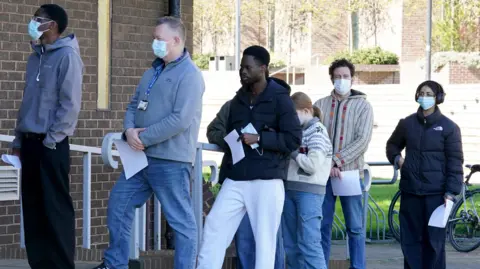
The core of the public health strategy revolves around a two-pronged approach: immediate prophylaxis through antibiotics and longer-term immunity via vaccination for high-risk groups. Approximately 5,000 students residing in university halls at the University of Kent are being offered the MenB jab, commencing Wednesday afternoon. This targeted vaccination programme aims to provide sustained protection against the specific strain of meningococcal bacteria identified in the outbreak, should it continue to circulate within the student population. Simultaneously, an intensive antibiotic distribution effort has seen 2,500 doses made available through dedicated sites in Canterbury and Broadstairs. These antibiotics are critical for immediate intervention, proving effective in preventing illness in 90% of exposed individuals and helping to reduce bacterial carriage.
Meningitis B, the specific strain behind this outbreak, is a serious bacterial infection that can lead to life-threatening conditions such as blood poisoning (septicaemia) and inflammation of the brain and spinal cord (meningitis). While babies have been routinely vaccinated against MenB since 2015 as part of the national immunization schedule, the current generation of older teenagers and university students typically did not receive this vaccine in infancy, as it was not widely available at the time of their birth. The UK previously opted against a widespread catch-up vaccination campaign for teenagers, a decision now under renewed scrutiny. In response to the Canterbury outbreak, Mr. Streeting has requested the Joint Committee on Vaccination and Immunisation (JCVI), the independent advisory body, to revisit its recommendations on a broader catch-up programme for MenB. He emphasized, however, that any decision would be based on "data, evidence and advice," without pre-judgement.
Public health officials are keen to dispel misconceptions and prevent unnecessary panic. Professor Anjan Ghosh, Director of Public Health at Kent County Council, highlighted that the MenB vaccine requires two doses and typically takes about four weeks for full immunological protection to develop. This means it is primarily a preventative measure for future exposure rather than an immediate solution to halt the current outbreak. Furthermore, Prof. Ghosh explicitly stated there is no reason for people to wear masks in response to this outbreak. He cautioned that such measures could "create the wrong message" and "spread panic," drawing unwanted parallels with the recent Covid-19 pandemic. He stressed, "this is not Covid, it is a very specific infection which has a specific way of spreading."
The mode of transmission for meningococcal disease is a crucial distinction. It spreads through "close personal contact," as explained by Streeting, which includes activities such as kissing, sharing drinks or vapes, and living in shared accommodation. This understanding underpins the targeted nature of the public health intervention, focusing on individuals within the University of Kent halls of residence and those who attended Club Chemistry during the critical period of 5-7 March. Streeting also reassured the wider public that there is no concern about students returning home from Kent and potentially spreading the bacteria through casual contact, nor is there any reason for pupils at schools and colleges in the area to disrupt their normal routines, including sitting exams. This stance is further supported by the fact that merely sitting on trains or general travel does not pose a significant risk of transmission.
The rapid response, initiated from the very first confirmed case, involved rigorous contact tracing to identify individuals who may have interacted with those infected. Antibiotics were swiftly offered to these contacts as an immediate preventative measure. This proactive approach aims to interrupt transmission chains and protect those at highest risk of developing the severe form of the disease.
While invasive meningitis B cases are serious, they are relatively rare, with England typically seeing between 300 to 400 cases annually, 80% of which are MenB. It’s also important to note that the vaccine, while effective, does not protect against all possible forms of meningitis B, as it represents a diverse group of bacterial strains. Additionally, a significant proportion of the population – estimated at 10 to 20% – can carry the meningococcal bacteria harmlessly in the back of their throat without experiencing any symptoms. However, in a small number of susceptible individuals, this exposure can trigger invasive disease.
Former JCVI member Adam Finn echoed the sentiments of public health officials, describing the risk of any young person contracting meningitis B as "fantastically small." He reinforced that even within Canterbury, individuals without a direct connection to the outbreak do not necessarily need to seek private vaccination. Prof. Finn expressed confidence that this infection would not "shoot through the population" like Covid-19 and anticipated that the outbreak would "die out in the coming days" due to the focused and effective public health measures currently in place.
The situation in Kent underscores the delicate balance public health authorities must strike between informing the public, managing anxiety, and implementing precise, evidence-based interventions. The current strategy prioritizes rapid response for those directly at risk, while providing clear guidance to the broader community, ensuring resources are allocated effectively and public trust is maintained through transparent communication.