
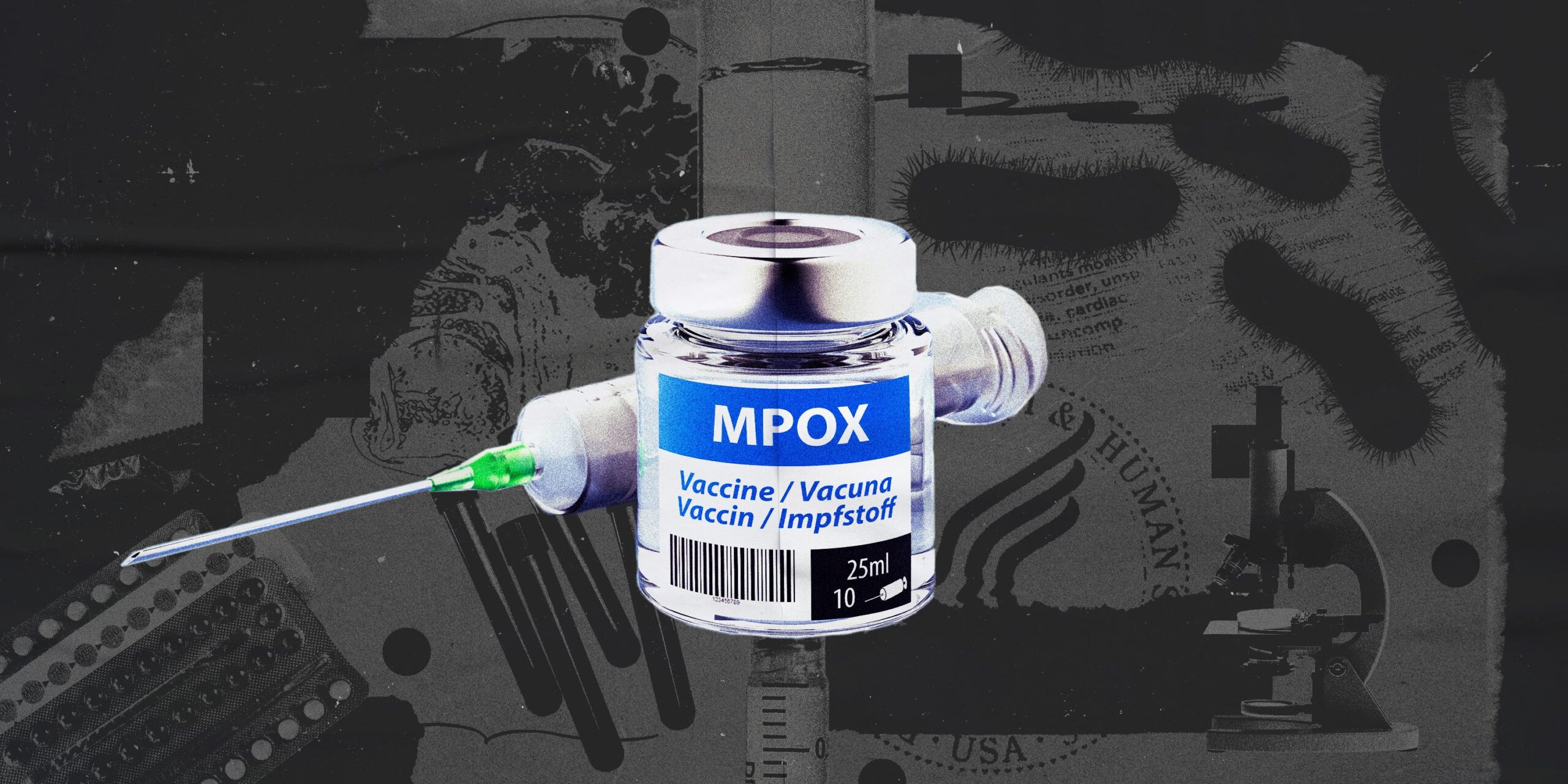
"Data-driven modeling reveals that achieving at least 50% population-level immunity among high-risk groups can reduce the probability of a prolonged Clade I mpox outbreak to less than 12%, highlighting vaccination as a critical defense against emerging viral threats."
As global health authorities monitor the ongoing outbreak of Clade I mpox in the Democratic Republic of the Congo (DRC), recent modeling from the Centers for Disease Control and Prevention (CDC) provides a critical assessment of the risk this more virulent strain poses to the United States. By simulating the introduction of Clade I into sexual networks—specifically among gay, bisexual, and other men who have sex with men (MSM)—researchers have identified that the trajectory of a potential domestic outbreak is inextricably linked to existing levels of immunity. This analysis serves as a vital blueprint for public health preparedness, emphasizing that while the risk of a widespread epidemic remains manageable, it is heavily dependent on proactive vaccination strategies and the maintenance of high immunity thresholds in urban centers.
The Biological and Epidemiological Context of Clade I
Mpox, formerly known as monkeypox, is caused by the mpox virus, an orthopoxvirus with two distinct genetic clades: Clade I and Clade II. The global outbreak that began in 2022 was driven by Clade IIb, which primarily spread through sexual contact within MSM networks. While Clade IIb generally results in a lower mortality rate and less severe clinical presentations, Clade I—historically endemic to the Congo Basin in Central Africa—has long been associated with more severe disease, higher hospitalization rates, and increased transmissibility in close-contact settings.
In previous outbreaks within African nations, Clade I demonstrated a higher proportion of severe outcomes compared to Clade II. Recent developments in the DRC have further alarmed the international community. A 2024 outbreak in the Kamituga mining region has been linked to transactional sex, with nearly 88% of hospitalized patients reporting recent sexual exposure. This shift suggests that Clade I, once thought to be primarily zoonotic or household-based, is effectively utilizing sexual networks for transmission. For the United States, this raises a pivotal question: If Clade I were introduced into the same sexual networks that facilitated the 2022 Clade II outbreak, what would be the result?
Methodology: Simulating Viral Entry and Spread
To answer this, CDC researchers employed a dynamic, agent-based transmission model. This sophisticated tool simulates the interactions of individual "agents" within a virtual environment to predict how a virus might move through a specific population. The study focused on 13 U.S. counties, selected from the 50 jurisdictions targeted by the "Ending the HIV Epidemic" (EHE) initiative. These counties were chosen to represent a diverse range of population sizes, international travel hubs, and existing immunity profiles.
The model accounted for varying levels of "per-contact transmissibility." Since exact data on Clade I’s transmissibility in human sexual networks is still emerging, the researchers modeled three scenarios: a baseline scenario (equivalent to Clade II), a 10% increase in transmissibility, and a 20% increase. These assumptions were grounded in evidence that Clade I often results in higher viral loads and more intense rashes, factors that typically correlate with higher infectiousness.
Each simulation was "seeded" with five highly active individuals—those with a high frequency of spontaneous or one-time sexual partners—entering a network. The researchers then ran 1,000 simulations for each county to determine the cumulative number of infections and the likelihood of the virus continuing to circulate one year after introduction.

The 50% Threshold: A Critical Discovery
The most significant finding from the CDC’s modeling is the identification of a "tipping point" for population immunity. The data indicates that in counties where population-level immunity (derived from either prior Clade II infection or JYNNEOS vaccination) exceeded 50%, the size and duration of potential outbreaks were drastically reduced.
In these high-immunity scenarios, simulations rarely resulted in more than 100 cumulative cases over a year. Furthermore, the probability of "prolonged transmission"—defined as the virus continuing to spread 12 months after its introduction—dropped to less than 12%. Conversely, in counties where immunity levels were below 25%, the risk of a larger, sustained outbreak was significantly higher. In these lower-immunity areas, even a slight increase in viral transmissibility (the 20% more transmissible scenario) could lead to case counts that exceed those seen during the 2022 Clade II outbreak.
This linear relationship between immunity and transmission suggests that every percentage point increase in vaccination coverage directly translates to a quantifiable decrease in outbreak risk. For public health officials, this provides a clear, measurable goal: achieving and maintaining at least 50% immunity within at-risk networks to prevent localized epidemics from becoming national crises.
The Role of the JYNNEOS Vaccine
Central to achieving this immunity is the JYNNEOS vaccine, a two-dose regimen designed to protect against both smallpox and mpox. The CDC model assumed that while prior infection with Clade II provides robust protection, the JYNNEOS vaccine remains a highly effective tool, offering 75.2% protection after one dose and 85.9% after the full two-dose series.
However, the analysis highlights a concerning gap in current U.S. vaccination coverage. Despite the availability of the vaccine, only about one in four individuals—approximately 25% of the two million people recommended for vaccination based on risk—have received both doses. This underutilization leaves millions of individuals susceptible to Clade I. Because JYNNEOS is expected to be cross-protective against both clades, the current push for vaccination is not merely a response to the 2022 outbreak but a proactive defense against the more severe Clade I strain.
Behavioral Adaptation and Public Health Interventions
The modeling also factored in "behavioral adaptation." During the 2022 outbreak, data from across the United States showed that many individuals at higher risk of exposure voluntarily reduced their number of sexual partners or changed their sexual behaviors to mitigate risk. The CDC’s simulations assumed a similar level of adaptation would occur if Clade I began to spread.
Sensitivity analyses revealed that if this behavioral change does not occur, outbreak sizes could be substantially larger. This underscores the importance of clear, non-stigmatizing public health communication. By informing at-risk communities about the specific risks of Clade I and the benefits of vaccination, health departments can encourage the behavioral shifts that, alongside vaccination, act as a primary brake on viral spread.
Limitations and Uncertainties
While the model provides a robust framework for risk assessment, it is subject to several limitations. First, the study did not explicitly account for "waning immunity." If the protection provided by vaccination or prior infection diminishes significantly over time, the "50% immunity" threshold might actually require higher levels of recent vaccination than currently estimated.

Second, the analysis focused on 13 specific counties. While these are representative of many urban centers and travel hubs, they do not encompass the entire U.S. landscape. Variations in local sexual network structures and vaccination reporting requirements—some counties have stopped reporting to the CDC or use "opt-in" systems—mean that true population immunity could be higher or lower than the estimates used in the study.
Finally, the model assumed that no additional vaccination would occur during the year-long outbreak simulation. In a real-world scenario, a surge in cases would likely trigger emergency vaccination campaigns, which would theoretically truncate the outbreak more quickly than the model suggests.
Expert Perspective and the Necessity of Transparency
The importance of this data extends beyond the numbers. Dr. Georges Benjamin, Executive Director of the American Public Health Association, emphasizes that the timely reporting and public availability of such modeling are essential components of the government’s "legal and moral responsibility" to the public.
"By not [reporting on these threats], the nation is blind to these threats," Dr. Benjamin noted. "When this happens for infectious diseases, they quickly become epidemics that are then harder to contain at a much higher cost. The human pain and suffering across all populations is serious and preventable."
The removal of this technical brief from official government websites in early 2025 has raised concerns among public health advocates regarding the transparency of emerging health threats. Access to modeling data allows local health departments, community organizations, and individuals to make informed decisions about resource allocation and personal health risks.
Conclusion: A Manageable Threat Through Preparedness
The CDC’s modeling of Clade I mpox offers a cautiously optimistic outlook: a large-scale outbreak among the MSM population in the United States is not inevitable. The existing "immunity wall" built during the 2022 outbreak provides a significant head start. However, this protection is unevenly distributed and currently falls short of the 50% threshold in many jurisdictions.
The path forward requires a renewed focus on completing the two-dose JYNNEOS series for those at risk, maintaining robust wastewater monitoring for early detection, and ensuring that public health data remains transparent and accessible. By treating Clade I as a preventable threat rather than an inevitable crisis, the United States can leverage its modeling insights to protect its most vulnerable populations and prevent the next potential epidemic before it begins.