
"True fitness is not about matching an aesthetic seen on social media, but about cultivating the internal resilience to endure discomfort and the functional strength to remain active well into your sixties."
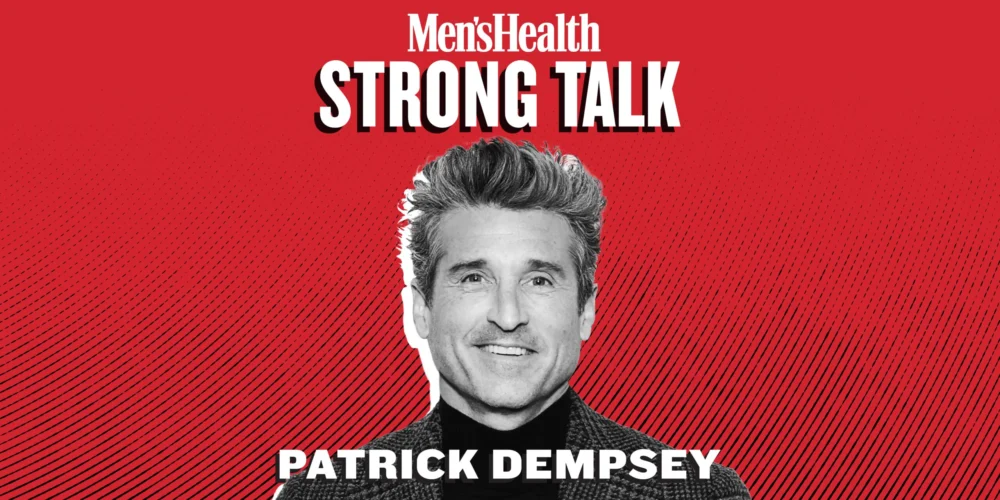
At 60 years old, Patrick Dempsey is redefining the narrative of aging in Hollywood by prioritizing a holistic approach to wellness that balances high-intensity endurance, functional strength training, and proactive medical screening. Through his recent appearance on the Strong Talk podcast, Dempsey shared how he integrates professional-level cycling and disciplined weightlifting with a mission-driven focus on colorectal cancer awareness, offering a comprehensive model for longevity that transcends mere physical appearance.
The Evolution of an Icon: From "McDreamy" to Endurance Athlete
For decades, Patrick Dempsey was primarily known for his charismatic portrayal of Dr. Derek Shepherd on Grey’s Anatomy. However, his off-screen life has long been defined by a level of athleticism that rivals professional competitors. Whether he is navigating the high-speed turns of a professional auto race or tackling grueling elevation gains on a road bike, Dempsey has transitioned into a phase of life where physical capability is a prerequisite for his personal and professional pursuits.
His latest role as the hitman Angelo Doyle in the series Memory of a Killer requires a different kind of intensity, one that demands both physical presence and mental sharpness. To maintain this edge at 60, Dempsey has moved away from the vanity-driven workouts often associated with the film industry, focusing instead on a philosophy of "comfortable suffering." This concept, familiar to endurance athletes, suggests that the more one exposes themselves to controlled physical hardship, the more resilient the mind becomes when facing the inevitable challenges of life and aging.
The Philosophy of "Comfortable Suffering" on the Road
Cycling serves as the cornerstone of Dempsey’s cardiovascular health. It is a sport that demands consistent output and the ability to manage lactic acid and mental fatigue over long durations. Dempsey describes his relationship with the bike as a mixture of joy and necessary "suffering." For him, the "suffering" is not a deterrent but a metric of growth. By pushing through the physical burn of a steep climb, he trains his nervous system to remain calm under pressure.
Dempsey’s approach to cycling is notably versatile. He does not pigeonhole himself into a single discipline, instead oscillating between road cycling, gravel riding, and training on rollers. Gravel riding, in particular, has seen a surge in popularity among older athletes because it offers a lower-impact environment with less vehicular traffic, while providing a rigorous full-body workout due to the unstable terrain.
When he is unable to get outside, Dempsey utilizes rollers—a type of indoor trainer that requires the rider to balance the bike on three spinning cylinders. Unlike a stationary bike, rollers demand constant core engagement and hyper-focus to keep the bike upright. This emphasis on balance is a critical component of his longevity strategy. As the body ages, proprioception and balance often decline; by incorporating rollers into his routine, Dempsey is actively mitigating the risk of future falls and maintaining the neuromuscular pathways required for elite coordination.
Functional Strength: The 3-to-5 Exercise Protocol
While endurance provides the foundation for his cardiovascular health, Dempsey complements his riding with a disciplined strength training regimen. His gym philosophy is grounded in minimalism and efficiency. Rather than spending hours on isolated muscle groups, he focuses on a full-body strength circuit typically consisting of only three to five compound exercises.
The goal of this protocol is "functional muscle"—tissue that serves a purpose beyond aesthetics. For a man in his sixties, maintaining lean muscle mass is essential for metabolic health and bone density. Dempsey’s focus is on movements that translate to real-world activity: squats for leg power, hinges for posterior chain strength, and presses for upper-body stability.

"It’s not just about looking good and trying to match what people have on Instagram," Dempsey noted during his discussion with Men’s Health fitness director Ebenezer Samuel. "It’s more the internal feeling of feeling better about myself." This shift from external validation to internal well-being is a hallmark of mature fitness. By focusing on how his body feels and functions, Dempsey ensures that his training supports his lifestyle rather than detracting from it through overtraining or injury.
A Mission for Men’s Health: Colorectal Cancer Advocacy
Beyond the gym and the track, Dempsey is leveraging his platform to address a critical but often overlooked aspect of men’s health: colorectal cancer screening. A longtime advocate for cancer patients and their families—having founded the Dempsey Center in Maine in honor of his mother—he has recently partnered with Guardant Health to promote the Shield blood test.
Colorectal cancer is one of the leading causes of cancer-related deaths globally, yet it is highly treatable if detected early. Despite this, many men avoid traditional screenings, such as colonoscopies, due to the perceived discomfort or the intensive preparation required. Dempsey’s partnership aims to highlight newer, non-invasive screening options that make the process more accessible.
During his conversation with the Strong Talk team, Dempsey was vocal about the necessity of proactive health management. He even challenged the hosts on their own screening schedules, emphasizing that fitness and nutrition are only two pillars of health; the third pillar is medical vigilance. For Dempsey, being "in shape" includes being informed about one’s internal health markers and staying ahead of potential diagnoses through regular testing.
The "One Hill at a Time" Mindset
The common thread through Dempsey’s fitness, career, and advocacy is a psychological strategy he calls "tackling one hill at a time." In the context of a 100-mile bike ride with thousands of feet of elevation, the total distance can feel insurmountable. By narrowing his focus to the immediate incline in front of him, Dempsey manages his energy and prevents mental overwhelm.
This micro-focus is a powerful tool for anyone pursuing long-term goals. Whether it is a grueling workout, a complex acting role, or a long-term health journey, the ability to compartmentalize the "suffering" into manageable segments is what allows for sustained progress. Dempsey’s life at 60 is a testament to the efficacy of this mindset. He does not look at the aging process as a steep, unavoidable decline, but rather as a series of hills that can be summited with the right preparation and mental fortitude.
Integrating Wellness and Community
Dempsey also highlights the social dimension of health. While he values the solitude of a solo ride for mental clarity, he frequently participates in group rides. The community aspect of fitness provides accountability and a sense of shared purpose, which are vital for mental health as men age. The "Strong Talk" podcast episode, featuring Dempsey alongside veteran triathlete Marty Munson and Ebenezer Samuel, underscored this need for dialogue and shared expertise.
Dempsey’s lifestyle is a rejection of the idea that 60 is a time to slow down. Instead, he views it as a time to refine. By mixing high-intensity cycling with functional strength circuits and staying at the forefront of medical technology and screening, he has created a sustainable blueprint for the modern man.
Ultimately, Patrick Dempsey’s message is clear: peak physical and mental shape is not a destination but a continuous process of adaptation. It requires a willingness to suffer occasionally, a commitment to functional movement over vanity, and the courage to face one’s health head-on. As he continues to cruise through the "rollers" of life—balancing the climbs and the descents—he remains an influential figure for those looking to age not just gracefully, but powerfully.