
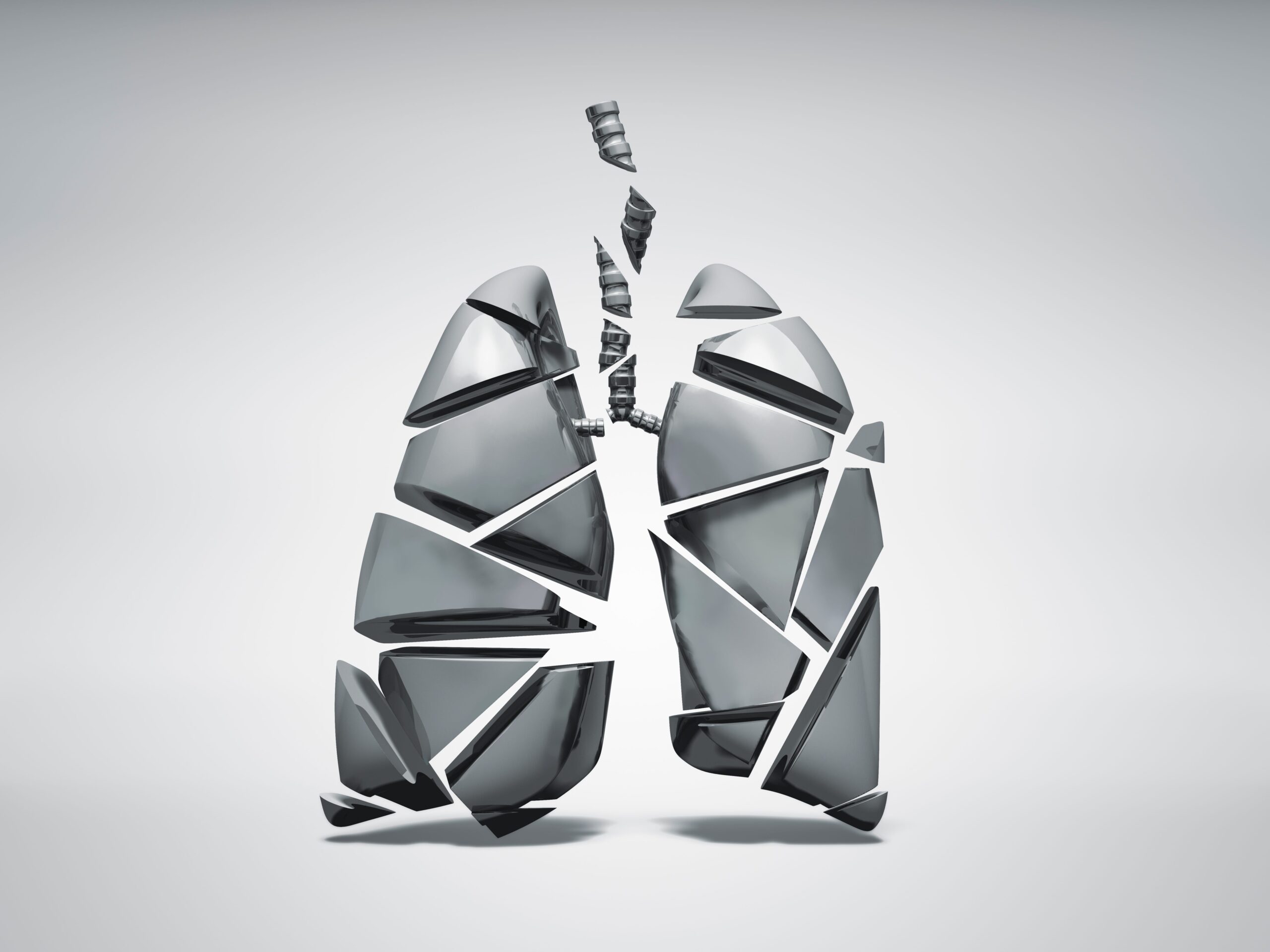
"By successfully decoupling the body’s oxygenation needs from the physical presence of lungs, surgeons have demonstrated a life-saving ‘bridge’ that allows the most critically ill patients to survive long enough for a transplant. This milestone proves that even when the primary respiratory organs are entirely absent, advanced mechanical oxygenation can stabilize a patient and allow secondary organ systems to recover from systemic shock."
This breakthrough, recently documented in the journal Med, details a high-stakes medical intervention performed by the thoracic surgery team at Northwestern Medicine. Faced with a 33-year-old patient whose lungs had become a source of lethal infection, surgeons took the unprecedented step of removing the organs entirely without an immediate replacement. By utilizing a sophisticated artificial lung system to maintain blood oxygenation and carbon dioxide removal, the team was able to keep the patient alive and stable for 48 hours, providing a critical window for his body to heal and for donor organs to be sourced.
The human biological blueprint is unforgiving when it comes to oxygen deprivation. Under normal physiological conditions, the brain can only withstand approximately four minutes of oxygen starvation before irreversible cellular damage begins. Within ten minutes, the lack of aerobic metabolism typically results in brain death. Yet, a recent case study has challenged the traditional boundaries of critical care, describing a 33-year-old man who survived for two full days with a total absence of pulmonary tissue. This medical feat was not merely a matter of survival, but a calculated surgical strategy to save a patient whose lungs had transitioned from life-sustaining organs to life-threatening reservoirs of infection.
The patient’s ordeal began with a severe case of the influenza virus, a common respiratory infection that, in rare instances, can trigger a catastrophic immune response. In this case, the flu predisposed the patient to secondary bacterial pneumonia. This "double hit" led to the development of Acute Respiratory Distress Syndrome (ARDS), a condition characterized by widespread inflammation in the lungs. In ARDS, the alveoli—the microscopic sacs where gas exchange occurs—become flooded with fluid and cellular debris. As the surface area for oxygen absorption diminishes, the blood becomes hypoxic, and the body’s organs begin to shut down from a lack of fuel.
By the time the patient arrived at Northwestern University Feinberg School of Medicine, his condition was terminal. Dr. Ankit Bharat, the chief of thoracic surgery and lead author of the study, noted that the patient’s heart stopped almost immediately upon arrival, requiring emergency CPR. The infection had become so pervasive that the lung tissue was effectively "melting"—a clinical term for necrosis and liquefaction of the parenchyma. At this stage, the lungs were no longer capable of recovery; they were necrotic masses harboring a bacterial load that was poisoning the rest of his body. The patient was experiencing multi-organ failure, with his heart and kidneys rapidly declining under the strain of sepsis and hypoxia.
The medical team faced a classic surgical paradox. The patient’s only hope was a double lung transplant, but his body was too unstable to survive the grueling hours of such a procedure. Furthermore, leaving the infected lungs in place meant that the source of his systemic sepsis remained, ensuring his death. Conversely, removing the lungs without a plan for oxygenation would lead to immediate cardiac arrest. The heart and lungs are intrinsically linked through the pulmonary circulatory loop; the right side of the heart is designed to pump blood specifically into the lungs. Without the lungs to receive that blood, the circulatory system would collapse.
To resolve this, Dr. Bharat and his team devised a radical "third option": the total removal of the infected lungs followed by the implementation of an artificial circulatory and oxygenation circuit. This system acted as a surrogate respiratory system. It diverted the patient’s blood, infused it with oxygen, stripped it of carbon dioxide, and returned it to the body with enough pressure to maintain systemic circulation. This allowed the surgeons to clear the massive infection by physically removing the diseased tissue—an "extirpation of the source"—which is a fundamental principle of treating severe infections that is rarely applied to the lungs themselves.

The results of the lung removal were immediate and profound. Once the necrotic, bacteria-laden tissue was gone, the patient’s inflammatory markers began to drop. With the artificial system providing stable oxygenation, his blood pressure stabilized. Most importantly, his other organs, which had been failing due to the toxic environment of sepsis, began to recover. His kidneys regained function, and his heart, no longer struggling to pump blood through scarred and fluid-filled lungs, began to strengthen.
For 48 hours, the patient existed in a state of "pulmonary suspension." He was alive, conscious, and stabilizing, despite having an empty chest cavity. This 48-hour window was sufficient for the transplant team to locate a compatible set of donor lungs. Because the patient’s systemic health had improved during his time on the artificial lung, he was now strong enough to undergo the transplant surgery. The procedure was successful, and a two-year follow-up confirms that the patient has returned to a normal life with healthy lung function.
This case has significant implications for the future of transplant medicine. Historically, lung transplants have been reserved for patients with chronic, end-stage diseases such as cystic fibrosis or interstitial lung disease. In these cases, the decline is slow, allowing for a planned transition to surgery. In contrast, acute cases like severe ARDS have often been viewed as "too sick to transplant." The prevailing wisdom has been to support the patient with ventilators or ECMO (Extracorporeal Membrane Oxygenation) in the hope that the lungs will eventually heal.
However, Dr. Bharat’s team provided molecular evidence that this hope is sometimes misplaced. By analyzing the patient’s removed lungs at a cellular level, they found extensive, permanent scarring and immune-mediated destruction. These lungs were never going to recover. "For the first time, biologically, we are giving molecular proof that some patients will need a double lung transplant, otherwise they will not survive," Bharat stated. This suggests that for a subset of ARDS patients, the current standard of "wait and see" may actually be a death sentence.
Dr. Jimmy Johannes, a pulmonologist not involved in the case, noted that while this approach is a "remarkable solution," its application may remain limited to rare, extreme circumstances. The infrastructure and expertise required to maintain a patient without lungs are immense, and the risks of such a radical "bridge" are significant. Nevertheless, the case proves that the physiological barrier of surviving without lungs is not insurmountable.
The success of this intervention challenges the medical community to rethink the timeline of transplantation. If a patient’s lungs are irrecoverably damaged by a virus or bacteria, the most "conservative" path may actually be the most radical: removing the organs to save the patient. Dr. Bharat emphasizes that young patients die frequently because clinicians do not realize that transplantation—or this temporary "lung-less" state—is a viable option in acute settings.
As medical technology continues to evolve, the concept of the "artificial lung" may move from a temporary 48-hour bridge to a more long-term solution, similar to how ventricular assist devices (VADs) support patients with heart failure for months or even years. For now, this case stands as a testament to surgical ingenuity and a reminder that the limits of human survival are often defined by the tools and the courage of the medical teams fighting to extend them. The 33-year-old survivor serves as a living proof that even when the body’s most vital systems fail, science can provide a temporary scaffolding, holding back death until a new lease on life can be found.