Scotland has launched a groundbreaking two-year pilot program to screen all newborns for Spinal Muscular Atrophy (SMA) via the routine heel prick test, becoming the first UK nation to implement this vital early detection measure. This initiative promises to transform the lives of affected children by enabling immediate access to life-changing treatments, significantly improving health outcomes and potentially preventing the severe progression of this rare genetic condition.
Scotland has embarked on a pioneering public health initiative, becoming the first constituent country of the United Kingdom to introduce universal screening for Spinal Muscular Atrophy (SMA) in newborns. This landmark two-year pilot program, which commenced on March 23rd, integrates the SMA test into the standard heel prick screening panel administered to all babies born across Scotland. The move is set to revolutionize the diagnosis and management of SMA, a devastating genetic condition, by ensuring early detection and intervention, which are critical for maximizing treatment efficacy and improving long-term health outcomes.
Spinal Muscular Atrophy is a severe genetic disorder characterized by the progressive degeneration of motor neurons in the spinal cord and brainstem. These specialized nerve cells are responsible for controlling voluntary muscle movement, and their loss leads to muscle weakness, atrophy, and paralysis. The underlying cause of SMA is a deficiency in the survival motor neuron (SMN) protein, vital for the normal function and survival of motor neurons. This deficiency is primarily due to mutations in the SMN1 gene. Without adequate SMN protein, motor neurons cannot function correctly, leading to a cascade of muscle problems that affect everything from crawling and walking to breathing and swallowing.
The severity of SMA varies widely, typically categorized into types 1 through 4 based on age of onset and maximum motor function achieved. Type 1, also known as Werdnig-Hoffmann disease, is the most severe form, with symptoms appearing within the first six months of life. Without treatment, infants with SMA Type 1 often struggle with feeding and breathing, and their life expectancy is typically limited to two years. Type 2 SMA, which affects Grayce Pearson, presents later, usually between 6 and 18 months, with individuals able to sit independently but often never walking. Type 3 and 4 are milder forms with later onset and less severe muscle weakness. SMA is a relatively rare condition, affecting approximately 1 in 10,000 live births, though about 1 in 50 people are carriers of the faulty gene.
The critical importance of early diagnosis in SMA cannot be overstated. The disease causes irreversible damage as motor neurons die off, meaning that the earlier treatment begins, the more motor neurons can be preserved, and the better the potential outcomes. Modern treatments for SMA, including gene therapy and disease-modifying drugs, are most effective when administered pre-symptomatically or very early in the disease course. For instance, gene therapy like Zolgensma (onasemnogene abeparvovec) aims to replace the faulty SMN1 gene, while drugs such as Spinraza (nusinersen) and Evrysdi (risdiplam) work to increase the production of the SMN protein. When these therapies are initiated before symptoms manifest, children can often achieve motor milestones that would otherwise be impossible, sometimes even approaching typical development.
The Scottish pilot program will see approximately 50,000 heel prick samples processed annually at the Scottish Newborn Screening Laboratory in Glasgow. This laboratory, which previously screened for 10 rare but serious conditions, will now include SMA in its expanded panel. Sarah Smith, Director of the Scottish Newborn Screening Laboratory and NHS Greater Glasgow and Clyde’s consultant clinical scientist, highlighted the transformative potential of this pre-symptomatic testing. "We’re testing babies that haven’t shown the symptoms yet," she explained. "So they appear to be perfectly, lovely, healthy babies and the parents don’t know what’s going to come in the future with these diseases. By picking them up pre-symptomatically, we can get them onto the treatment and in a lot of cases the symptoms of those diseases will never actually present themselves."
Health Secretary Neil Gray underscored the Scottish government’s commitment to improving health outcomes for its youngest citizens. "Scotland is the first country in the UK to start the evaluation of SMA screening," he stated. "This is a pilot across Scotland to help inform the UK screening committee about its efficacy and to allow them to take a further recommendation about its wider rollout. SMA can have devastating implications for babies and their families, and this investment demonstrates our commitment to early detection through our screening programme. By detecting SMA before symptoms develop, screening could allow earlier treatment which could be life-changing and help secure the best possible care and support for babies and families."
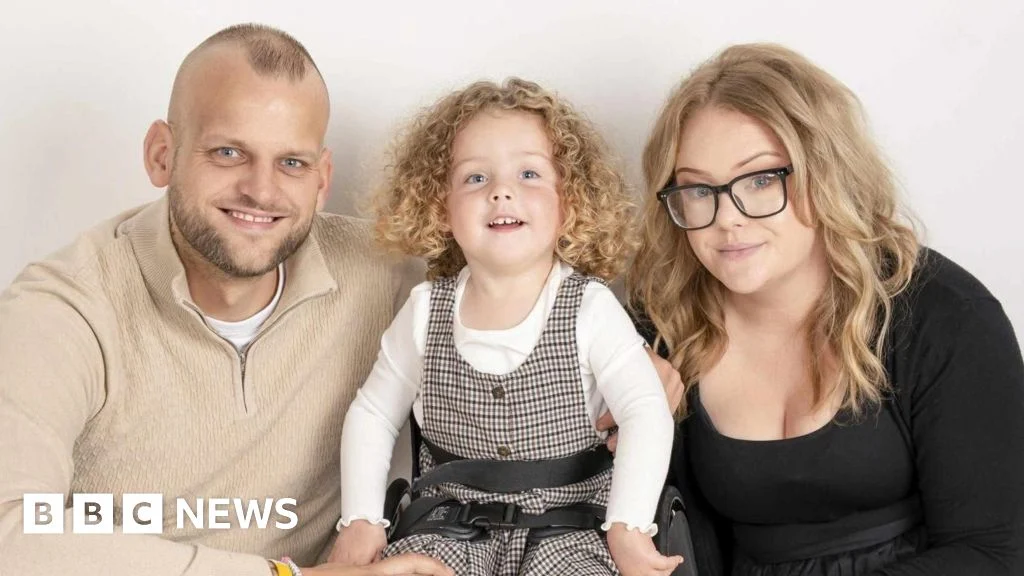
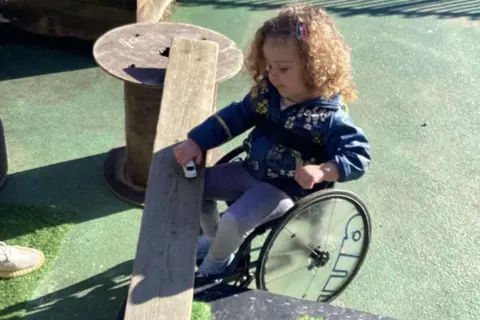
For families like the Pearsons from Milton, Glasgow, this initiative arrives too late but offers immense hope for future generations. Their daughter, Grayce, now three years old, was diagnosed with SMA Type 2 when she was 14 months old. Her parents, Tony and Carrie, recall the agonizing journey to diagnosis. At around six months old, Grayce’s movements began to decline dramatically. "Overnight she stopped kicking her legs and wasn’t attempting to crawl. She wasn’t trying to reach out for things," her father, Tony, recounted. Initially, their concerns were dismissed, with Carrie being told she was an "over-anxious mother." However, her maternal instincts proved correct. "A child just doesn’t stop being able to physically move her legs altogether," Carrie asserted. The delay in diagnosis meant Grayce missed the window for gene therapy, which, as Carrie notes, "would have been a one-off and she probably would have been making her milestones."
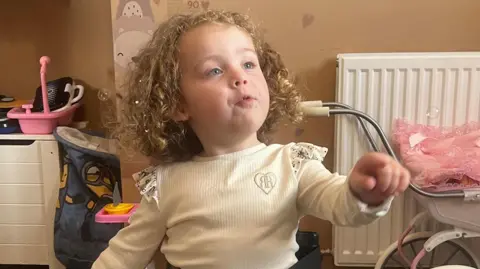
Despite the challenges, Grayce is a testament to resilience and the benefits of ongoing treatment. She is currently on medication that significantly improves her symptoms. "Even the fact that she’s twisting around and reaching for stuff, she couldn’t do that at all," Carrie proudly shared. Grayce is a happy three-year-old who thrives at nursery and enjoys "whizzing about" in her wheelchair. Her parents diligently take her swimming every two or three days, a crucial activity as water resistance helps build muscle, reflecting their unwavering commitment to fighting for her progress. Tony and Carrie have been vocal campaigners for SMA to be included in newborn screening, driven by a profound desire to spare other families the arduous diagnostic odyssey they endured. "As soon as that baby is born, if the parents find out their children have got SMA they can start gene therapy and show little to no symptoms," Tony emphasized. "For what we’ve had to go through, I just want other parents to be saved that scary moment of diagnosis."
The Scottish decision is also a significant victory for national advocacy groups and prominent campaigners. Giles Lomax, Chief Executive of the SMA UK charity, hailed the pilot as a "milestone" and an "important step forward for the SMA community." He highlighted that with all three main SMA treatments now routinely available through NHS Scotland, coupled with newborn screening, "the future for anyone diagnosed with SMA is very different compared to their peers who were diagnosed symptomatically. These babies will now have the opportunity to grow up without lifelong health care needs and the complexity and challenges of living with SMA."
The campaign for universal SMA screening has gained considerable momentum across the UK, partly fueled by the powerful personal story of celebrity Jesy Nelson. The singer revealed in January that her twin daughters were diagnosed with SMA Type 1 and would "probably never walk." She shared the harrowing experience of noticing their reduced leg movement and feeding difficulties. Nelson launched a petition calling for all babies in the UK to be tested for SMA, which garnered over 100,000 signatures, thereby obliging it to be considered for a debate in the House of Commons. Upon hearing Scotland’s news, Nelson expressed a "bittersweet moment" on her Instagram story. "Today my heart feels super heavy. It’s a very bittersweet moment knowing that Scotland had become the first UK nation to screen babies for SMA," she wrote, lamenting the disparity. "We’re so close yet so far. I will never be able to understand why we still do not test for it here in England." She added, "To know that my girls lives and so many other children in England could look so different if this had been here for them. But nevertheless I will keep fighting and pushing for change because nobody should ever have to go through this heartache."
The Scottish pilot program is poised to provide crucial data and evidence to the UK National Screening Committee (UK NSC), which advises all four UK countries on screening programs. Its success could pave the way for a wider, potentially UK-wide, rollout of SMA newborn screening. This development reflects a broader shift in healthcare towards proactive, preventive measures for rare diseases where effective treatments exist. By identifying approximately three to four babies born with SMA in Scotland each year before symptoms emerge, this initiative promises not only to save lives and improve quality of life but also to alleviate the immense emotional and financial burden on families and healthcare systems. The move by Scotland is a beacon of hope, illustrating the profound impact that dedicated advocacy, scientific advancement, and progressive health policy can have on vulnerable populations.