
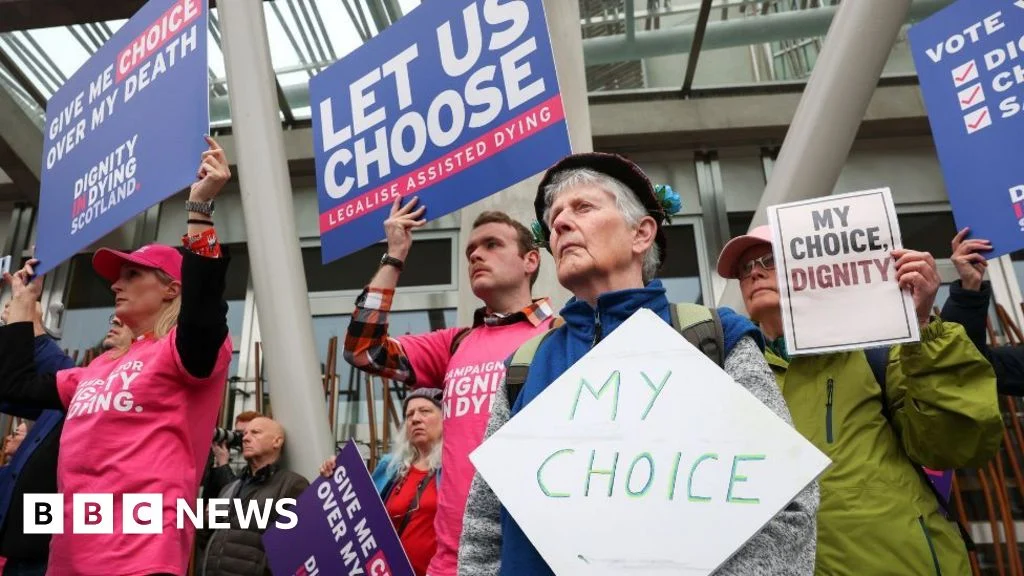
"The impending vote on assisted dying in Scotland represents a pivotal juncture for patient autonomy and end-of-life care across the British Isles, sparking profound ethical, legal, and practical debates that could reshape societal approaches to death and dignity."
As MSPs in the Scottish Parliament prepare for a historic vote on the Assisted Dying for Terminally Ill Adults (Scotland) Bill this Tuesday, the nation stands on the precipice of a significant legislative change. This proposed law, championed by Liberal Democrat MSP Liam McArthur, aims to grant terminally ill adults the right to choose an assisted death, a move that has ignited intense public and parliamentary debate across Scotland and the wider United Kingdom. Having already passed its general principles in May after an emotional Stage 1 debate, the bill now faces its final legislative hurdle, the outcome of which will carry profound implications for healthcare, legal frameworks, and individual liberties.
The Scottish Bill: Defining Eligibility and Safeguards
The Assisted Dying for Terminally Ill Adults (Scotland) Bill is meticulously crafted to establish a framework for individuals seeking to end their lives with medical assistance. Central to its provisions are strict eligibility criteria designed to ensure that the option is only available to those facing irreversible suffering and with full mental clarity. While the initial draft of the bill defined terminal illness broadly as an "advanced and progressive disease, illness or condition from which they are unable to recover and that can reasonably be expected to cause their premature death," it initially lacked a specific life expectancy timeframe. This omission was a significant point of contention during early parliamentary scrutiny, with critics arguing it introduced ambiguity and potential for broad interpretation.
In response to these concerns and to align with international precedents and other proposed UK legislation, McArthur subsequently agreed to amend the bill to include a life expectancy criterion. This amendment, which is expected to specify a timeframe (often six to twelve months in other jurisdictions), aims to reassure undecided MSPs and provide a clearer, more consistent definition of terminal illness. Furthermore, the bill explicitly states that disability and mental illness alone do not constitute terminal illness for the purpose of eligibility, addressing fears that the legislation could be extended to individuals whose primary suffering is not from a terminal physical condition.
A cornerstone of the Scottish bill is its rigorous approach to assessing mental capacity. To be deemed eligible, an applicant must be capable of fully understanding information and advice about the assisted dying process, as well as being able to make, communicate, comprehend, and remember their decision. Crucially, the bill explicitly excludes individuals suffering from a mental disorder that might impair their ability to make such a profound request. This contrasts with a more typical legal approach where capacity is assumed unless proven otherwise, reflecting the gravity of the decision to end one’s life and the need for heightened safeguards. The challenges in accurately assessing capacity, particularly in complex medical and psychological contexts, remain a central focus of the ongoing debate.
Comparative Landscape: England, Wales, and the Crown Dependencies
The legislative push in Scotland is not isolated, but rather part of a broader, evolving conversation across the British Isles. In Westminster, Labour MP Kim Leadbeater introduced the Terminally Ill Adults (End of Life) Bill as a Private Members’ Bill, seeking to legalise assisted dying in England and Wales. Her proposals outline similar eligibility criteria, requiring individuals to be terminally ill with less than six months to live, possess mental capacity, and make a voluntary, informed request. The process would involve a 14-day reflection period, after which a doctor would prepare a lethal substance for the patient to self-administer. Robust legal protections against coercion, including a 14-year prison sentence for those found guilty of pressuring someone into an assisted death, are also a key feature.
While Leadbeater’s bill garnered significant support, passing through the Commons in June last year, its progress has stalled in the House of Lords, making its passage unlikely before the next general election. This highlights the inherent difficulties in advancing such complex and ethically charged legislation through the UK parliamentary system without explicit government backing. Last week, over 100 Labour MPs publicly urged Prime Minister Keir Starmer to allocate sufficient parliamentary time for the bill, underscoring the political appetite for progress on this issue. In Northern Ireland, the Department of Health has indicated no current plans to introduce similar legislation.
However, the Crown Dependencies have emerged as pioneers within the British Isles. The Isle of Man made history in March last year by passing its own assisted dying bill, followed by Jersey which voted to pass its legislation just last month. Neither has yet received Royal Assent – the formal approval by the monarch, usually on the advice of the Privy Council – a crucial step before they become law.
The Manx bill allows terminally ill adults with less than 12 months to live, and who have resided on the island for five years, to choose to end their lives. Recent reports indicate that the UK Ministry of Justice has raised concerns regarding safeguards against coercion and capacity assessments within the Manx bill, signalling the continued scrutiny these laws face even after local parliamentary approval. Jersey’s bill caters to individuals with terminal illnesses causing unbearable suffering, with a prognosis of less than six months to live, or 12 months for those with neurodegenerative conditions such as Parkinson’s or Motor Neurone Disease (MND). Should Jersey’s bill receive Royal Assent, the first legal assisted deaths could potentially occur as early as summer 2027, demonstrating the extensive implementation period required even after legislative passage.
The Scottish Process: A Step-by-Step Approach
The proposed Scottish legislation outlines a multi-stage process for an individual to access assisted dying, designed with multiple layers of scrutiny and reflection:
- Initial Declaration: The process begins with the person signing an initial declaration, formally expressing their wish for an assisted death.
- Medical Assessment: Two independent medical practitioners would then assess the applicant’s eligibility, confirming their terminal illness, mental capacity, and ensuring they are not being subjected to pressure or coercion. This dual medical assessment is a critical safeguard.
- Period of Reflection: Following the initial declaration, a mandatory 14-day period of reflection is imposed. This crucial interval allows the individual to carefully consider their decision without immediate pressure. In exceptional circumstances, where a patient is expected to die of their illness before the 14 days elapse, this period can be shortened to a minimum of 48 hours.
- Second Declaration & Private Consultation: If the individual wishes to proceed after the reflection period, they would make a second declaration. Doctors are mandated to engage in a private consultation with the patient at this stage to re-verify their voluntary choice and confirm the absence of coercion. Discussions about palliative care options must also take place, ensuring the patient is fully aware of all available alternatives for end-of-life support.
- Provision of Substance: If all criteria are met and confirmed, a medical practitioner or an authorised health professional would provide the individual with an "approved substance" – a lethal drug – which the patient must then self-administer. The specific drug to be used is yet to be definitively agreed upon but would be subject to further regulatory approval.
- Proxy & Coercion Offences: The bill makes provisions for a proxy to sign a declaration on behalf of individuals physically unable to do so, while also creating a new criminal offence for coercing or pressuring a terminally ill adult into an assisted death, carrying severe penalties. Medics participating in the process, adhering to the established safeguards, would be exempt from criminal and civil liability.
A key inter-governmental aspect of the Scottish bill relates to conscientious objection. While the original Holyrood bill included a provision allowing individuals or organisations to opt out without detriment, this section was removed due to the UK government’s jurisdiction over employment protections. However, the bill was subsequently amended to state that the legislation cannot take effect until such protections are established via regulations at Westminster. Health Secretary Neil Gray has indicated the UK government’s willingness to collaborate with Holyrood on this, alongside the necessary sign-off from Westminster for the use of lethal drugs in Scotland, highlighting the complex dependencies involved in enacting this legislation.
The Heart of the Debate: Ethics, Safeguards, and Resources
The debate surrounding assisted dying in Scotland is multi-faceted, encompassing profound ethical considerations, practical challenges, and differing views on societal values. MSPs have been granted a free vote, allowing them to cast their ballots based on conscience rather than party lines, reflecting the deeply personal and moral nature of the issue.
One of the most persistent arguments raised by opponents is the "slippery slope" concern – the fear that legalising assisted dying for a defined group could inevitably lead to its expansion to broader categories, such as those with non-terminal illnesses, severe disabilities, or even minors, potentially devaluing certain lives. Proponents counter this by arguing that robust safeguards, as designed in the Scottish bill, are sufficient to prevent such an expansion, citing the experience of other jurisdictions where such unchecked creep has not occurred.
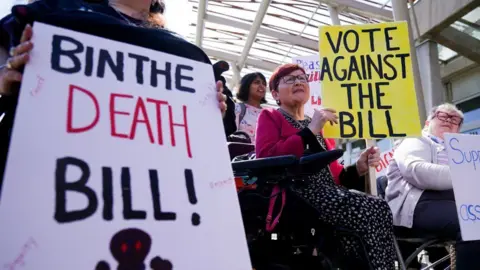
Further concerns have been voiced regarding the potential for legal challenges on human rights grounds, residency requirements (to prevent "death tourism"), the appropriate length of the reflection period, and the practicalities of assessing coercion. The role of medical professionals and the specific substances to be used also remain areas of intense discussion. The definition of "terminal illness" itself, as noted earlier, has been a significant point of contention, with medical experts highlighting the inherent difficulties in precise prognostication. While the bill now explicitly states that disability and mental illness alone do not constitute terminal illness, the nuanced assessment of capacity for individuals with complex conditions remains challenging. Former health secretary Michael Matheson, among others, has warned that coercion, subtle or overt, could be an "inevitable" consequence of the bill, irrespective of safeguards. Conversely, Liam McArthur has consistently argued that the bill offers dying individuals the fundamental freedom and dignity to choose how they end their lives, alleviating unbearable suffering.
Beyond the ethical considerations, the practical implications for NHS Scotland have been scrutinised. Critics question whether the health service possesses the necessary capacity and funding to implement and manage assisted dying services. The bill’s costings anticipate approximately 25 assisted deaths in the first year, rising to 400 after two decades, with an estimated one-third of applicants not proceeding. The financial burden on the NHS is projected to be around £200,000 in the first year, potentially increasing to £342,973 after 20 years, primarily covering clinicians’ time, staff training, and the cost of lethal drugs.
While supporting documents accompanying the bill suggest it could be "effectively cost neutral" due to savings from reduced end-of-life care costs and a decrease in individuals seeking services like Dignitas abroad, the Scottish government has disputed this claim. Health Secretary Neil Gray has stated that introducing assisted dying would necessitate a "reprioritisation" of existing budget plans, indicating that it would not be without additional financial implications. This debate underscores the tension between providing a new end-of-life option and the already strained resources of the public health system.
Assisted dying bills have been introduced in Holyrood before, but none have progressed to this advanced stage. As MSPs cast their votes, the decision will mark a truly historic moment for the Scottish Parliament, with far-reaching societal and ethical ramifications that will resonate across the UK and beyond.