
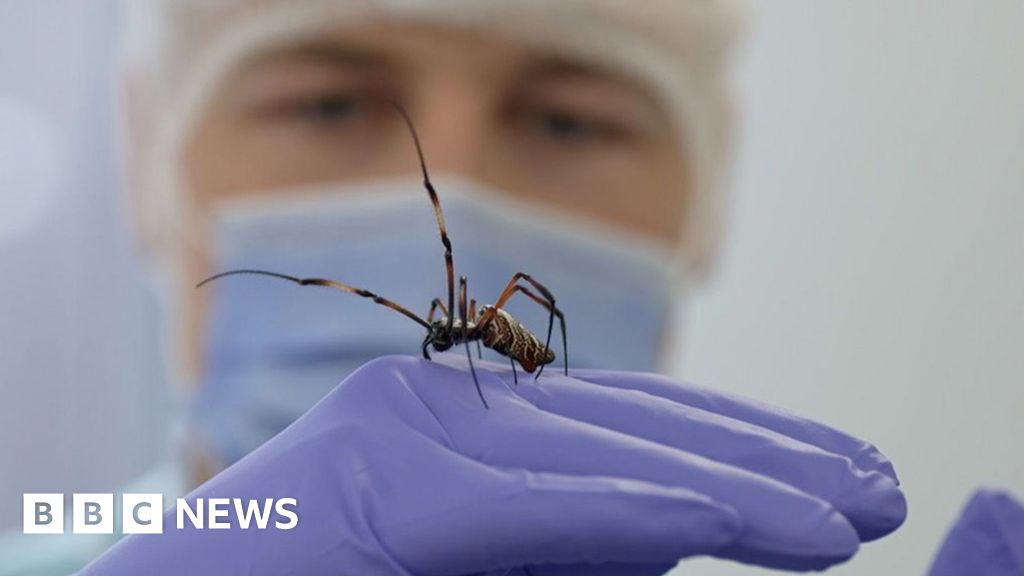
"Harnessing nature’s engineering marvel, golden orb-web spider silk offers a groundbreaking scaffold for nerve regeneration, promising a future where complex nerve injuries can be repaired more effectively, reducing patient suffering and healthcare burdens."
This innovative approach to medical science is seeing trauma and orthopaedic surgeon Dr. Alex Woods pioneering the use of spider silk to develop sophisticated surgical devices aimed at mending damaged nerves. The initiative, housed at Oxford’s Wood Centre for Innovation through his start-up Newrotex, represents a remarkable confluence of ancient biological engineering and modern medical necessity, offering a beacon of hope for patients facing debilitating nerve injuries.
Nerve damage, whether from traumatic accidents, surgical complications, or disease, can profoundly impact a patient’s quality of life, leading to loss of sensation, motor function, and often chronic pain. Current surgical interventions, while effective in some cases, are fraught with limitations. Autologous nerve grafts, for instance, involve harvesting a healthy nerve from another part of the patient’s body (like the leg) to bridge the gap in the damaged nerve. While this technique benefits from the body’s natural biocompatibility, it creates a secondary surgical site, leading to potential pain, numbness, or weakness in the donor limb. Furthermore, the availability of suitable donor nerves is often limited, restricting the repair of larger or multiple nerve defects. Synthetic nerve conduits exist, but their efficacy for longer nerve gaps is often inferior to biological grafts.
It is against this backdrop of unmet medical need that Dr. Woods, drawing upon his unique academic background – a PhD in Zoology combined with his clinical expertise as an NHS surgeon in Oxford – identified the extraordinary potential of spider silk. He eloquently describes its function: "It acts like a scaffold for nerves to grow along like a rose on a trellis," a vivid analogy that underscores the silk’s role in providing structural guidance for delicate nerve fibres.
The specific material of interest comes from the golden orb-web spider (genus Nephila), known for producing some of the strongest biological materials on Earth. These fascinating arachnids, with their hand-sized bodies and intricate webs, are native to tropical and subtropical regions of southern and east Africa. The spiders at Newrotex originate from Madagascar, carefully nurtured in a controlled environment at the Wood Centre for Innovation. Dr. Woods explains the meticulous care required: "They’re quite territorial so we keep them in their own terrariums and we keep the room very humid to mimic their natural environment." Despite their formidable appearance, these spiders are generally considered harmless to humans, primarily focusing on constructing large, metre-diameter webs to catch prey.
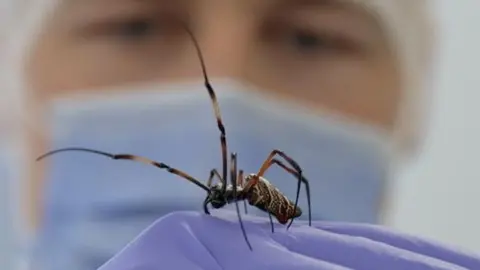
The key to their medical utility lies in the remarkable properties of their "drag-line silk" – the robust fibre spiders use for structural support and to dangle from. When a peripheral nerve is severed, the body attempts to regenerate by sprouting new axons along a rudimentary biological scaffold. However, this natural scaffold is transient, typically degrading within about 10 days. Given that nerves regenerate at an approximate rate of 1mm per day, this limited timeframe means that the body struggles to bridge gaps exceeding 1cm, leading to permanent nerve damage.
Here, spider silk presents a significant advantage. "The drag-line silk… is similar to the body’s ‘scaffold’," Dr. Woods notes, "except it lasts for 150 days." This extended durability is critical, providing a stable, long-lasting conduit that allows regenerating nerve fibres sufficient time to traverse substantial gaps, thereby promoting more complete and functional recovery. The silk fibres are meticulously processed and implanted within a vein or hollow conduit, serving as an internal guide for the regenerating nerve. Over time, the biocompatible silk naturally degrades and is absorbed by the body, leaving behind a repaired nerve pathway. This marks the first time that golden orb-web spider silk has been formally developed into a medical device for human application, a testament to the pioneering spirit of Newrotex.
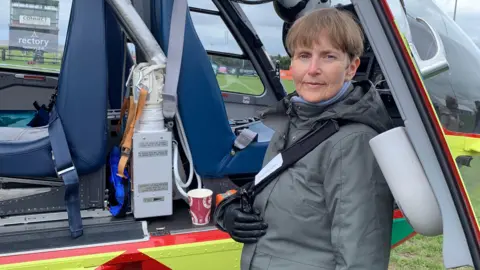
The potential impact of this technology is profoundly illustrated by patients like Helen Hide-Wright from Fenny Compton. In 2022, she endured a catastrophic accident, suffering a cardiac arrest at the wheel and colliding with a lorry, resulting in extensive injuries including severe nerve damage in her right arm. To repair the severed nerves, she underwent a conventional nerve graft, where nerve tissue was taken from behind her foot, leaving her with a permanent loss of sensation in that area. While grateful for the "brilliant" surgery she received, Hide-Wright recognizes the transformative potential of the spider silk device. "What Alex is offering would appear to be far more beneficial, a very exciting opportunity," she stated, envisioning a recovery process free from the complications of a secondary donor site.
However, bringing such an innovative product from the lab to clinical practice is a monumental undertaking. Dr. Woods is acutely aware of the formidable regulatory, financial, and evidentiary hurdles that lie ahead. "I’m convinced that if my nerve was lacerated tomorrow I would have our implant put in," he asserts, underscoring his profound belief in the device’s efficacy. Yet, he acknowledges the arduous journey: "Seeing all the steps you need to get through and the cost and the evidence you need to produce to bring that to patients has been really eye-opening, but there’s still a risk it’ll never see the light of day."
Beyond the direct clinical benefits for patients, the widespread adoption of this silk-based device, dubbed SilkAxons, could yield substantial economic advantages for healthcare systems like the NHS. By eliminating the need for a secondary operation to harvest a nerve graft, the device would bypass an entire surgical procedure, along with its associated risks, recovery time, and costs. This includes reducing operating theatre time, anaesthesia, hospital stay, post-operative pain management, and the potential for donor site complications such as infection or chronic pain. The ability to perform a direct, single-site repair represents a significant step forward in efficiency and patient care.
The applications of this "simple device" extend far beyond traumatic injuries. Dr. Woods envisions its use in treating iatrogenic nerve injuries – those inadvertently caused during other surgical procedures. For example, nerve damage can occur following mastectomies, leading to chronic pain or numbness in the arm, or after prostate cancer surgery, which can impact urinary and sexual function. These are "huge problems, which are nerve injuries which, right now, struggle to be treated," he explains. The versatility and biocompatibility of spider silk open "a really exciting opportunity to take this simple device and open it up to people in all those different specialties," offering solutions where current treatments are inadequate.
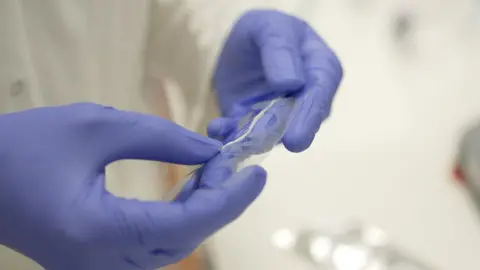
The journey towards widespread clinical availability is ongoing. The SilkAxons device is currently undergoing its crucial first-in-human study in a hospital in Panama. This initial phase is designed primarily to establish the device’s safety in a clinical setting, a fundamental requirement before progressing to larger-scale efficacy trials. Following successful completion in Panama, further studies are planned for the UK and the US, paving the way for eventual regulatory approval from bodies like the FDA and MHRA. The development of spider silk-based nerve repair represents a bold leap forward in regenerative medicine, demonstrating how insights from the natural world can inspire solutions to some of humanity’s most complex medical challenges. Newrotex, under Dr. Woods’ visionary leadership, is not just repairing nerves; it’s weaving a new paradigm for healing.