
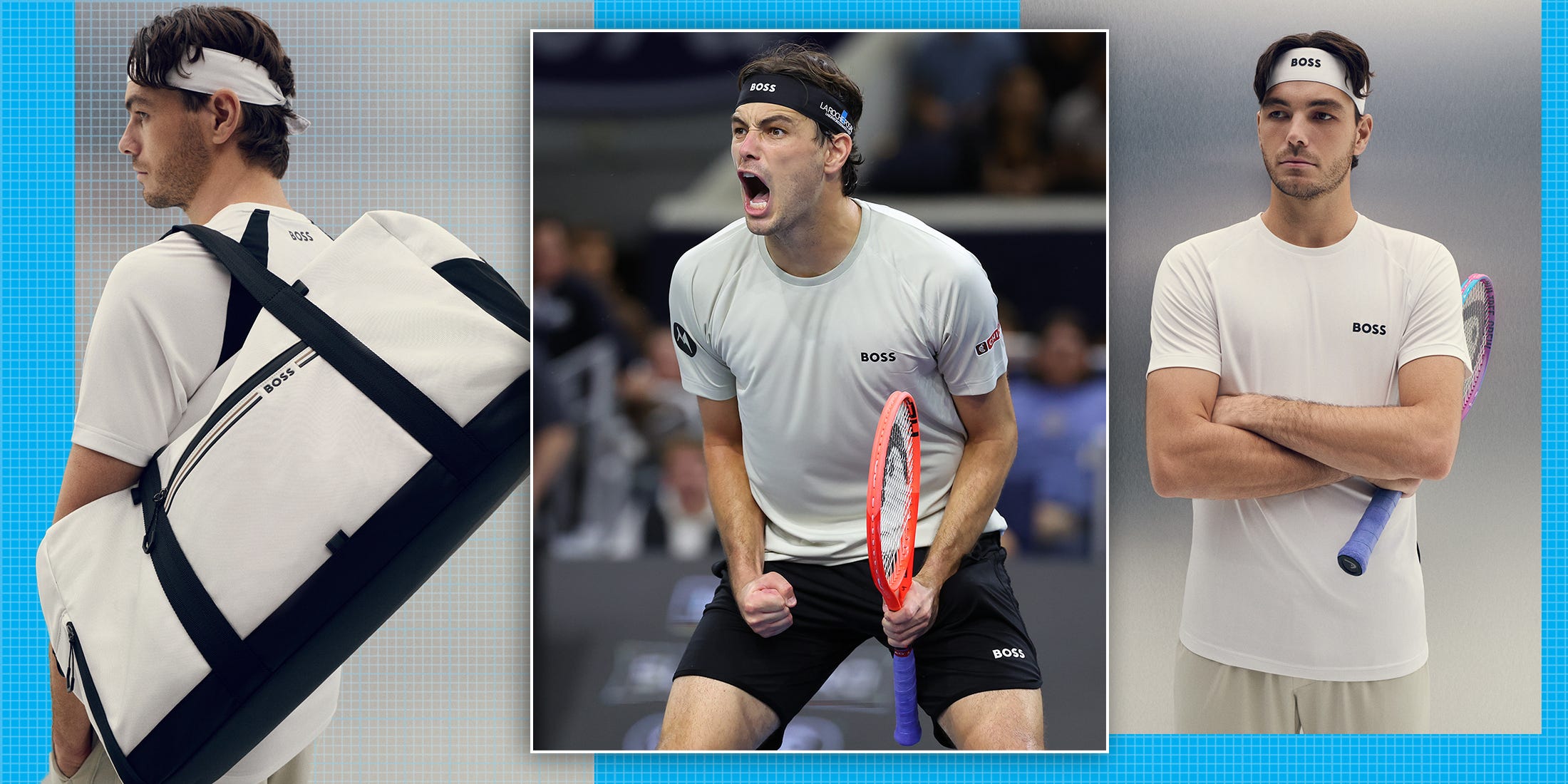
"While the scoreboard may favor a single victor, the lasting legacy of modern tennis is increasingly defined by the fusion of high-performance athleticism and sophisticated, classic style."

The recent conclusion of the Dallas Open highlighted a significant shift in the professional tennis landscape, where the traditional boundaries between technical sportswear and high-fashion aesthetics have become virtually indistinguishable. As American star Taylor Fritz faced off against Ben Shelton in a high-stakes final, the conversation extended beyond the tactical nuances of the match to the broader cultural implications of athlete branding. This evolution, spearheaded by partnerships like that of Fritz and the German luxury house BOSS, signifies a return to "clean and classic" silhouettes that prioritize both the psychological confidence of the player and the commercial accessibility of the sport’s elite wardrobe.
The atmosphere at the Ford Center at The Star in Frisco, Texas, was electric as Taylor Fritz, currently one of the standard-bearers for American men’s tennis, stepped onto the court for the Dallas Open final. Though the match ultimately concluded with a narrow victory for the rising powerhouse Ben Shelton, the narrative surrounding Fritz was one of aesthetic and professional maturation. Since 2024, Fritz has served as a global brand ambassador for BOSS, a partnership that has seen the 28-year-old San Diego native trade the casual, streetwear-inspired looks of his youth for a more disciplined, elevated wardrobe. This transition mirrors his rise through the ATP rankings, where he cracked the Top 10 in 2022 and reached a career-high of world No. 4, driven by a relentless serve and a clinical baseline game.

The Dallas Open, now in its second year of partnership with BOSS, served as a premier showcase for this new era of tennis style. Throughout the tournament, the brand’s presence was inescapable, with Fritz’s visage—adorned in the now-iconic BOSS headband—plastered across the venue. This visual dominance was supported by a physical retail presence, including a pop-up store within the stadium that allowed fans to engage directly with the same neutral-toned, high-performance activewear seen on the court. For Fritz, the choice of attire is not merely a commercial obligation but a fundamental component of his competitive mindset. He noted that the beige-and-black set he wore during the final—a slim-fit, quick-dry T-shirt paired with tailored stretch shorts—offered a "clean and classic" look that avoided the over-designed pitfalls common in contemporary sports apparel.
The technical specifications of modern tennis gear are more rigorous than ever. The "quick-dry" fabrics and "four-way stretch" materials utilized in Fritz’s BOSS kit are designed to withstand the extreme physical demands of professional tennis, which includes explosive lateral movements and the heat generated during multi-hour matches. However, the true innovation lies in the "tailored" aspect of these pieces. Historically, tennis whites were stiff and restrictive, later giving way to the oversized, neon-heavy synthetic kits of the 1990s and early 2000s. The current trend, as exemplified by Fritz, favors a streamlined silhouette that transition seamlessly from the court to a lifestyle setting. This "elevated" approach to sportswear reflects a broader market trend where consumers seek versatility and longevity in their clothing, rather than fleeting, trend-heavy designs.

Fritz’s personal style evolution is particularly noteworthy given his Southern California roots. Growing up in San Diego, his early fashion influences were rooted in skater culture and relaxed streetwear—styles defined by baggy denim and graphic tees. As he has matured on the global stage, his preference has shifted toward monochromatic palettes and "flowier" trousers, a style he describes as fitting his current persona "so much better." This maturation is not just superficial; it plays a psychological role in his performance. While Fritz remains humble about the direct impact of clothing on his win-loss record, he acknowledges that "feeling like I look good" provides a measurable boost to his on-court confidence. In a sport where matches are often decided by the thinnest of mental margins, such a psychological edge can be the difference between a break point saved and a match lost.
The Dallas Open itself represents a critical node in the American tennis circuit. Hosted at the practice facility of the Dallas Cowboys, the tournament bridges the gap between traditional tennis heritage and modern American sports spectacle. The involvement of a brand like BOSS—traditionally known for its precision tailoring and luxury suiting—indicates a strategic move to capture the growing "athleisure" and luxury performance markets. The collection showcased in Dallas, featuring crest-logo sweatshirts, cotton-terry layers, and five-panel caps, emphasizes a neutral color story of beige, black, and white. These pieces are designed to be "easy layers" that remain in a wardrobe’s rotation long after the spring tennis season has concluded.

Beyond the individual, the partnership highlights the camaraderie and competitive style within the ATP tour. When asked about his peers’ fashion choices, Fritz was quick to mention his "BOSS brother" Matteo Berrettini, another high-profile ambassador for the brand who has helped redefine the "tennis heartthrob" archetype through classic European styling. He also noted Frances Tiafoe as a player who brings a distinct, well-dressed energy to the tour. This indicates a growing self-awareness among the top tier of American players regarding their roles as style icons and influencers, a mantle previously held by legends like Arthur Ashe or Stan Smith, but now reimagined for a digital, brand-conscious age.
The implications of this shift extend to the fans and amateur players. The "Men’s Health" style perspective confirms that the appeal of these high-performance pieces lies in their accessibility; one does not require a 130-mph serve to appreciate the cut of a polished quarter-zip or the comfort of high-quality tracksuit bottoms. By focusing on "clean and classic" designs, brands like BOSS are making professional-grade aesthetics attainable for the recreational player, further cementing the sport’s reputation as a bastion of style.

As Fritz looks toward the remainder of the season, including the grueling clay-court swing and the eventual return to New York for the US Open, his "heads-down" approach remains his greatest asset. His performance in Dallas, while ending just short of a trophy, demonstrated the endurance and precision that have made him a mainstay in the world’s elite. His discipline on the court is mirrored by his disciplined approach to his public image. He has moved past the "trying too hard" phase of fashion, much like he has refined the raw power of his youth into a more calculated, strategic game.
In conclusion, Taylor Fritz’s performance at the Dallas Open served as a microcosm of the current state of professional tennis: a sport that is as much about the "look" and the "brand" as it is about the "set" and the "match." The fusion of BOSS’s luxury heritage with Fritz’s athletic prowess has created a new blueprint for the modern tennis ambassador. By prioritizing fabric, feel, and a timeless aesthetic, Fritz is not just playing for titles; he is defining the future of tennis style. Whether he is lifting a trophy or falling just short in a "razor-thin" final, he does so with a level of sophistication that suggests he is ready for whatever challenges—and style conversations—the rest of the season may bring. The "skater from San Diego" has officially become a global icon of "clean and classic" elegance, proving that in the modern game, the right fit is just as important as the right forehand.