
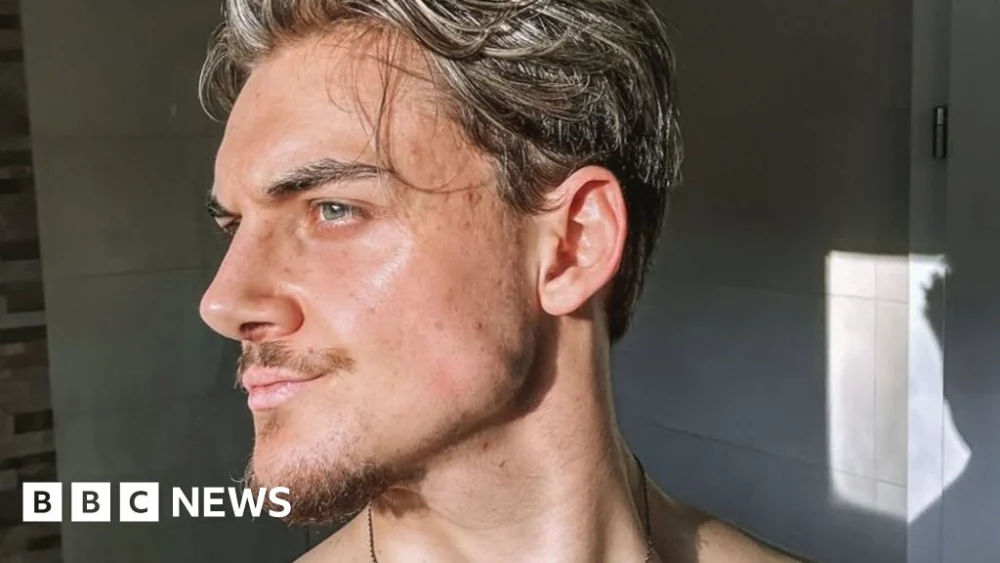
"In a digital age saturated with idealized male images, ‘looksmaxxing’ offers a meticulously crafted blueprint for self-improvement, but its pursuit can lead young men down a perilous path of unregulated health risks and extreme ideologies, blurring the line between self-care and self-destruction."

The pursuit of an idealized masculine aesthetic, dubbed "looksmaxxing," has emerged as a significant and rapidly growing online phenomenon. Driven by social media and influential figures, it encompasses a wide spectrum of practices, from conventional grooming and fitness to extreme, unregulated interventions. This movement, while often framed as self-improvement, carries substantial psychological and physical risks, drawing a concerning number of young men into a world that can intersect with harmful online subcultures like the "manosphere" and incel communities. The journey of looksmaxxing reveals a complex interplay of personal insecurity, societal pressure, and the potent, sometimes dangerous, influence of digital trends.
At its core, looksmaxxing is the practice of maximizing one’s physical attractiveness, primarily focusing on facial features and physique. Marvin, a 26-year-old adherent, embodies the dedication involved. He assesses his current attractiveness at "a solid 7/10," with aspirations for a 9/10, believing he can achieve this through targeted improvements. His self-critique focuses on skin clarity, under-eye bags, and jawline definition—common concerns within the looksmaxxing community.
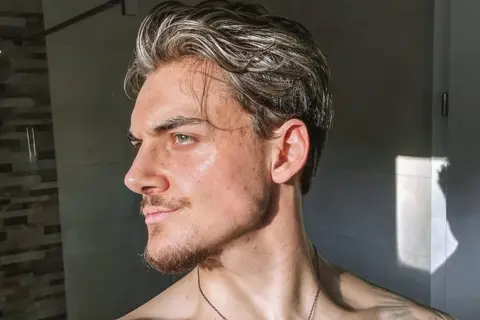
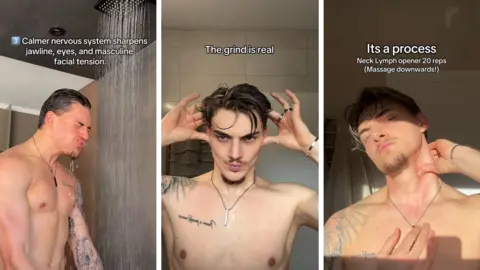
Marvin’s daily regimen illustrates the meticulous nature of "softmaxxing," the less invasive end of the spectrum. His day begins with an intensive gym workout, followed by a detailed skincare routine. This includes contrasting warm and ice-cold showers, a facial cleanse, and rubbing a frozen cucumber over his face—a purported remedy for puffiness, acne, and dull skin. Beyond traditional skincare, Marvin engages in specific facial exercises, which he shares with his 35,000 TikTok followers. He demonstrates techniques such as the "Zygopush," where thumbs are pressed upwards under the cheekbones to create a hollowed-out effect, and the "Hunter squeeze," involving pressing index fingers against the temples while squeezing the eyes to achieve a more "wolf-like", sharp appearance. Despite acknowledging the oddity of these practices, Marvin is confident they are sculpting him towards his desired aesthetic: a chiselled, hollow-cheeked profile with sharp, defined eyes and a strong jawline. He sees this transformation as "peaking," moving from an "unsatisfied carpenter" to an "online entrepreneur," linking physical enhancement directly to personal and professional success.
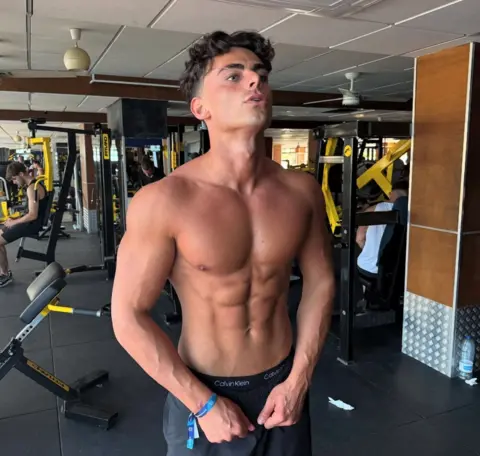
The allure of looksmaxxing lies in its promise of not just improved appearance, but a fundamentally better life, a sentiment echoed by many young men. The movement defines a clear, albeit often unattainable, aesthetic for the "successful male." This ideal typically features hyper-masculine traits: a robust physique, sharp facial angles, and a commanding presence. To gauge progress, many looksmaxxers utilize face analysis apps that purport to objectively rate attractiveness and identify areas for improvement, reinforcing a data-driven approach to self-worth.
Prominent figures like Braden Peters, known online as Clavicular, have propelled looksmaxxing into the mainstream. At just 20, Clavicular is celebrated within the community as a "giga chad," a perfect 10/10, embodying the ultimate looksmaxxing ideal. His influence stems from his seemingly flawless appearance and his controversial claims regarding its attainment. He openly attributes his features to taking testosterone from the age of 14 and even "bone-smashing" his jaw with a hammer to reshape his lower face—practices that are vehemently condemned by health professionals as dangerous and ineffective. Clavicular’s content, and that of similar influencers, normalizes extreme and potentially harmful methods, fostering an environment where young men are encouraged to push boundaries in their quest for perceived perfection. His concept of "mogging"—outshining everyone in his presence—further reinforces a competitive, hierarchical view of attractiveness.
However, the world of looksmaxxing extends beyond mere aesthetics; it often serves as a gateway to more sinister online ideologies. Researchers studying the "manosphere"—an umbrella term for various ultra-masculine subcultures—have noted looksmaxxing’s origins in incel (involuntary celibate) forums. These forums are frequently characterized by misogynistic rhetoric, blaming women for men’s perceived lack of sexual or romantic success. Journalist Matt Shea, who has extensively documented toxic masculinity and interviewed figures like Andrew Tate, highlights how influencers within this space exploit male insecurities. "They tell young men how worthless they are," Shea explains, "then offer themselves up as the solution." This solution often involves selling courses on how to increase one’s "sexual market value" (SMV), an arbitrary metric of attractiveness. The underlying logic suggests that a higher SMV guarantees success with women; if it doesn’t, either the man hasn’t done enough self-improvement, or women are at fault, a dangerous line of reasoning that can foster resentment and misogyny.

Crucially, not all looksmaxxers align with this misogynistic worldview. Leander, for instance, explicitly disassociates himself from incel culture. His journey into looksmaxxing began in 2023 after a breakup, motivated by a desire for self-improvement and increased self-esteem. As a "softmaxxer," his routine includes five gym sessions a week, regular ice-cold face baths to reduce puffiness, and consciously sleeping on his back. He also advocates against pornography, believing it distorts men’s perception of women and attraction. While Leander doesn’t use a numerical rating system like Marvin, he expresses satisfaction with his appearance "80% of the time." He acknowledges that for those not "conventionally attractive"—or, in Marvin’s terms, "sub five out of 10"—the frustration can "push you into an incel corner," though he does not condone such a path. His perspective highlights the nuanced motivations within the looksmaxxing community, where personal well-being often drives engagement, yet the shadow of extreme ideologies looms.
The pursuit of the looksmaxxing ideal also leads some to embrace medically unproven and potentially dangerous practices. Tom Thebe, 23, initially turned to looksmaxxing after experiencing hair loss at 21, which significantly impacted his confidence. He started with finasteride and minoxidil, both legal prescription medications in the UK for hair loss, and found them effective. This success propelled him further into looksmaxxing. Now, in addition to gym workouts and a skincare routine, Tom injects peptides. Peptides are short chains of amino acids, naturally produced by the body, which play roles in skin health, immunity, and hormones. However, the peptides Tom uses, such as GHK-Cu for skin and hair, and Melanotan II for tanning, are largely unregulated.
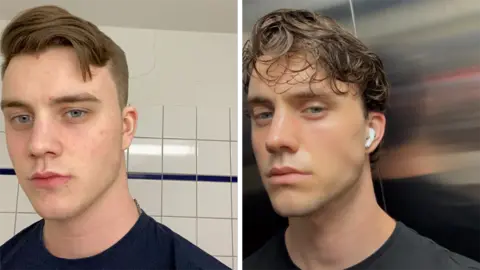
The critical issue with these substances is that the vast majority have only undergone testing on animals, not humans. This lack of human clinical trials means their safety, efficacy, and long-term side effects remain largely unknown. Health authorities, including the Medicines Health and Regulatory Authority (MHRA) in the UK, have issued stark warnings against their use, advising individuals to avoid them due to the significant health risks. Despite these warnings, Tom, who lives in Manchester and advises others on self-enhancement through social media, remains unfazed. While he considers setting up a coaching business, he differentiates himself from extreme looksmaxxers, recognizing the negative impact of practices like bone-smashing on impressionable young men.
Anda Solea, a researcher at the University of Portsmouth specializing in how incel culture infiltrates society, emphasizes the spectrum of looksmaxxing. She acknowledges the positive aspects, such as men caring about their health and fitness. However, she warns, "the problem soon starts when it becomes the only thing, and you take risks on your health to try and improve your looks." Solea points to the role of powerful algorithms that funnel young men into increasingly extreme content, creating echo chambers where they are told they must looksmaxx or face mockery. The dangerous progression occurs when, despite going to extreme lengths to alter their appearance, men do not achieve the desired social or romantic outcomes. Solea poses a critical question: "Will they start to hate women because women are at fault for not wanting them?" This psychological trajectory underscores the potential for looksmaxxing to morph from a quest for self-improvement into a breeding ground for resentment and misogyny.
Ultimately, the phenomenon of looksmaxxing is a complex reflection of modern male identity and societal pressures. While for some, like Marvin, Leander, and Tom, it begins as a personal journey of self-enhancement and confidence-building, the online ecosystem in which it thrives is fraught with perils. The influence of "giga chad" figures, the promotion of unregulated and dangerous practices, and the insidious link to the manosphere and incel ideologies present significant risks. As men navigate these digital landscapes in pursuit of an elusive ideal, understanding the motivations and potential pitfalls of looksmaxxing becomes crucial for promoting genuine well-being and mitigating exposure to harmful narratives.
Additional reporting: Elena Bailey