
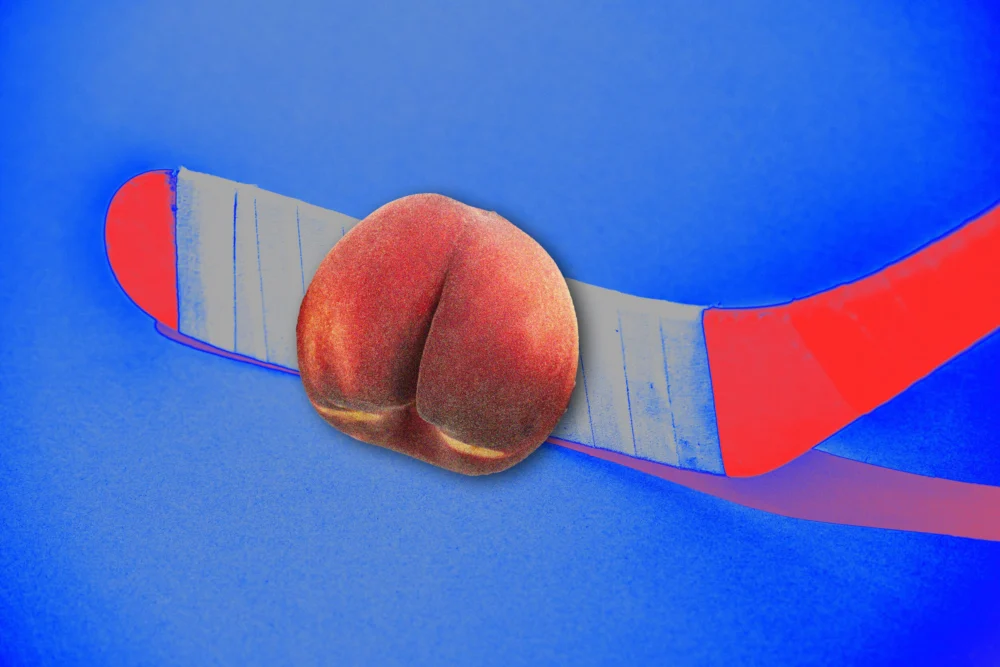
“More than just an aesthetic hallmark of the NHL, ‘hockey butt’ is a functional adaptation to the explosive, lateral mechanics of skating that offers a blueprint for superior lower-body strength and long-term joint mobility.”
The phenomenon known colloquially as “hockey butt” represents a unique physiological development where athletes exhibit a combination of a narrow waist, hyper-developed quadriceps, and exceptionally powerful gluteal muscles. While often discussed in humorous or aesthetic terms, this physical profile is the direct result of the specific biomechanical demands of ice hockey, which prioritizes lateral explosiveness and a constant low-center-of-gravity stance. By examining the training regimens of elite players like Dylan Larkin, it becomes clear that building such a foundation is not merely about appearance, but about correcting modern postural deficiencies and maximizing athletic output through targeted posterior chain engagement.
For many fans, the introduction to the specificities of the hockey physique came through Detroit Red Wings center Dylan Larkin. Before his leadership on the ice became a focal point of national sports conversations, Larkin was the face of a viral advertisement for a clothing brand that addressed a specific struggle common among his peers. “My name is Dylan Larkin, and I have hockey butt,” he famously declared. The ad featured Larkin performing numerous squats, highlighting the reality that for professional skaters, finding off-the-rack clothing is a genuine challenge. The "symptom" Larkin described—the feeling of "busting through the seams" of trousers—is a badge of honor in the locker room, signifying a body optimized for the ice.
The term itself has deep roots in the sport’s culture. Former NHL winger Mike Knuble noted as far back as 2012 that a well-developed posterior is a "defining characteristic" of a professional hockey player. In the high-stakes environment of the NHL, lacking this physical development is often a point of ridicule among teammates, as it suggests a lack of the explosive power necessary to compete at the highest level. Recently, this physical trait has transitioned from a locker room inside joke to a mainstream cultural observation, fueled in part by media representations such as the HBO Max series Heated Rivalry, which places significant visual emphasis on the hockey physique.
To understand why hockey players develop such specific proportions, one must look at the biomechanics of skating versus traditional running. Ryan Carter, a Stanley Cup-winning forward and partner with ETS Performance, explains that the power in a skating stride is fundamentally different from a sprinting stride. While running taxes the glutes and hamstrings in tandem as the foot pushes directly off the ground, skating is a lateral movement. The power is generated through explosive, outward pushes. In this movement pattern, the gluteus maximus, medius, and minimus become the predominant drivers of force, while the hamstrings and calves play a secondary, stabilizing role. This leads to the "hockey butt" silhouette: massive glutes that are often disproportionately larger than the accompanying hamstrings.
Furthermore, the "hockey stance"—a deep, partial squat that players maintain for the duration of their shifts—creates a state of constant muscular tension. Daniel Giordano, DPT, CSCS, of Bespoke Physical Therapy, points out that this repetition builds functional hypertrophy. For the average person, this type of development serves as the ultimate antidote to "gluteal amnesia," also known as "dead butt syndrome." In an era where sedentary office work leads to weakened, flattened gluteal muscles—humorously referred to as "Hank Hill ass"—the hockey-inspired workout offers a path toward structural health and improved quality of movement.

Fortunately, the benefits of this physique are accessible to those who never intend to lace up a pair of skates. By replicating the specific stresses of the ice in a gym environment, individuals can build a more resilient and powerful lower body. The following five exercises are the pillars of building a "hockey butt," focusing on lateral power, unilateral stability, and explosive force.
1. The Slider Lateral Lunge
Standard forward and reverse lunges are staples of leg day, but they lack the frontal-plane movement essential to the skating stride. The slider lateral lunge simulates the outward push of a skate. To perform this, one foot is placed on a sliding disc (or a towel on a smooth floor). As you sink into a squat on the stationary leg, the sliding leg extends directly out to the side.
This move is critical for developing the deep hip rotators and the gluteus medius. "It’s almost like a skating stride simulation," Carter notes. This exercise forces the core to stabilize the body during a wide range of motion, improving hip mobility and balance. As the athlete progresses, adding resistance through kettlebells or dumbbells can further stimulate muscle growth.
2. The Bulgarian Split Squat
Widely regarded as one of the most effective—and most difficult—unilateral exercises, the Bulgarian split squat is essential for mimicking the one-legged nature of skating. With one foot elevated on a bench behind the body, the athlete performs a deep squat on the lead leg.
This exercise forces the lead leg to bear nearly 90 percent of the body’s weight, demanding immense stability from the glutes and quadriceps. For those new to the movement, Giordano recommends starting with bodyweight to master the balance before adding significant load. The Bulgarian split squat not only builds mass but also identifies and corrects strength imbalances between the left and right sides of the body.
3. The Deadlift
No posterior chain program is complete without the deadlift. While the lateral lunges and split squats provide the specific "hockey" flare, the deadlift provides the raw power. By hinging at the hips and lifting a weighted barbell from the floor, the athlete engages the entire posterior chain, including the gluteus maximus and the spinal erectors.
For the purpose of building "hockey butt," the Romanian Deadlift (RDL) variant is often preferred, as it emphasizes the stretch and contraction of the glutes and upper hamstrings. This foundational strength is what allows a player to hold their ground in a puck battle or drive through a heavy check.

4. The Lateral Squat
Distinct from the lateral lunge, the lateral squat involves keeping both feet planted firmly on the ground in a wide stance. The athlete shifts their weight from one side to the other, lowering their hips while keeping one leg straight.
This move is vital for hip mobility. Carter swears by this exercise because it replicates the low athletic stance required to navigate the ice. Beyond the aesthetic benefits, improved hip mobility reduces the risk of lower-back pain and groin strains, common ailments for both athletes and office workers alike.
5. Russian Box Plyometrics (Skater Jumps)
To achieve the "pop" seen in professional skaters, one must train for power, not just strength. Russian box plyometrics involve explosive side-to-side jumping, often using a specialized slanted box. However, the same benefits can be achieved on flat ground through "skater jumps."
These movements utilize the "stretch-shortening cycle" (SSC). When the muscle is rapidly stretched during the landing, it stores elastic energy that is immediately released during the subsequent jump. This type of training increases the density and explosive capacity of the gluteal fibers. It is the secret to the "athletic" look of the hockey physique—muscles that are as functional as they are visible.
The Long-Term Impact
While the "hockey butt" has become a point of cultural fascination, its true value lies in longevity and health. As the body ages, the glutes are often the first major muscle group to atrophy, leading to a cascade of issues including knee instability, lower back pain, and reduced mobility. Adopting a hockey-centric training philosophy ensures that the lower body remains a stable, powerful base.
Consistency is the deciding factor. Even Hudson Williams, who portrayed a hockey player in Heated Rivalry, noted that achieving the look required a dedicated focus on aesthetics and high-volume training. For the average person, the goal may not be to win an Olympic gold or sign an NHL contract, but the principles remain the same. By moving out of the sagittal plane and into the lateral, and by prioritizing the glutes over the hamstrings, anyone can escape the pitfalls of "pancake ass" and build a foundation that is built to last. Whether for performance or purely for the back-end confidence that Dylan Larkin joked about, the "hockey butt" is a testament to the power of functional, sport-specific training.