

"Successful fitness after 40 is defined not by the maximum weight lifted in a single session, but by the strategic consistency that preserves joint integrity while combatting the natural onset of age-related muscle loss."
The transition into middle age necessitates a fundamental shift in how individuals approach physical conditioning, moving away from the reckless intensity of youth toward a methodology known as "intelligent bodybuilding." As the body’s physiological landscape changes—marked by a decrease in connective tissue elasticity and a natural decline in muscle mass—the traditional "no pain, no gain" mantra becomes not only obsolete but potentially hazardous. By prioritizing recovery, movement quality, and specific rep ranges, trainees over 40 can achieve significant hypertrophy and strength gains while ensuring their musculoskeletal system remains functional for decades to come.
The Biological Reality of the Aging Athlete
To train effectively after 40, one must first acknowledge the biological shifts occurring beneath the surface. The most significant of these is sarcopenia, the involuntary loss of skeletal muscle mass and strength. While often associated with the elderly, the foundations of sarcopenia are laid in the fourth and fifth decades of life. Research indicates that after age 30, adults lose between 3% and 5% of their muscle mass per decade if they do not engage in resistance training. For those over 40, the goal of training shifts from purely aesthetic to a critical defense against frailty. Building a "muscular reserve" now is the best insurance policy for mobility in later life.

Parallel to muscle loss is the degradation of connective tissues. Tendons and ligaments, which are less vascular than muscle tissue, lose water content and elasticity as we age. This makes the joints—specifically the shoulders, lower back, and knees—more susceptible to overuse injuries and acute tears. In this context, exercise selection is no longer a matter of preference but a requirement for longevity. A "great" exercise for a 20-year-old, such as the behind-the-neck press, may be a high-risk liability for a 45-year-old with reduced glenohumeral mobility.
The Philosophy of Intelligent Bodybuilding
The fitness industry often presents a false dichotomy for the over-40 demographic. One side promotes high-impact, extreme sports like competitive powerlifting or CrossFit, which can lead to injury if attempted without a decades-long foundation. The other side assumes middle-aged adults are inherently "broken," offering overly cautious, low-intensity routines that fail to provide the stimulus necessary for muscle growth.
Intelligent bodybuilding occupies the productive middle ground. Unlike powerlifting, which focuses on the maximum weight moved regardless of the toll on the joints, bodybuilding prioritizes the tension placed on the muscle itself. It is a "thinking person’s pursuit" because it requires an internal focus—the mind-muscle connection—to ensure the target tissue is doing the work. This approach allows for lifelong improvements, as the goal is aesthetic and functional symmetry rather than hitting a specific, often arbitrary, weight on a barbell.
Fundamental Movement Patterns and Joint Mechanics
A sophisticated training program for the mature lifter must be built around six primary movement patterns: the squat, the hinge, the lunge, the vertical push, the horizontal pull, and the carry. However, the execution of these movements must account for the multi-planar nature of human anatomy.

Consider the pectoralis major. While the standard bench press is the most common "push" exercise, it only addresses shoulder flexion. The chest also facilitates adduction (pulling the arms toward the midline) and internal rotation. Relying solely on a fixed-barbell press limits the muscle’s full range of motion and places excessive stress on the front of the shoulder. A smart program incorporates variety—using dumbbells or cables—to allow the joints to move through their natural paths, ensuring all "joint actions" are trained without creating repetitive stress patterns.
The Case for Strategic Isolation
While compound, multi-joint exercises are the foundation of any program, isolation exercises (such as bicep curls, lateral raises, and leg extensions) take on renewed importance after 40. There are three primary reasons for this:
- Systemic Recovery: Compound movements like heavy deadlifts are taxing on the central nervous system (CNS). Isolation movements allow a lifter to train a muscle to failure without the same level of systemic fatigue, allowing for more frequent training sessions.
- Mind-Muscle Connection: Isolation work facilitates a deeper internal focus. By removing the need to stabilize multiple joints, the lifter can "feel" the muscle contract, which is essential for hypertrophy when heavy loads are no longer advisable.
- Joint Fortification: Used correctly, isolation exercises can strengthen the muscles surrounding vulnerable joints. For example, high-rep tricep press-downs increase blood flow to the elbow tendons, potentially alleviating the symptoms of tendonitis.
Recalibrating Intensity: Rep Ranges and Load
The era of the "one-rep max" (1RM) should generally end at 40. While testing one’s absolute strength provides a temporary ego boost, the risk-to-reward ratio is skewed toward injury. For the mature lifter, the most productive rep range for muscle growth and joint safety is between 8 and 15 repetitions. In some instances, such as lower-body isolation work, ranges as high as 20 to 25 repetitions can be highly effective.
Training in these higher ranges creates metabolic stress and cellular swelling—two key drivers of hypertrophy—without requiring the bone-crushing loads that damage cartilage. Progress should be measured not just by the weight on the bar, but by "beating" previous performances through improved form, shorter rest periods, or increased "time under tension."
The Necessity of Power and Cardiovascular Health
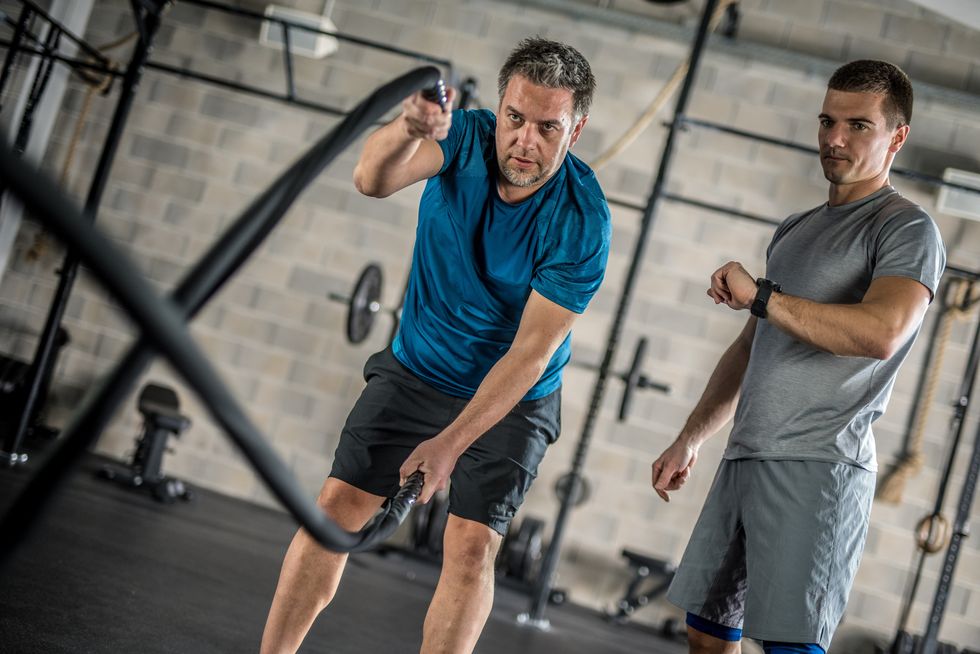
A common mistake in middle-age training is the total abandonment of power work. Power—the ability to exert force quickly—diminishes even faster than strength as we age. However, instead of high-risk movements like box jumps or Olympic cleans, the mature athlete should look to "low-impact power." Kettlebell swings and medicine ball slams offer the benefits of explosive movement with a much lower risk of joint impact or spinal compression.
Furthermore, cardiovascular health cannot be ignored in favor of pure hypertrophy. As metabolism naturally slows, maintaining a baseline of aerobic capacity is essential for heart health and body composition. Incorporating 20 to 30 minutes of Zone 2 cardio (steady-state exercise where you can still hold a conversation) several times a week improves mitochondrial function and aids in the recovery process by increasing systemic blood flow.
Consistency as the Ultimate Metric
The most significant hurdle for the over-40 trainee is the decline in recovery capacity. In one’s 20s, the body can often compensate for poor sleep, high stress, and suboptimal nutrition. By 40, these factors become limiting agents. The goal of each workout should not be to "annihilate" the body, but to provide just enough stimulus to trigger adaptation, leaving enough "in the tank" to return to the gym 48 hours later.
Consistency trumps intensity every time. There will be days when work stress or lack of sleep makes a heavy session impossible. On those days, "clocking in"—performing a lighter, mobility-focused session—is a victory. It maintains the habit and keeps the joints moving without adding to the body’s inflammatory load.

Conclusion
Training after 40 is an exercise in biological management. By understanding that the body is no longer a blank slate but a complex machine with decades of wear and tear, the lifter can pivot to a more sophisticated, sustainable model of fitness. Through the application of intelligent bodybuilding, a focus on moderate rep ranges, and a commitment to recovery, it is entirely possible to not only maintain muscle but to build a physique that is stronger and more resilient than in one’s youth. The path forward is not about doing less, but about doing it with more intention, precision, and respect for the aging process.