
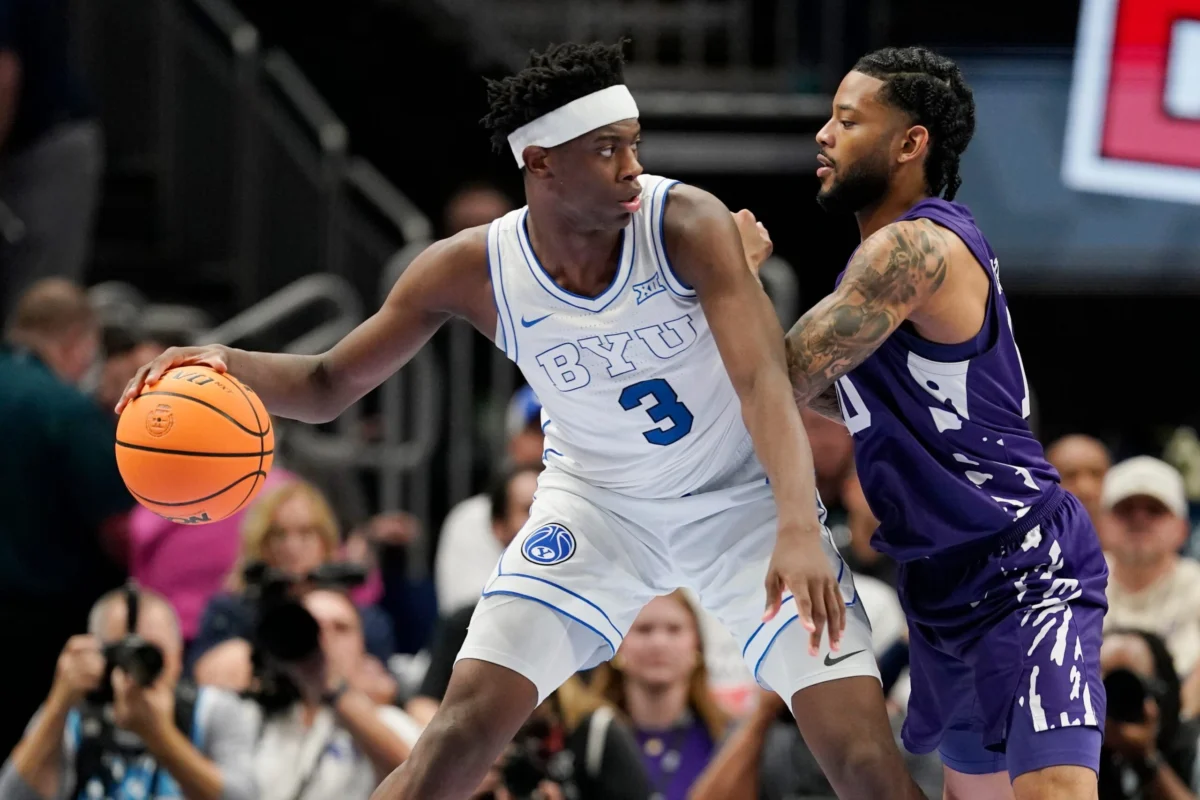
“By combining advanced biometric tracking with a grounded family support system, AJ Dybantsa is proving that the path to becoming a top NBA draft pick is as much about physiological discipline and mental blocking as it is about on-court production.”
As the projected number one overall pick in the 2026 NBA Draft, AJ Dybantsa has faced unprecedented scrutiny since his arrival at Brigham Young University (BYU). While many expected the 6’9” forward to treat his collegiate tenure as a mere formality, Dybantsa has instead leaned into the holistic resources of the program, leading the nation in scoring while utilizing elite-level sports science to redefine the limits of a freshman campaign. His journey offers a rare glimpse into the intersection of Name, Image, and Likeness (NIL) era economics, professional-grade athletic training, and the psychological fortitude required to remain "the main thing" in a world of constant media speculation.
The Statistical Phenomenon
In the modern era of college basketball, it is rare for a freshman to not only meet but exceed the monumental expectations of a five-star recruiting profile. AJ Dybantsa has done exactly that. Averaging 25.3 points per game, he currently paces the entire nation in scoring—a feat rarely accomplished by a first-year player in a Power Four conference. Beyond his offensive output, his 6.7 rebounds per game lead the Cougars, signaling a defensive and secondary-effort presence that NBA scouts value as much as his perimeter shooting.
Dybantsa’s impact on BYU has been transformative. The program, which transitioned into the highly competitive Big 12 environment, needed a centerpiece capable of contending with the physicality of established basketball powerhouses. Dybantsa has provided that anchor, earning All-America honors and positioning the Cougars as a formidable threat in the postseason. However, the numbers on the scoreboard are only half the story. The true engine behind his success lies in the meticulous management of his physical health and recovery.

The Science of Stamina: Biometrics and Recovery
The conversation surrounding professional basketball in recent years has been dominated by "load management"—the practice of resting healthy players to prevent injury. Dybantsa has taken a different approach, co-leading his team in minutes played. His ability to maintain high-level output without succumbing to fatigue is the result of a sophisticated integration of technology and sports medicine.
At BYU, Dybantsa and his teammates utilize wearable technology that was once the exclusive province of the NBA. Movement trackers are embedded in their practice gear, monitoring every sprint, jump, and lateral slide. These devices are paired with heart-rate monitors that provide real-time data to the coaching staff. For Dybantsa, this data has been a revelation. He notes that even when he feels he is pushing his absolute limit, the biometric data often shows his heart rate is lower than expected, indicating a physiological "ceiling" that is higher than previously thought. This objective feedback allows him to push harder, knowing his body has more "in the tank."
Recovery is treated with equal rigor. The BYU athletic department provides a pipeline to specialized care, including soft tissue work, physical therapy, and massage therapy. By focusing on "pre-habilitation"—addressing minor muscle tightness through foam rolling and targeted massage before it becomes a structural injury—Dybantsa has avoided the common pitfalls of the freshman season.
Overcoming the "Freshman Wall"
Despite his current dominance, Dybantsa’s transition to the collegiate level was not without its hurdles. The "freshman wall"—a period of mental and physical exhaustion that typically hits young players mid-season—is a well-documented phenomenon in NCAA sports. Dybantsa admits that he hit this wall earlier than most, during the grueling summer and fall practice schedules.
"I had some bad practices that luckily weren’t showcased on live television," Dybantsa revealed. This admission highlights a crucial aspect of his development: the willingness to fail in private to succeed in public. By reviewing film with coaches and leaning on the advice of peers who have already transitioned to the NBA, he learned to navigate the "grind" of the daily schedule. His ability to block out external noise—a skill he has honed since being identified as a top prospect in his early teens—allowed him to view these setbacks as data points rather than failures.

The "Family-Eesque" Choice: Why BYU?
One of the most discussed aspects of Dybantsa’s career was his decision to commit to BYU over other traditional basketball blue-bloods. Critics questioned whether a school in Provo, Utah, could provide the visibility and competition necessary for a top-tier NBA prospect. Dybantsa’s response has been a masterclass in personal branding and emotional intelligence.
He describes the atmosphere at BYU as "family-esque," a sentiment reinforced when he attended a football game and heard the entire stadium chanting his name before he had even played a minute of basketball. This sense of belonging, combined with the professional demeanor of the coaching staff, convinced Dybantsa and his family that BYU was the optimal environment for his final developmental steps before the professional ranks.
The support system is not just metaphorical. Dybantsa’s family has been a constant presence throughout his rise. His father moved from their Boston-area home to Utah during his high school years, and the rest of the family joined them for his college career. For a 19-year-old balancing the pressures of national stardom, the presence of his parents and younger sister provides a necessary sense of normalcy. Whether it is a "home-cooked meal" or the "discipline" provided by his father’s advice, this domestic stability acts as a hedge against the volatile nature of sports fame.
NIL and the Business of Basketball
In the current collegiate landscape, the Name, Image, and Likeness (NIL) era has changed the financial trajectory of young athletes. Dybantsa, as one of the most marketable faces in the country, has seen significant financial influx. However, his approach to wealth management mirrors his approach to basketball: disciplined and focused.
While many young athletes succumb to the temptation of high-end luxury purchases, Dybantsa has maintained a conservative spending profile. Aside from a few "splurges" on jewelry, he has prioritized saving his earnings. This financial maturity is often a trait seen in athletes who have a long-term vision for their careers, viewing their current earnings as a foundation for a future professional empire rather than a short-term windfall.

Looking Toward the 2026 NBA Draft
While the NBA’s "tanking" teams—most notably the Washington Wizards in current league discourse—are already eyeing Dybantsa for the 2026 draft, the young forward remains singularly focused on the present. His goal is not merely to be drafted, but to lead BYU to a national championship.
"If we win a championship, everything else will fall into place," Dybantsa says, echoing a sentiment often shared by the greats of the game. By focusing on the "main thing"—team success and daily improvement—he effectively shields himself from the distractions of mock drafts and trade rumors.
As BYU enters the critical "March Madness" period, Dybantsa’s confidence remains at 100%. He has evolved from a high-school phenom into a collegiate powerhouse, utilizing every tool at his disposal—from heart-rate monitors to family dinners—to ensure his readiness for the next level. For the NBA teams hoping to secure his services in 2026, the message is clear: AJ Dybantsa is not just a gifted athlete; he is a meticulously prepared professional in a student-athlete’s jersey. His freshman season at BYU will likely be remembered not just for the scoring titles, but as the blueprint for how a modern prospect navigates the complexities of the highest levels of sport.