
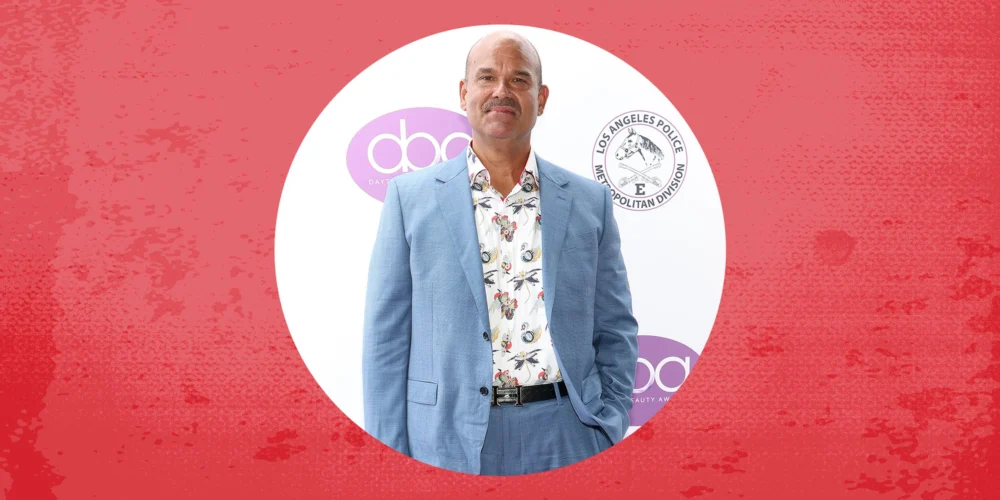
"Transformation is not a singular event but the result of ‘compounded interest’ earned through small, daily victories over the urge to remain stationary."
The journey of physical transformation often begins not with a radical overhaul of one’s life, but with a single, daunting realization that the status quo is no longer sustainable. For veteran actor Mel Rodriguez, known for his compelling performances in The Residence and CSI: Vegas, this realization came at the age of 47, a time when many individuals resignedly accept their physical condition as permanent. By pivoting from a cycle of extreme weight fluctuation to a philosophy of consistent, low-barrier movement, Rodriguez managed to shed significant weight and build a functional, resilient physique. His story serves as a masterclass in the psychological and physiological power of incremental progress and the effectiveness of calisthenics as a sustainable fitness modality.
The Psychology of the Turning Point
For decades, Mel Rodriguez lived within the volatile spectrum of weight fluctuation. His body weight was a moving target, swinging between 230 and 400 pounds. At his heaviest, he reached 420 pounds—a threshold that carries significant risks for cardiovascular health, metabolic function, and joint integrity. Like many who struggle with obesity, Rodriguez was well-acquainted with the clinical advice of physicians; he had "heard it all before." The disconnect, however, often lies between the medical necessity of weight loss and the psychological readiness to execute a long-term plan.
When Rodriguez reached age 47, he faced a common mental barrier: the belief that it was "too late" to change. This is a frequent cognitive trap in middle age, where the cumulative damage of sedentary habits feels insurmountable. However, Rodriguez countered this defeatism with a profound shift in mindset. He began to view his own resistance as a compass. He realized that the activities he feared most or felt most inclined to avoid were precisely the ones required for his evolution. By identifying fear not as a deterrent but as an indicator of necessary action, he bypassed the paralysis of choice that often stymies fitness journeys.
The Power of "Compounded Interest" in Fitness
Rather than diving into a high-intensity interval training (HIIT) program or a restrictive fad diet, Rodriguez began with the most fundamental human movement: walking. His initial efforts were modest—laps around the block. This approach mirrors the concept of "compounded interest" in finance, where small, regular contributions grow exponentially over time. In a physiological sense, these short walks began to improve his cardiovascular efficiency and insulin sensitivity without overtaxing his joints, which were already under pressure from his 420-pound frame.
Over the course of 18 months, these small efforts accumulated. The walks around the block evolved into three-to-four-mile daily excursions. This gradual scaling is critical for long-term adherence; it allows the central nervous system and the musculoskeletal system to adapt to new stresses without the high risk of injury or burnout associated with "weekend warrior" syndrome. By the time Rodriguez integrated more complex movements, he had already established a baseline of discipline and physical stamina.
The Calisthenics Solution: Eliminating the "Excuse Gap"
As his fitness improved, Rodriguez revisited a form of exercise he had practiced in his youth: calisthenics. Bodyweight training offers a unique advantage for individuals with demanding schedules, such as actors who spend long hours on set or in travel. The "excuse gap"—the distance between wanting to work out and having the equipment or location to do so—is effectively closed when your own body provides the resistance.
Working with Action Fitness in Tarzana, California, Rodriguez developed a routine that emphasizes high-volume repetitions and muscular endurance. Calisthenics is particularly effective for building "functional" strength—the kind of strength that translates to real-world movement and longevity. For a man in his early 50s, this focus on mobility, core stability, and relative strength is far more beneficial than chasing maximal powerlifting numbers.
Breaking Down the Rodriguez Routine
The routine Rodriguez has followed for the past two years is designed to be performed anywhere, ensuring that his fitness remains a priority regardless of his filming location.

1. Cardiovascular Foundation: The 30-Minute Walk
The workout begins with a 30-minute treadmill walk. This serves as both a warm-up and a steady-state cardio session. At 52, maintaining a consistent aerobic base is vital for heart health and recovery.
2. Upper Body Endurance: Pushups and Diamond Variations
Rodriguez utilizes standard pushups (2 sets of 15) to prime the chest, shoulders, and triceps. He then moves into Diamond Pushups, performed to failure. By bringing the hands together to form a diamond shape, the mechanical advantage shifts heavily toward the triceps and the inner pectoral muscles. Training "to failure" in this context ensures that even without external weights, the muscle fibers are recruited to their maximum potential, stimulating hypertrophy.
3. Core Stability: The Plank
The plank (2 sets of 30 seconds) is a foundational isometric hold. For someone who previously carried significant weight, core strength is essential for protecting the lower back and improving posture.
4. High-Volume Isometrics and Range of Motion
The inclusion of 100 forward and 100 backward arm circles may seem simple, but at high volumes, it builds significant shoulder endurance and joint health. This is followed by isometric curls (50 per side), which utilize self-resistance or static tension to fatigue the biceps. These movements prioritize time-under-tension, a key driver in muscle growth.
5. Lower Body and Posterior Chain: Squats and Calf Raises
Bodyweight squats and calf raises are performed to failure. Squats are the "king" of calisthenics, engaging the quads, hamstrings, and glutes. Performing these to failure ensures that the metabolic stress is high enough to trigger fat loss and muscle maintenance.
6. Trapezius Development: Shoulder Shrugs
Even without heavy dumbbells, shoulder shrugs performed to failure can help develop the trapezius muscles, which support the neck and upper spine.
The Medical and Personal Payoff
The most significant validation of Rodriguez’s journey did not come from a mirror or a scale, but from a clinical setting. After years of being told by doctors that he needed to lose weight to avoid chronic illness, Rodriguez recently attended a check-up where that "usual spiel" was absent. His vitals and physical condition had reached a point where his weight was no longer the primary concern of his healthcare providers.
Now 52, Rodriguez maintains a physique that is a far cry from his 420-pound peak. His transformation underscores a vital truth in health and fitness: the best routine is the one that removes the most barriers. By embracing calisthenics and the philosophy of "compounded interest," Rodriguez moved past the fear of being "too old" or "too heavy" to change.
Broader Implications for Health and Longevity
Rodriguez’s success highlights a shift in how we view mid-life fitness. The traditional "all-or-nothing" approach—where one either trains like an athlete or remains sedentary—is being replaced by a more nuanced understanding of consistent, low-impact movement. For the general population, the lessons from Rodriguez’s journey are clear:
- Start Small: The physiological benefits of walking cannot be overstated. It is the lowest-barrier entry point to fitness.
- Use Your Environment: Calisthenics eliminates the need for expensive memberships or equipment, making fitness accessible to everyone.
- Mindset Over Mechanics: Viewing discomfort as a signal for growth rather than a reason to stop is the key to psychological resilience.
- Focus on the Process: By focusing on the daily "interest" of movement rather than the final "balance" of the scale, individuals can build habits that last decades rather than weeks.
Mel Rodriguez’s transformation is a testament to the fact that the human body is remarkably adaptable, even after years of neglect. At 52, he is not just in "better" shape; he is in the best shape of his life, proving that while the best time to start a fitness journey may have been twenty years ago, the second-best time is today.