
"Freeze branding is not a reckless rite of passage but a traumatic medical event that causes full-thickness tissue death and creates permanent systemic health risks, including sepsis and an increased susceptibility to skin cancer."
In the latest installment of the medical drama The Pitt, viewers are presented with a visceral example of "cryobranding"—a dangerous DIY body modification involving dry ice—that highlights the intersection of misguided fraternal bonding and severe physiological trauma. While the show utilizes these moments to explore the "Dudes Being Dudes" trope of reckless behavior, the underlying medical reality, as confirmed by emergency medicine experts, reveals a landscape of cell rupture, nerve damage, and potential secondary infections that can be life-threatening.
The Narrative Context: "Dudes Being Dudes" in Season 2
In Season 2, Episode 5 of The Pitt, titled "11:00 A.M.," the series explores a specific brand of masculine impulsivity. To understand the gravity of the medical emergency presented, one must first understand the cultural framework the show establishes. There is a distinct difference between what the internet often classifies as "Dudes Rock" and "Dudes Being Dudes." The former refers to actions that are perhaps eccentric or silly but ultimately harmless and aesthetically "cool"—think of the calculated, stylish heists in Ocean’s Eleven or the effortless camaraderie of Matt Damon and Ben Affleck. These moments evoke a positive, if slightly reckless, sentiment.

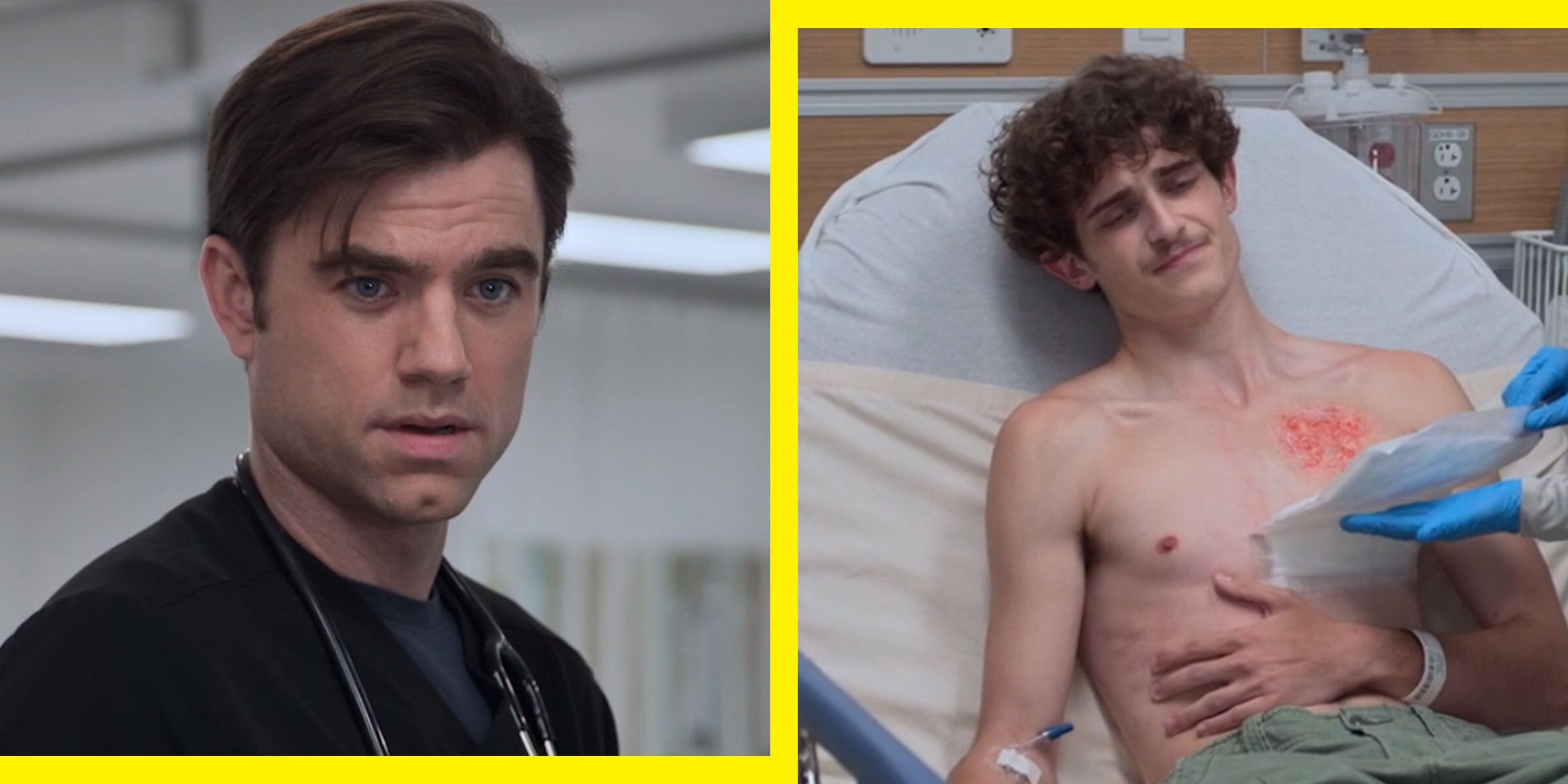
However, "Dudes Being Dudes" occupies a darker, more chaotic space. It is the realm of the "bad idea" that cannot be rationalized after the fact. It is the classification for actions where the outcome is inevitably injurious and the logic is non-existent. In The Pitt, this is personified by the Bednar brothers, Alex (Jett Burton) and Aaron (Lukas Jann). In an attempt to solidify their fraternal bond, the two decided to brand Alex’s chest with dry ice to match a "family crest"—the Pittsburgh Pirates logo—that Alex already had on his back. The result was not a symbol of brotherhood, but a severe medical crisis that brought them into the emergency room under the care of Dr. Langdon (Patrick Ball) and Nurse Donnie (Brandon Mendez Homer).
The Medical Reality of Dry Ice Exposure
When Alex Bednar arrives in the ER, the levity of the "chill bro" persona quickly fades against the clinical reality of his injury. To provide a deeper understanding of what occurs during such an incident, Dr. Robert Glatter, an Assistant Professor of Emergency Medicine at Lenox Hill Hospital and a member of the Men’s Health Advisory Board, analyzed the scene. His assessment is stark: "freeze branding," also known as cryobranding, is an exceptionally hazardous practice that should never be attempted on human skin.
The primary culprit is the extreme temperature of dry ice. Composed of solid carbon dioxide, dry ice maintains a temperature of approximately minus 110°F (-78.5°C). For perspective, this is significantly colder than the temperatures required to cause instantaneous frostbite. When this substance is pressed against bare skin, the thermal shock is immediate and devastating.
Full-Thickness Burns and Tissue Death
Dr. Glatter explains that direct contact with dry ice results in what is known as a "full-thickness" burn. In clinical terms, this means the damage is not limited to the epidermis (the outer layer) or the dermis. Instead, the freezing process penetrates through every layer of the skin, reaching down into the subcutaneous fat and even the underlying muscle.

The biological mechanism is violent. Because the human body is composed largely of water, the extreme cold causes the water inside the skin cells to freeze and expand instantly. This leads to the physical rupture of the cell membranes. As the cells burst, they release enzymes and inflammatory mediators that cause the death of surrounding healthy tissue. The body’s attempt to heal this massive void of necrotic tissue results in the formation of a keloid or a hypertrophic scar—a thick, raised, and often discolored mass of collagen that represents the "brand" the Bednar brothers were seeking. However, unlike a tattoo, which sits within the skin, a brand is a permanent architectural change to the body’s largest organ, often resulting in restricted movement and a lifetime of skin sensitivity.
Systemic Risks: Sepsis and Dehydration
The dangers of cryobranding extend far beyond the localized site of the burn. One of the most significant risks associated with third-degree cold burns is sepsis. Sepsis is a life-threatening condition where the body’s immune system overreacts to an infection, leading to widespread inflammation, organ failure, and potentially death.
As Dr. Glatter notes, the combination of necrotic (dead) tissue and a compromised blood supply creates an ideal breeding ground for bacteria. "The combination of tissue with poor blood supply and potential bacterial contamination creates conditions for systemic infection," he explains. When the skin barrier is destroyed, the body loses its primary defense against pathogens. If bacteria enter the bloodstream through the damaged area, the patient can quickly descend into septic shock.
Furthermore, the skin plays a vital role in regulating the body’s hydration. Large-scale burns, such as a brand across the chest, can lead to significant fluid loss. The damaged tissue can no longer retain moisture, leading to dehydration. In extreme cases, this fluid imbalance can stress the kidneys and the cardiovascular system, making the "Dudes Being Dudes" moment a potentially fatal endeavor.

Long-Term Complications: Cancer and Chronic Pain
The episode of The Pitt also touches upon the long-term aesthetic of the brand—a white, raised scar. While the characters may view this as a badge of honor, the medical implications are sobering. The white appearance of the scar is due to the permanent loss of melanocytes, the cells responsible for producing melanin (pigment).
Melanin is the body’s natural defense against ultraviolet (UV) radiation. Without it, the branded area of the skin is left completely unprotected from the sun. Dr. Glatter warns that individuals with such brands have a significantly higher risk of developing skin cancer in the scarred area later in life.
There is also the matter of neurological damage. Dry ice is so cold that it can act as a temporary local anesthetic by numbing the sensory nerves. This is why Alex might not have felt the full extent of the agony in the moments the dry ice was applied. However, as the tissue thaws, the pain is described as debilitating. Because the burn is full-thickness, it often destroys nerve endings, leading to permanent numbness or, conversely, chronic neuropathic pain that can last for years.
The Misapplication of Agricultural Techniques
A crucial point of context provided by medical experts is the origin of freeze branding. This technique was originally developed for use in the cattle industry. Livestock, such as cows and horses, have significantly thicker and more resilient skin than humans. In an agricultural setting, freeze branding is used to kill the pigment-producing cells in the hair follicles so that the hair grows back white, creating a visible mark that does not damage the hide as deeply as a hot iron might.

Humans, however, have thin, fragile skin that is not designed to withstand such extremes. Applying an industrial agricultural process to human anatomy is a fundamental misunderstanding of biology. While Aaron Bednar shows off his own branding in the episode, suggesting a history of this behavior, the medical reality is that they have been lucky to avoid catastrophic outcomes thus far.
Conclusion: The Narrative and the Warning
In The Pitt, Dr. Langdon eventually manages to treat Alex, informing him that while he will be "OK," he will carry a permanent, disfiguring scar. When Aaron suggests they try the branding again in a few months to "get it right," the medical staff’s immediate and loud rejection serves as a proxy for the audience’s common sense.
The episode serves as a powerful reminder of the physical cost of impulsive behavior. While the "Dudes Being Dudes" trope provides a framework for understanding why young men might engage in high-risk bonding rituals, the physiological consequences are indifferent to the sentiment behind the act. The message from both the show and medical professionals is clear: if you want to honor a bond or a "family crest," seek a professional tattoo artist. Dry ice belongs in a cooler, not on the human body. The "rush" of a reckless moment is never worth the lifetime of medical complications that follow a full-thickness cryogenic burn.