
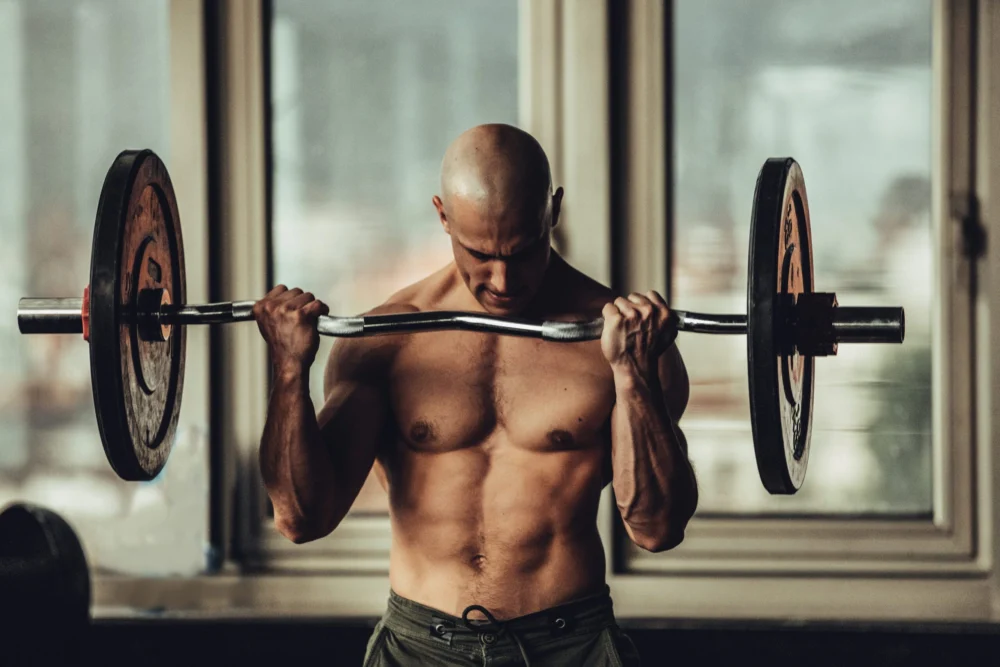
"Maximum biceps development is not a product of heavy, momentum-driven lifting, but rather the result of mastering controlled elbow flexion and forearm supination through a full range of motion."
Building a pair of strong, well-defined arms is a cornerstone of physical conditioning that bridges the gap between aesthetic aspiration and functional utility. While the biceps are often celebrated as the ultimate "show" muscle, their role in human biomechanics is profound, facilitating essential pulling movements and stabilizing the elbow and shoulder joints during complex tasks. To move beyond the plateau of standard repetitions, one must understand the anatomical nuances of the upper arm and the specific mechanical advantages offered by various exercise iterations.
Understanding the Anatomy of the Upper Arm
To train the biceps effectively, it is necessary to look beneath the skin at the musculature responsible for arm flexion. The primary muscle of focus is the biceps brachii, which is composed of two distinct sections: the long head and the short head. Both heads originate at the scapula (shoulder blade) but follow different paths. The long head is situated on the lateral (outside) part of the arm and is responsible for creating the "peak" of the muscle when flexed. The short head sits on the medial (inside) part of the arm, contributing to the overall thickness and width of the biceps.

However, a comprehensive arm routine must also account for the brachialis and the brachioradialis. The brachialis lies deep beneath the biceps brachii; when developed, it physically pushes the biceps upward, making the arm appear larger and more peaked. The brachioradialis is the primary muscle of the forearm that crosses the elbow joint, playing a critical role in "hammer" style grips. True arm hypertrophy requires a strategic approach that targets all three of these muscles through varying angles and grip orientations.
The Mechanics of Training: Flexion and Supination
The biceps serve two primary functions: elbow flexion (bringing the hand toward the shoulder) and forearm supination (rotating the palm upward). Many lifters focus solely on the "hinge" movement of the elbow while neglecting the rotational component. To maximize muscle fiber recruitment, particularly in the short head, a curl should involve a conscious effort to turn the pinky finger toward the ceiling at the top of the movement.
Furthermore, the concept of "isolation" is paramount in biceps training. Because the biceps are relatively small compared to the back or legs, they are easily overshadowed by larger muscle groups if form is compromised. Using "body English"—swinging the hips or arching the back—shifts the mechanical load from the biceps to the anterior deltoids and the lumbar spine. This not only increases the risk of injury but also diminishes the stimulus required for muscle growth.
Fundamental Free-Weight Exercises
The foundation of any arm program begins with classic movements that allow for significant loading and a natural range of motion.

Standing Dumbbell Curl
The dumbbell curl remains the gold standard for its versatility. Unlike a barbell, dumbbells allow the wrists to move freely, which can prevent joint strain and allow for maximum supination. By curling one arm at a time or both simultaneously, the lifter can focus on the mind-muscle connection. It is recommended to perform 3 sets of 10 to 12 reps, ensuring the elbows remain pinned to the ribcage.
Standing Barbell Curl
The barbell curl is the premier movement for overloading the biceps with weight. By using a fixed bar, the lifter can move more total poundage, which is essential for triggering hypertrophy. Altering the grip width—wider for the short head, narrower for the long head—allows for subtle shifts in muscle emphasis. A standard protocol is 3 sets of 8 to 12 reps.
Concentration Curl
Favored for its ability to eliminate momentum, the concentration curl involves sitting on a bench and bracing the elbow against the inner thigh. This position forces the biceps to work in total isolation. By focusing on the eccentric (lowering) phase of the movement, lifters can create significant micro-trauma in the muscle fibers, leading to greater repair and growth.
Advanced Isolation and Angle Variation
Changing the angle of the humerus (upper arm bone) relative to the torso can drastically change which part of the biceps is under the most tension.

Incline Dumbbell Curl
By sitting on an incline bench, the arms hang behind the plane of the torso. This puts the long head of the biceps in a fully stretched position. Training a muscle at its greatest length—a concept known as stretch-mediated hypertrophy—is one of the most effective ways to build mass. Because the muscle is at a mechanical disadvantage in this position, lighter weights are usually required.
Preacher Curl (Dumbbell, Machine, or Band)
Whether performed on a dedicated bench or using a resistance band on the floor, the preacher curl places the arms in front of the body. This creates a "peak contraction" focus, putting maximum tension on the muscle at the top of the movement. It also makes cheating virtually impossible, as the back of the arm is braced against a pad.
Spider Curl
Similar to the preacher curl but performed while lying chest-down on an inclined bench, the spider curl forces the arms to hang vertically. This removes all help from the shoulders and back. It is a high-intensity isolation move that is best performed with a focus on the "squeeze" at the top of the rep.
Targeting the Brachialis and Grip Variations
To achieve a 3D look, the routine must shift from underhand grips to neutral and overhand grips.

Hammer Curl
By holding dumbbells with a neutral grip (palms facing each other), the load is shifted toward the brachialis and brachioradialis. This exercise is essential for "filling out" the side of the arm and increasing grip strength.
Zottman Curl
The Zottman curl is a hybrid movement. The lifter performs the concentric (upward) phase with a standard underhand grip to hit the biceps, then rotates the palms to an overhand grip for the eccentric (downward) phase. This targets the forearms and brachialis during the lowering portion, providing a comprehensive arm workout in a single move.
Towel Hammer Curl
For those looking to challenge their grip and forearm stability, looping a towel through a kettlebell or dumbbell handle creates an unstable load. This forces the muscles of the hand and forearm to fire constantly to maintain the grip while the biceps and brachialis handle the flexion.
Cable-Based Movements for Constant Tension
One drawback of free weights is that the tension on the muscle varies throughout the rep due to gravity. Cable machines provide "constant tension," meaning the biceps are working just as hard at the bottom and top of the move as they are in the middle.

Crucifix Curl
Standing between two cable towers with arms extended like a cross, the lifter curls the handles toward their ears. This unique angle emphasizes the biceps peak and requires significant core and shoulder stability to maintain proper posture.
Lying Cable Curl
Performing curls while lying flat on the floor or a bench eliminates any possibility of using the legs or hips for momentum. It allows for a deep stretch and a very controlled contraction, making it an excellent finishing movement for an arm session.
Functional Integration: Compound Pulling
While isolation is key for aesthetics, the biceps also thrive when forced to assist in heavy compound movements.
The Chinup
Often called the "king of upper body exercises," the chinup uses an underhand grip to recruit the biceps heavily. Pulling one’s entire body weight provides a level of mechanical tension that isolation curls cannot match. Incorporating 3 sets of 8 to 10 reps can build foundational strength that carries over into all other curling movements.
Underhand Barbell Row
By switching from a traditional overhand grip to an underhand grip during a barbell row, the lifter increases the involvement of the biceps. This allows the arm muscles to work in tandem with the large muscles of the back (latissimus dorsi and rhomboids), fostering overall upper-body power.
Conclusion and Programming
A successful biceps training program is built on the pillars of variety, intensity, and strict form. It is generally recommended to train the biceps two to three times per week, allowing at least 48 hours between sessions for recovery. A balanced routine should include one heavy primary lift (like the barbell curl), one angle-specific isolation move (like the incline or preacher curl), and one neutral-grip move (like the hammer curl).
By prioritizing the mind-muscle connection over the weight on the bar, and by targeting the various heads of the muscle through diverse ranges of motion, any trainee can unlock the full potential of their arm development. Growth is a slow process of incremental overload, but with the right anatomical understanding and exercise selection, the path to stronger, more muscular arms becomes clear.