
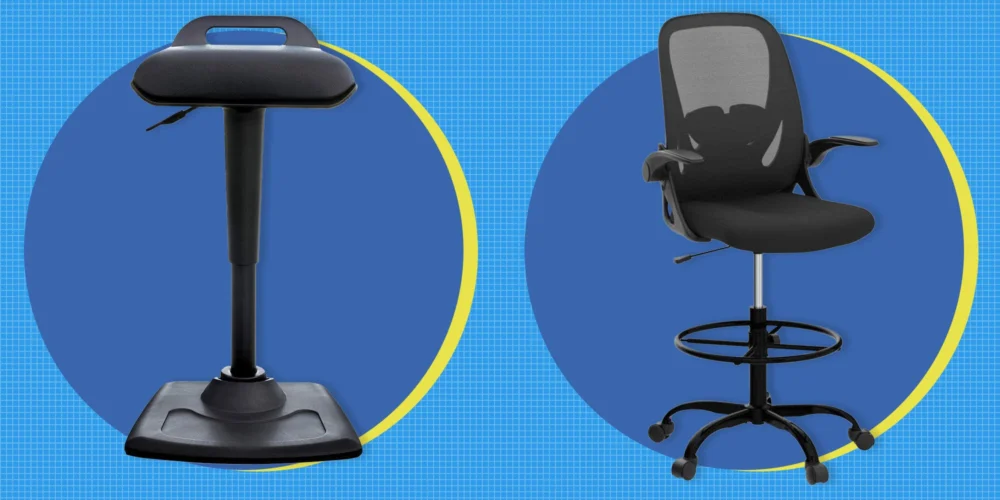
"The transition to standing desks has revealed a critical middle ground: the need for ‘active’ seating that supports the body’s natural biomechanics while encouraging micro-movements throughout the workday."

As the modern workforce shifts away from traditional sedentary office environments, the standing desk has become a staple of the ergonomic landscape. However, health experts and office designers have increasingly noted that static standing for eight hours can be as taxing on the circulatory system and lower joints as prolonged sitting is on the spine. The emergence of standing desk chairs—often referred to as drafting chairs or active stools—provides a versatile solution, allowing professionals to oscillate between standing, leaning, and sitting at an elevated height. This evolution in office furniture aims to maintain the metabolic benefits of a standing desk while providing the necessary structural support to prevent fatigue and postural collapse.
The Biomechanics of Active Seating
The primary philosophy behind standing desk seating is the promotion of "active sitting." Unlike traditional office chairs that encourage a 90-degree angle at the hips and knees, many standing desk chairs are designed to facilitate a 135-degree angle. This posture, often seen in equestrian riding, allows the hips to open naturally, reducing the pressure on the lumbar discs and encouraging the spine to maintain its natural S-curve. By sitting on the edge of a stool or using a leaning mechanism, the user engages their core and leg muscles, fostering neuromuscular engagement that is absent in standard ergonomic chairs.

Furthermore, the integration of "wobble" bases or balance ball components introduces micro-movements. These small, constant adjustments require the body to stabilize itself, which can improve circulation and keep the mind more alert by preventing the lethargy often associated with a static posture.
The Gold Standard of Adjustability: The Primy Drafting Chair
When evaluating the market for high-utility seating, the Primy Tall Standing/Drafting Desk Chair emerges as a leader in cost-to-performance value. Its design is a testament to the necessity of customization in ergonomics. With adjustable height, lumbar support, armrests, and footrests, it addresses the unique proportions of the individual user. The use of breathable mesh is a critical inclusion for those working long hours, as it facilitates heat dissipation, a common issue with high-density foam or leather alternatives.

While some might find the aesthetic utilitarian, its structural integrity—built on a metal and wood frame—ensures longevity. The Primy model serves as a "high-tech rolling barstool," bridging the gap between a traditional task chair and a specialized standing desk accessory. Its silent, smooth-glide casters are particularly relevant for open-plan offices or home environments where acoustic management is essential.
Minimalist Innovation and Active Engagement
For those seeking to maximize the health benefits of their standing desk, the Vari Active Seat represents a departure from traditional chair architecture. Priced at a premium, it utilizes an articulating pedestal that allows for a 20-degree lean in any direction. This "active seat" design is intentionally unstable, forcing the user to engage their back and core muscles to maintain balance.

This style of seating is particularly effective for "perching"—a middle ground between sitting and standing. By supporting the pelvis while the legs remain mostly extended, the Vari stool alleviates the weight-bearing stress on the feet and ankles without the user fully disengaging into a sedentary state. Its minimalist footprint makes it an ideal choice for smaller workspaces where a full-sized executive chair would be obstructive.
The Executive Experience at Height: Misolant and Okeysen
Ergonomic health does not necessarily require the sacrifice of comfort or professional aesthetic. The Misolant Drafting Chair and the Okeysen Armless Office Chair cater to users who require the support of a standing desk chair but prefer the "executive" feel of padded upholstery. The Misolant model features faux leather with diamond stitching, supported by a heavy-duty iron frame. This is a chair designed for the "marathon" worker—someone who may spend several hours in a seated position even at a tall desk.

Similarly, the Okeysen model offers a modern, L-shaped silhouette that aligns with contemporary design trends. By removing the armrests, these chairs provide a greater range of motion for the upper body, which is often preferred by architects, designers, and creatives who need to move freely across large drafting surfaces. The inclusion of a built-in footrest ring in these models is not merely for comfort; it is a vital ergonomic feature that prevents the legs from dangling, which can otherwise impede circulation in the lower extremities.
Specialized Wellness: The Role of the Balance Ball
The Gaiam Balance Ball Chair Stool represents the intersection of fitness equipment and office furniture. By utilizing an inflatable half-dome as the seat, Gaiam forces the user to perform constant, subtle core stabilization. This type of seating is often recommended by physical therapists for individuals looking to improve their posture and strengthen the pelvic floor and deep abdominal muscles.

The 360-degree swivel and locking casters provide the functionality of a standard office chair, but the "active" nature of the ball ensures that the user cannot remain passive. For professionals who find themselves stiffening up after hours of focus, the balance ball stool provides a built-in mechanism for movement, allowing for gentle bouncing or hip circles that can alleviate spinal compression.
Budget-Friendly Utility and Contemporary Aesthetics
The democratization of ergonomic furniture has led to a variety of accessible options that do not compromise on essential features. The Bojuzija Ergonomic Drafting Chair and the Boss Office Products Armless Chair provide the necessary height elevation for standing desks at a fraction of the cost of high-end boutique brands.

Bojuzija stands out for its contemporary aesthetic and thick foam padding, offering 3.5 inches of cushion—a rarity in the budget category. Meanwhile, the Modway Thrive Drafting Chair emphasizes visual impact, offering bold colors like cobalt blue and orange. While the Thrive model focuses on height adjustability over lumbar customization, its stainless steel and alloy frame suggests a durability that outclasses many plastic-based competitors. These models prove that the transition to a healthier workspace is accessible across various price points.
Choosing Between a Chair and a Stool
The decision between a full-backed chair and a minimalist stool should be governed by the user’s primary work habits. Those who intend to use their standing desk in a "hybrid" fashion—spending significant time sitting—should prioritize chairs with robust lumbar support and armrests, such as the Primy or Misolant models. These features provide the necessary bracing to prevent slouching as muscles fatigue over time.

Conversely, for users whose primary goal is to remain active and who only "take the load off" periodically, a stool like the Vari or Learniture Active Learning Stool is superior. These stools are easier to tuck away when not in use and are purpose-built to facilitate the "perching" posture that is most compatible with standing desk heights.
The Future of the Healthy Workspace
The integration of standing desk chairs is more than a trend; it is a response to a growing understanding of sedentary physiology. By providing a seat that matches the height of a standing desk, manufacturers are allowing users to maintain their workflow without the physical "reset" required when moving from a standing position to a low-seated position.

Ultimately, the best standing desk setup is one that encourages variety. The human body is designed for movement, and the most effective ergonomic strategy is to change positions frequently. Whether through a high-tech drafting chair, a wobbling stool, or a balance ball, the goal is to create a dynamic environment where the furniture works in tandem with the body’s natural need for activity. As the boundary between the home and the office continues to blur, these versatile seating solutions offer a way to maintain professional productivity without sacrificing long-term physical well-being.