
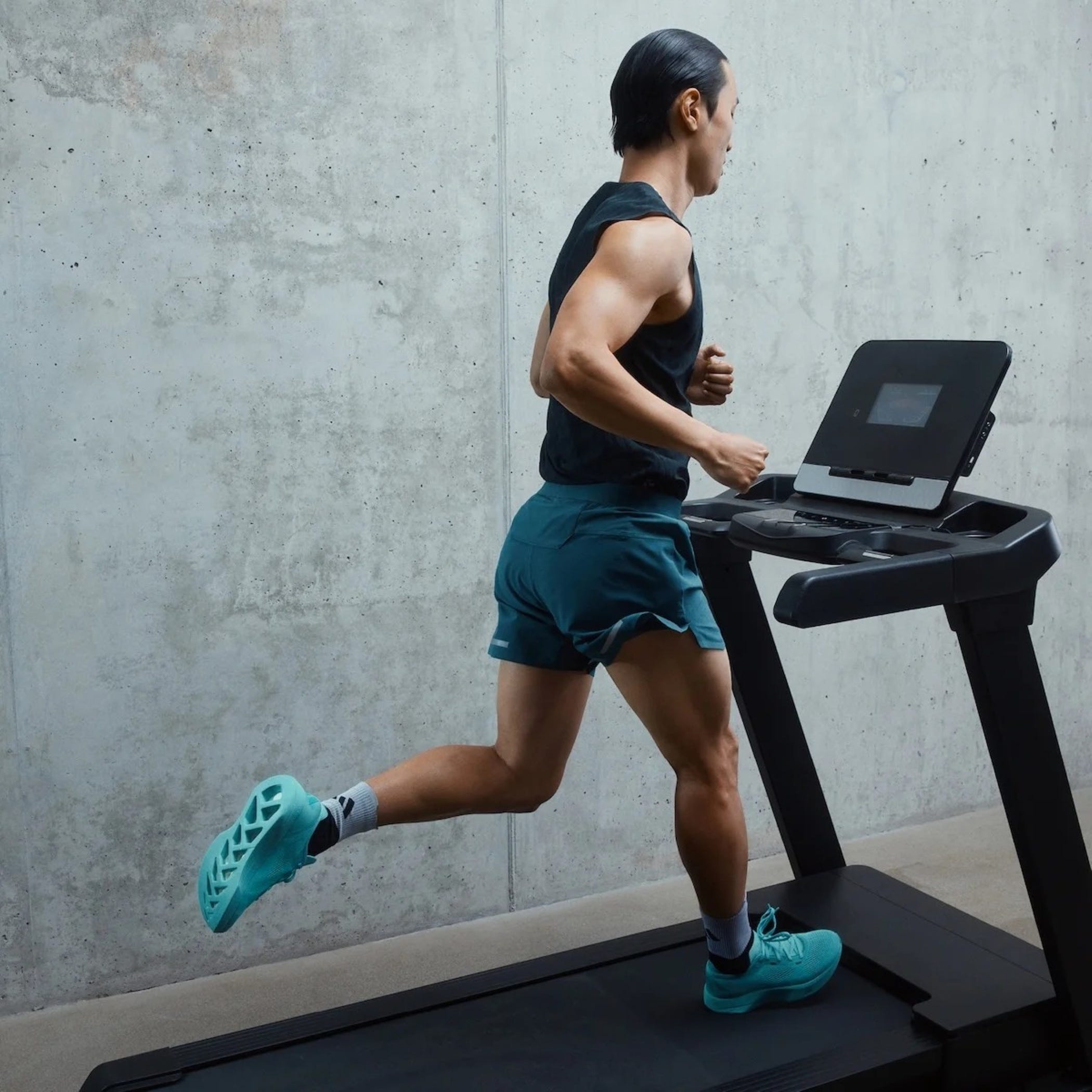
"The modern treadmill runner requires more than just a standard trainer; they need specialized footwear that balances surface-specific traction with biomechanical support tailored to the repetitive nature of indoor belts."

As fitness enthusiasts increasingly move their aerobic conditioning indoors to escape environmental variables or to utilize precision-based speed work, the demand for treadmill-specific footwear has surged. Unlike the variable terrain of outdoor road running, the treadmill offers a consistent, moving surface that presents its own unique set of physiological challenges, including increased heat buildup within the shoe and a specific type of friction between the outsole and the rubber belt. Choosing the correct shoe is no longer merely about aesthetic preference but about aligning one’s specific biomechanics—arch height, gait cycle, and cross-training needs—with the engineering of the shoe to prevent overuse injuries and maximize energy return.
The Versatility of the Daily Trainer: Nike Pegasus 41
For decades, the Nike Pegasus line has served as the benchmark for the "workhorse" running shoe, and the Pegasus 41 continues this legacy with specific refinements that excel in a gym environment. The hallmark of this iteration is the introduction of ReactX foam, which Nike claims provides over 10% more energy return than previous React iterations. When paired with dual Air Zoom units—one in the forefoot and one in the heel—the shoe offers a "moderately bouncy" sensation. On a treadmill, where the belt already provides a slight degree of "give," this level of responsiveness is ideal; it offers enough propulsion for interval sprints without the unstable "trampoline" effect found in high-stack carbon-plated racers.

The Pegasus 41 is particularly noted for its waffle-inspired outsole. While originally designed for road grip, this pattern provides exceptional surface area contact on treadmill belts, ensuring that no energy is lost to slippage during high-speed transitions. However, runners should note the 10.5-ounce weight and the traditionally narrow Nike toebox. For those who experience foot swelling during long indoor sessions—a common occurrence due to the lack of natural wind cooling—opting for the extra-wide version is often a necessity rather than a luxury.
The Hybrid Athlete’s Choice: Under Armour Project Rock BSR 5
Many treadmill users do not view their run in isolation but rather as one component of a larger high-intensity functional training (HIFT) session. The Under Armour Project Rock BSR 5 is engineered for this specific demographic. Unlike traditional running shoes that can feel "tippy" or unstable during lateral movements or heavy lifting, the BSR 5 utilizes UA TriBase technology. This design maximizes ground contact where the foot needs it most, allowing for a superior "grounded" feel.

Fitness directors note that while the BSR 5 is heavier (11.9 ounces) and "clunkier" than a dedicated marathon shoe, it offers a level of durability that pure runners lack. The rubber outsole includes reinforced toe caps, which are essential for those who transition from the treadmill to the floor for planks, burpees, or mountain climbers. While it lacks the extreme plushness of a maximalist shoe, its firmer cushioning is a deliberate choice, requiring the runner to "earn their strides" and maintaining stability during the strength-training portions of a workout.
Engineering Speed: Adidas Adizero EVO SL
For the runner focused on tempo runs and speed intervals, weight is the primary enemy. The Adidas Adizero EVO SL enters the market as one of the lightest daily trainers available, weighing in at a mere 7.9 ounces. This shoe represents a "trickle-down" of elite racing technology into a more accessible, durable package. By utilizing Lightstrike Pro—the same high-performance foam found in Adidas’ record-breaking "super shoes"—the EVO SL provides a high degree of energy return without the aggressive stiffness of a carbon plate.

The treadmill environment is often warmer than the outdoors, making the EVO SL’s breezy mesh upper a critical feature. This breathability helps regulate foot temperature, reducing the risk of blisters and "hot spots." However, the trade-off for such a lightweight profile is a reduction in stability. This shoe is best suited for neutral runners who have strong intrinsic foot strength and do not require corrective guidance during their gait cycle.
Stability and Support: ASICS Gel-Kayano 32
Treadmill running is notoriously repetitive; because the surface never changes, the same muscles and joints absorb the impact in the exact same way with every stride. For runners who overpronate (where the foot rolls inward), this repetition can lead to injuries like shin splints or plantar fasciitis. The ASICS Gel-Kayano 32 addresses this through its 4D Guidance System. Rather than using the "medial posts" of the past—which could feel hard and intrusive—this adaptive system uses a softer foam in the arch area to help guide the foot back into a neutral position.

The Kayano 32 is a maximalist stability shoe, featuring a high stack height and plush foam. While stability shoes are historically heavy, ASICS has managed to keep the Kayano 32 at 10.6 ounces, making it surprisingly nimble for the level of protection it offers. The tread is designed without large lugs, which is a subtle but important feature for treadmill use; large lugs can sometimes "catch" on the belt, whereas the Kayano’s smoother outsole ensures a seamless transition from heel-strike to toe-off.
The King of Cushioning: Hoka Clifton 10
Hoka has become synonymous with the maximalist movement, and the Clifton 10 remains the gold standard for those prioritizing joint protection. The shoe features a high-stack CMEVA (Compression Molded EVA) foam that provides a "cloud-like" experience. For runners recovering from injury or those who find the hard deck of a treadmill unforgiving, the Clifton 10 offers significant impact attenuation.

A key design element of the Hoka is the Metarocker geometry. This curved sole design is intended to complement the natural gait cycle, essentially "rolling" the runner forward. On a treadmill, this can help maintain a consistent cadence even as fatigue sets in. The Clifton 10 also holds the American Podiatric Medical Association (APMA) Seal of Acceptance, highlighting its benefits for overall foot health. Despite its bulky appearance, it remains remarkably light at 9.8 ounces, though it lacks the ground feel that some purists prefer.
Purpose-Built Performance: Reebok FloatZig Tread
While most shoes on this list are "road-to-gym" hybrids, the Reebok FloatZig Tread is a rare example of a shoe designed specifically for the treadmill. The engineering team at Reebok focused on the specific traction needs of the indoor runner, developing a "Griptonite" rubber outsole. The checkerboard pattern is optimized for the synthetic materials of a treadmill belt, providing a level of "stickiness" that ensures confidence during steep incline walks or high-speed sprints.

The FloatZig Tread utilizes a dual-density midsole, which balances the soft energy return of the "Zig" shape with a firmer base for stability. With a lower stack height than the Hoka or ASICS, it offers a more "controlled" feel, which many runners prefer when navigating the moving parts of a machine. It is a specialized tool for a specialized environment, though it may feel under-cushioned for those accustomed to maximalist road shoes.
The Minimalist Approach: Vivo Barefoot Primus Flow
On the opposite end of the spectrum is the Vivo Barefoot Primus Flow. At just 5.3 ounces, it is the lightest shoe in the category, offering a "barely-there" sensation. The barefoot philosophy suggests that by removing excessive cushioning and arch support, the body is forced to strengthen its own muscles and tendons.

The treadmill is perhaps the safest place to experiment with minimalist running because the surface is predictable and free of debris like rocks or glass. The Primus Flow features a wide toebox, allowing for natural toe splay, and a highly flexible sole that provides maximum "ground feel." However, the transition to such a shoe must be gradual. Without the mechanical "help" of foam and high-drop heels (the Primus Flow has a 4mm drop compared to the Nike’s 10mm), the calves and Achilles tendons must work significantly harder.
Conclusion: Matching Footwear to the Indoor Environment
The "best" treadmill shoe is ultimately a subjective choice dictated by a runner’s specific goals. A sprinter chasing PRs on the belt will find the Adidas Adizero EVO SL indispensable, while a high-mileage runner seeking longevity may gravitate toward the ASICS Gel-Kayano 32 or the Hoka Clifton 10. For the generalist, the Nike Pegasus 41 remains the most balanced option.

Regardless of the choice, runners should monitor their footwear for signs of wear. While treadmill shoes do not face the abrasive friction of asphalt, the internal foam still compresses over time, losing its ability to absorb shock. By selecting a shoe that matches their gait and the specific demands of the treadmill, athletes can ensure that their indoor miles are as productive—and as safe—as their outdoor ones.