
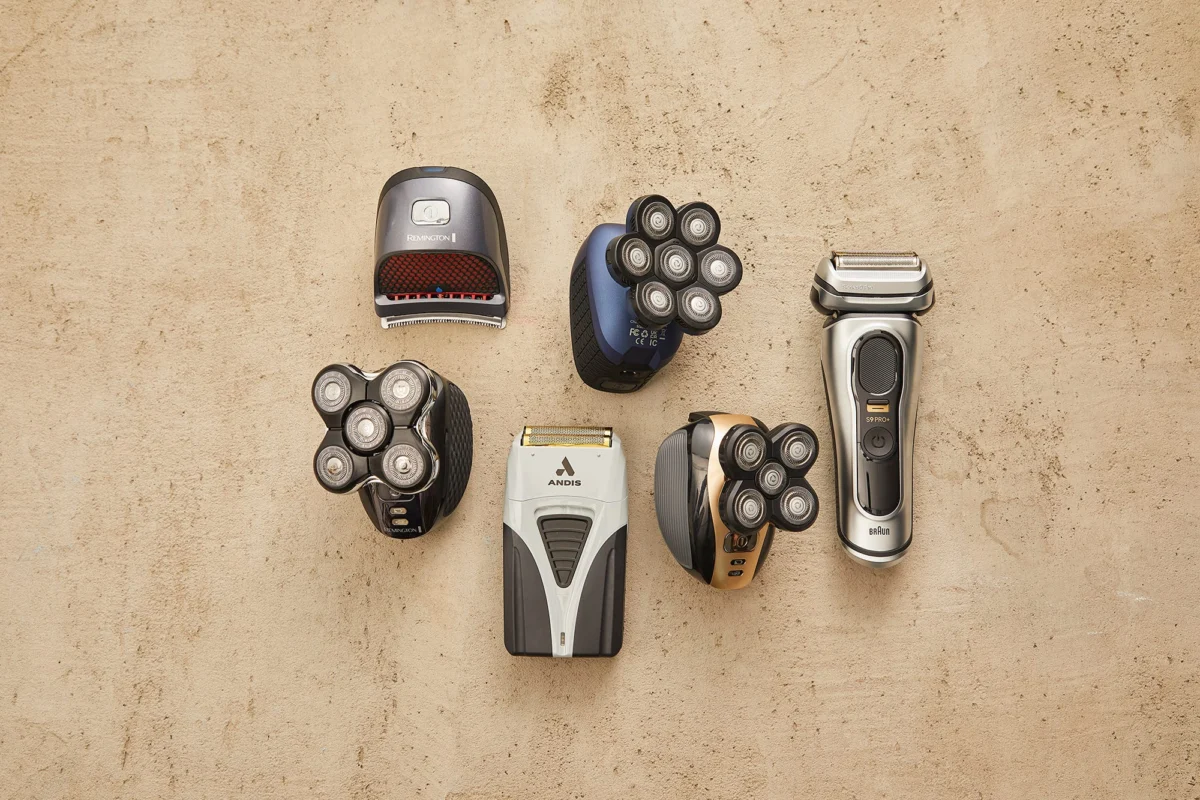
"Achieving a perfectly smooth scalp has transitioned from a high-stakes bathroom chore to a precision science, driven by ergonomic designs that prioritize speed, skin safety, and professional-grade closeness."

As the bald aesthetic continues to grow in popularity among men—driven by both style preferences and the practicalities of thinning hair—the grooming industry has undergone a technological revolution. Moving beyond the limitations of traditional facial razors, a new generation of specialized head shavers has emerged, engineered specifically to navigate the unique, non-linear contours of the human cranium. These devices represent a significant shift in home grooming, offering a balance between the aggressive closeness of a barber’s straight razor and the safety of an electric trimmer, effectively democratizing the "skin fade" and the "clean shave" for the everyday consumer.
The Engineering of the Scalp Shave
Shaving the head presents a distinct set of challenges compared to shaving the face. The skin on the scalp is thinner in some areas and more prone to irritation in others, and the surface area is significantly larger with numerous "blind spots" at the back of the head. To address this, manufacturers have moved toward multi-head rotary systems and ergonomic "palm-grip" designs.

The core of this innovation is found in devices like the Freebird Flexseries. This unit utilizes five "ScalpSafe" shaving heads that are designed to flex independently. This allows the shaver to maintain constant contact with the skin even as it moves over the bony protrusions of the skull. For the modern man, this translates to fewer passes and a significantly reduced risk of nicks or "razor burn." The Flexseries also highlights a growing trend in the industry: the integration of pre-shave and post-shave attachments. By including an exfoliation brush, the device prepares the skin by lifting dead cells and stubble, a step that experts agree is crucial for preventing ingrown hairs on the scalp.
Speed vs. Dexterity: The Multi-Head Debate
As the market matures, a "more is more" philosophy has emerged regarding the number of shaving heads. The Wyklaus 7D Head Shaver sits at the apex of this trend, featuring seven independent cutting elements. The logic is simple: more heads cover more surface area, theoretically cutting shaving time in half. In testing, this proves true for the broad expanses of the top and sides of the head.

However, there is a trade-off between speed and dexterity. While a seven-head system like the Wyklaus is a powerhouse for "mowing the lawn," its bulkier footprint can make it difficult to navigate the tight curves behind the ears or the delicate transition at the nape of the neck. In contrast, five-head models like the Remington Balder Pro offer a "sweet spot" of efficiency. The Balder Pro is marketed with a claim of a two-minute shave; while real-world testing suggests a more realistic five-minute window for a thorough job, it remains one of the fastest dedicated tools on the market. Furthermore, the inclusion of a hair capture chamber in the Balder Pro addresses a common complaint of electric shaving: the mess. By internalizing the clippings, it allows for a "dry shave" in environments outside the bathroom, such as a dressing room or office, without leaving a trail of hair.
The Premium Crossover: When Luxury Meets Utility
For some users, the "dedicated" head shaver is an unnecessary addition to a crowded grooming kit. This has led to the rise of ultra-premium crossover devices. The Braun Series 9 Pro+ is frequently cited by professional barbers, including Faheem Alexander of Philadelphia’s Hands of Precision, as the "Rolls-Royce" of the category.

Unlike the palm-held rotary shavers, the Braun is a traditional foil shaver, but one boosted by 40,000 cutting actions per minute. Its value proposition lies in its versatility; it is equally adept at clearing a three-day beard as it is at polishing a scalp. The inclusion of a SmartCare center—a dock that cleans, lubricates, and charges the device—ensures that the blades remain at peak performance for years. While the price point is significantly higher than entry-level rotary shavers, the cost-per-use is justified for the man who wants a single, high-performance tool for both face and head.
The Barbershop Standard: Foil Technology
While rotary shavers are praised for their comfort, those seeking the absolute closest shave possible—the "glass-smooth" finish—often turn to foil technology. The Andis ProFoil Lithium Plus is a staple in professional barbershops for finishing skin fades. Its titanium foils are hypoallergenic and designed to get closer to the root than almost any other electric motor.

However, the Andis represents the "aggressive" end of the spectrum. It lacks the pivoting, forgiving nature of the Freebird or Remington rotary models. It requires a steady hand and a "mapped" understanding of one’s own head shape to avoid irritation. For the experienced user, the reward is an 80-minute battery life and a finish that rivalries a manual razor. Experts suggest that when using such high-output foil shavers, a post-shave moisturizer is not optional; it is a requirement to soothe the skin after such a close encounter with the blades.
The Aesthetic of the Stubble: The Shortcut Pro
Not every man shaving his head desires a reflective, smooth finish. There is a significant demographic that prefers the "buzz" look—a uniform, short stubble that suggests a military or athletic aesthetic. The Remington Shortcut Pro caters specifically to this niche.

The Shortcut Pro’s design is a radical departure from the others. It features an extra-wide, curved blade that fits the palm of the hand, designed to be "brushed" over the head like a comb. Because it uses interchangeable guards rather than oscillating foils or rotaries, it allows for various lengths of stubble. It is the ultimate tool for the "self-haircut," providing a foolproof way to maintain a consistent length without the risk of the "bald spots" that can occur when using traditional long-handled clippers on oneself. Its compact size also makes it the premier choice for travelers who need to maintain their look while on the road.
Power Management and Portability
Battery life has become a primary battleground for manufacturers. The Freebird leads the pack with a staggering 90 minutes of runtime, followed closely by the Andis at 80 minutes. For the frequent traveler, these numbers mean the charger can often be left at home for trips lasting up to a month.

However, battery life must be balanced with charging convenience. Many modern shavers have moved toward USB charging, though premium models like the Braun still rely on proprietary docks. When selecting a device, users must consider their lifestyle: a 40-minute battery life (like that of the Shortcut Pro) is ample for home use but may require more frequent tethering to a power outlet during extended travel.
Conclusion: Choosing the Right Tool for the Task
The "best" head shaver is ultimately determined by the user’s skin sensitivity, desired finish, and time constraints.

- For the Beginner: The Freebird Flexseries offers the most "forgiving" experience with its ScalpSafe technology and comprehensive attachment kit.
- For the Time-Crunched: The Wyklaus 7D or Remington Balder Pro provide the speed necessary to integrate a head shave into a frantic morning routine.
- For the Perfectionist: The Andis ProFoil or Braun Series 9 Pro+ offer the engineering required for a professional-grade, "bottom-of-the-baby" smoothness.
- For the Low-Maintenance Look: The Remington Shortcut Pro remains the gold standard for maintaining a clean buzz cut without the shine.
As the technology continues to evolve, the barrier to entry for maintaining a shaved head has never been lower. With the right tool, what was once a bi-weekly trip to the barber has become a five-minute ritual of self-care, allowing men to take full control of their grooming identity.