
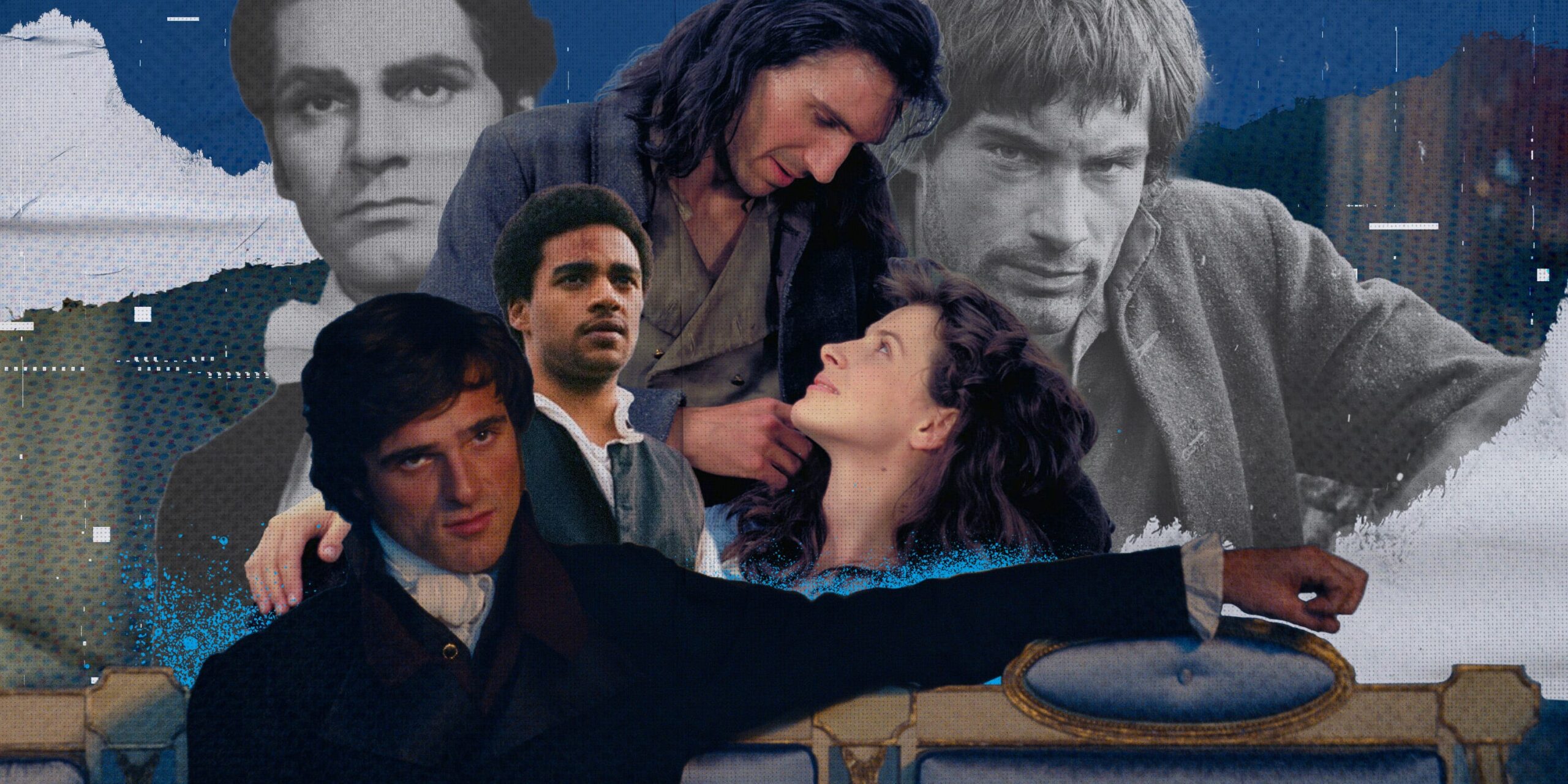
"Heathcliff is more than a literary character; he is a cultural mirror, with each cinematic iteration redefining the boundaries between romantic vulnerability and destructive dominance according to the anxieties of its era."

Emily Brontë’s Wuthering Heights has remained a cornerstone of Western literature not merely for its haunting prose, but for its central figure, Heathcliff—a character who defies easy categorization. As society’s understanding of manhood has shifted from the stoic providers of the Great Depression to the hyper-aware figures of the digital age, the actors portraying this "dark-skinned gipsy" have served as barometers for the prevailing masculine ideals of their time. By analyzing these performances, we see a chronological map of how the "ideal man" has transitioned from a resilient breadwinner to a complex, and often systemic, symbol of rage and desire.
The 1930s: Resilience and the Crisis of the Breadwinner
In 1939, Laurence Olivier delivered what many consider the definitive classical portrayal of Heathcliff. To understand Olivier’s performance, one must understand the socio-economic landscape of the 1930s. Following the Great Depression, the traditional masculine identity was in a state of profound crisis. Men who had been raised as the sole providers for their families found their status threatened by widespread unemployment and the gradual entry of women into the workforce.

Olivier’s Heathcliff embodied this dichotomy of the "hard and soft." His background in Shakespearean theater brought a distinguished, almost regal air to the role, yet his sharp features and deep, dark eyes conveyed a sympathetic vulnerability. This Heathcliff was tough and confident—reflecting the resilience required of men during the Depression—but he was also a symbol of what men could be: romantic and emotionally expressive. His Academy Award-nominated performance allowed audiences to see a man who was both a menacing force of nature and a victim of his own profound sensitivity, a combination that resonated with a generation of men struggling to reclaim their agency.
The 1960s: The Magnetic "Beefcake" and the Slow Burn
By 1967, the cultural needle had moved toward a more commanding, physical presence. Ian McShane, long before his iconic roles in Deadwood and John Wick, portrayed a Heathcliff that was less about Shakespearean poise and more about raw, magnetic energy. This era’s masculinity was defined by a "slow burn"—a looming, uneasy presence that didn’t need to explode to be felt.

McShane’s Heathcliff was a "beefcake" in the gothic sense: tall, dark, and brooding. He moved away from the angsty outbursts of earlier interpretations, opting instead for a performance that was sexy and scary in equal measure. This reflected the mid-century shift toward the "strong, silent type" who possessed an undercurrent of potential violence. McShane’s version became a blueprint for the gothic romantic hero: a man who could be feared, worshipped, and desired simultaneously, embodying a masculine ideal that was emotionally complex but undeniably in command.
The 1970s: The Villainous Turn and Softening Ideals
The 1970s represented a radical departure in film. As mainstream masculinity began to "soften" through the influence of figures like Bob Dylan and the vulnerable protagonists of The Graduate, the 1970 adaptation of Wuthering Heights took a counter-intuitive approach. Starring Timothy Dalton over a decade before he became James Bond, this version stripped away the romantic gloss to present a Heathcliff who was purely, almost surgically, sadistic.

In a deviation from the novel, this adaptation even reframed Hindley—Catherine’s abusive brother—as a heroic figure, highlighting Heathcliff’s role as a singular villain. Dalton’s Heathcliff was quiet, mean, and selfish. While the culture around him was exploring emotional availability, this film committed to the concept of the male as a domineering force of nature. It transformed Brontë’s multi-generational epic into a binary battle of good versus evil, using Dalton’s hypnotic presence to explore the darker, more one-note aspects of masculine obsession.
The 1990s: Sensitivity Beneath the Surface
The early 1990s saw masculinity in another state of flux. The "macho bro" of the 1980s—typified by the hyper-muscularity of stars like Arnold Schwarzenegger—was being replaced by a more progressive, sensitive archetype. Ralph Fiennes’ 1992 portrayal of Heathcliff arrived exactly at this crossroads.

Fiennes, in his feature film debut, presented a Heathcliff who was nasty and vicious—a performance so striking it caught the attention of Steven Spielberg, who was then casting for the role of Amon Göth in Schindler’s List. Yet, Fiennes’ Heathcliff was also deeply unguarded. Opposite Juliette Binoche, he portrayed a man whose masculinity was a protective shell for a sensitivity greater than anyone else on Earth. This version was one of the few to include the second half of the novel, allowing Fiennes to show the full trajectory of a man whose passion, when thwarted, curdles into a lifelong pursuit of revenge.
The 2000s: From Surf Bros to Tumblr Icons
The turn of the millennium brought two distinct flavors of Heathcliff. In 2003, Mike Vogel played "Heath" in an MTV modern-day reinterpretation. This version epitomized the "early-2000s hunk"—blonde, All-American, and somewhat "surf bro" in aesthetic. It was a version of masculinity that felt safe and digestible for a younger audience, utilizing "softboy" energy to elicit sympathy while maintaining a temperamental physicality.

However, by 2009, the "sensitive indie boy" had become a cultural powerhouse. Tom Hardy’s Heathcliff for the BBC was the definitive version for the "Tumblr era." Hardy portrayed a man who was both feral and wounded, possessing a physical intimidation that was constantly undercut by visible aching. This performance contained the seeds of the stoic, tormented masculinity Hardy would later perfect in Mad Max: Fury Road. Notably, Hardy’s Heathcliff utilized a gravelly, "Bane-like" vocalization in the later scenes, cementing the idea of a man so broken by grief that his very voice had become a weapon of his own torment.
The 2010s: Systemic Rage and Realism
Andrea Arnold’s 2011 adaptation provided a pivotal moment in the character’s history by casting James Howson, the first Black actor to play Heathcliff in a major production. This choice made literal what Brontë had always implied: that Heathcliff’s status as an "outsider" was not just a matter of class, but of race.

Howson, a non-professional actor, brought a raw, documentarian stillness to the role. In this version, Heathcliff’s masculinity was rooted in isolation and systemic exclusion. His rage was not merely the result of a broken heart, but the result of a world that refused to see him as human. This Heathcliff was more vocal and explosive, his long silences punctuated by outbursts that reframed the character’s anger as something political and systemic rather than purely romantic.
The 2020s: The Weaponized Female Gaze
As we look toward 2026, Jacob Elordi’s Heathcliff represents the latest evolution: the "internet boyfriend" who weaponizes the female gaze. Elordi’s portrayal sits at the intersection of "softboi" and "fuckboi"—a modern masculine figure who is hyper-aware of his own effect on others.

This Heathcliff is about sexuality and control. Under the direction of Emerald Fennell, the character is viewed through Catherine’s eyes, making his darkness and menace inherently "sexy." Elordi’s version is self-mythologizing; he is the man who carries books in his pockets but possesses a "chronic smirk" that suggests a deep, depraved unpredictability. He represents a contemporary masculinity that is comfortable with its own contradictions—wanting to be the dominant force while simultaneously yearning to be "the big spoon." It is a portrayal that understands that in the modern era, the most captivating men are often those who are the most dangerous to love.
Conclusion: The Enduring Mirror
From Olivier’s resilient survivor to Elordi’s self-aware predator, the character of Heathcliff continues to endure because he provides a canvas upon which society can project its changing fears and desires. Whether he is a victim of the economy, a byproduct of systemic racism, or a weaponized object of the female gaze, Heathcliff remains a harrowing reminder of the complexities of the human experience. As masculinity continues to evolve, so too will the moors of Wuthering Heights, waiting for the next actor to step into the fog and redefine what it means to be a man.